
Every year, thousands of UK pet owners rush their beloved dogs and cats to emergency vets after their furry friends nibble on garden plants they didn’t know were toxic. A 2025 study by the Royal Veterinary College found that 34% of pet poisoning cases involve garden plants, up 12% from 2023—and many owners had no idea their favourite shrubs were dangerous. In this article you’ll discover which five common UK garden plants pose the biggest threat, why your pet finds them so tempting, and the one warning sign that means you need to call your vet immediately.
📊 Key Figures 2025
- 34% of pet poisoning cases now involve garden plants, according to the Royal Veterinary College (2025)
- Lily toxicity in cats has increased 28% in the past two years, with Easter lilies remaining the deadliest variety (PDSA, 2025)
- Dogs aged 1-3 years account for 67% of accidental plant ingestions in the UK (BVA survey, 2025)
Sources: Royal Veterinary College, PDSA, British Veterinary Association, 2025
1. Lilies: Beautiful but Lethal for Cats
If you own a cat, lilies are your number-one enemy. Every single part of the lily plant—petals, stamens, leaves, even the water in the vase—contains compounds that cause acute kidney failure in cats. Tragically, just two or three petals can be enough to cause severe damage.
The worst culprits are Easter lilies, Stargazer lilies, and Tiger lilies, but honestly, all true lilies are dangerous. Your cat doesn’t need to eat a whole flower; sometimes they’ll brush against pollen and ingest it while grooming.
✅ Expert Tip
Remove lilies completely from your home and garden if you have a cat. If someone gifts you lilies, ask them to remove the stamens immediately or choose a cat-safe alternative like sunflowers, roses (thorns removed), or lisianthus.
⚠️ Warning
If your cat eats any part of a lily, contact your vet or the Animal Poison Centre (0844 892 0111) within 2 hours. Symptoms include vomiting, lethargy, and loss of appetite—but kidney damage can occur silently before any signs appear.
2. Foxgloves: The Garden Favourite That Hides a Heart Problem
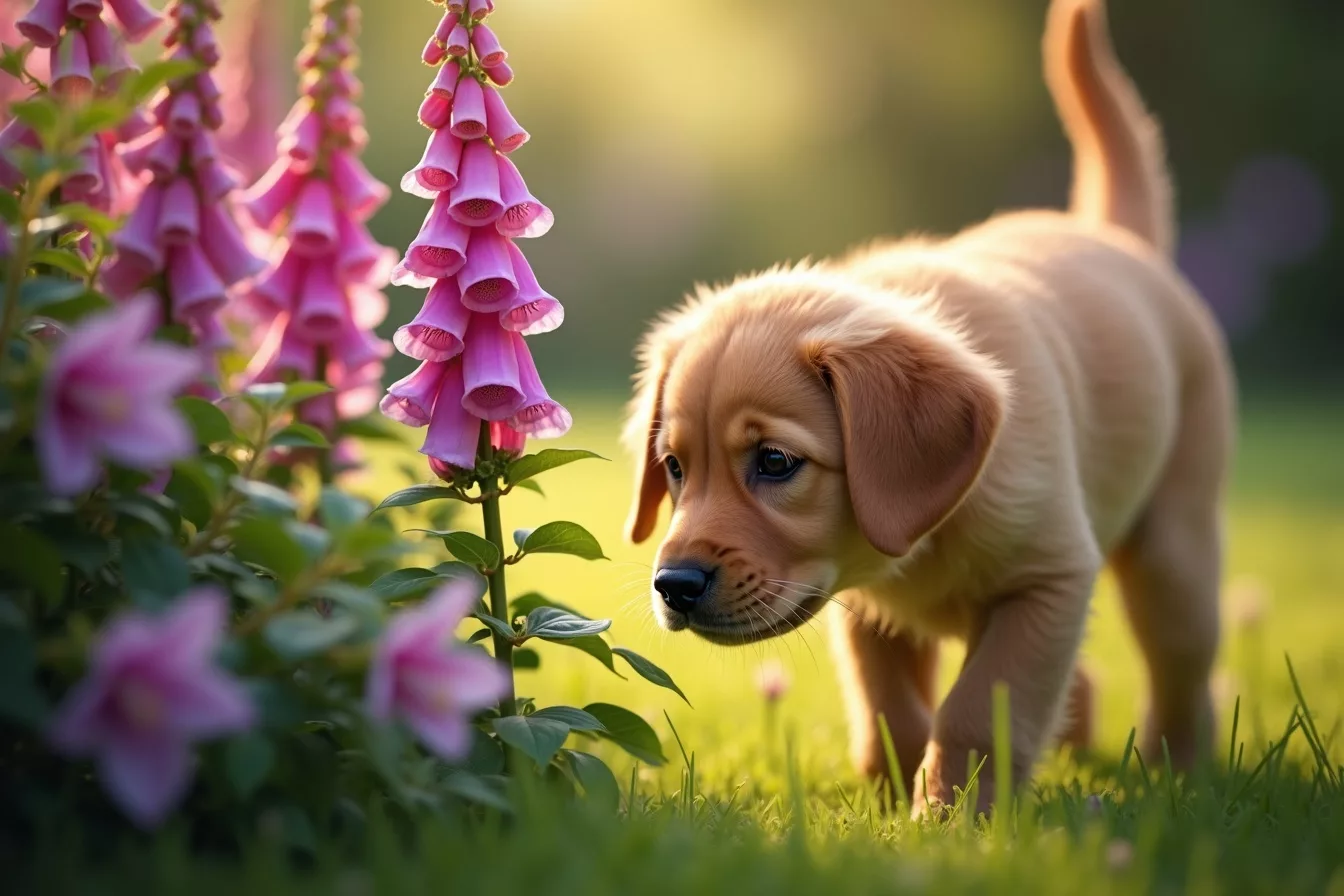
Foxgloves are iconic in British gardens—tall, purple, and strikingly beautiful. But every part of the plant contains cardiac glycosides, compounds that disrupt your pet’s heart rhythm. Even small amounts can be dangerous.
Dogs are more likely to be affected than cats, especially curious puppies who see the tubular flowers as something to investigate. One case involved Biscuit, a two-year-old Cocker Spaniel from Cornwall, who ate foxglove leaves while his owner was weeding and suffered life-threatening arrhythmias requiring 48 hours of emergency care.
✅ Expert Tip
If you love foxgloves, grow them in a raised bed or container garden that’s physically separated from where your dog plays. Better yet, replace them with digitalis-free alternatives like delphiniums, which offer a similar tall-flower aesthetic without the toxins.
3. Sago Palms: Deceptively Toxic Indoor and Outdoor Plants
Sago palms have become increasingly popular in UK conservatories and sheltered gardens because they look exotic and require minimal care. However, they’re among the most toxic plants for dogs. The seeds and nuts are the most dangerous parts, containing cycasin, a compound that causes severe liver damage.
Just two or three nuts can poison a medium-sized dog. Symptoms appear within 24 hours but liver damage progresses silently, sometimes resulting in organ failure weeks later.
⚠️ Warning
If your dog ingests any part of a Sago palm, seek emergency veterinary care immediately, even if they seem fine. Vomiting, diarrhoea, lethargy, and abdominal pain are red flags. Liver function tests at the vet are essential.
4. Yew Trees: The Silent Killer in Hedgerows
Yew is common in UK gardens, hedgerows, and churchyards. It’s slow-growing, evergreen, and traditionally planted around old properties—but it’s extremely dangerous. The entire plant is toxic except the red arils (the berry-like covering), and even those contain a deadly seed inside.
Yew poisoning affects the heart and nervous system. Many pets show no symptoms before sudden collapse or death occurs. Just 50 grams of yew needles can be fatal to a large dog.
✅ Expert Tip
If you have a yew tree on your property, fence it off completely and never allow your pet to browse near it. Check your garden boundary if you live next to a churchyard or older property with yew hedges—toxins can still affect pets through the fence.
5. Rhododendrons and Azaleas: Spring Bloomers with Hidden Dangers
These stunning flowering shrubs are garden staples in spring, especially in acidic soil across Scotland and Wales. They contain grayanotoxins, which interfere with nerve and muscle function. Dogs and cats both suffer the same effects: drooling, vomiting, diarrhoea, weakness, and irregular heartbeat.
What makes rhododendrons particularly dangerous is that they’re often overlooked as “toxic”—many owners think they’re harmless ornamentals. Young plants and fresh new growth contain higher toxin concentrations.
✅ Expert Tip
Supervise outdoor time during spring flowering season. Create a designated pet play area free of rhododendrons and azaleas, or consider replacing them with non-toxic shrubs like hawthorn, dog rose, or viburnum.
What to Do If Your Pet Eats a Toxic Plant
Time is critical. Don’t wait for symptoms—call your vet or the Animal Poison Centre (0844 892 0111) immediately if you suspect ingestion. Have the plant name and the approximate amount eaten ready to tell them.
Keep a photo of all your garden plants on your phone so you can identify them quickly in an emergency. Bring a leaf or sample to your vet if possible.
Safer Garden Alternatives
You don’t have to sacrifice a beautiful garden. Replace toxic plants with pet-safe options like sunflowers, zinnias, marigolds, roses (without thorns), lavender, and herbs like basil and parsley. Dog rose and hawthorn provide wildlife benefit and colour without toxins.
The most surprising point? Many gardeners plant these toxic species without realising they own a pet-safety time bomb. Your garden should be a place of joy for your whole family—furry members included.
Have you noticed your pet nibbling on plants in the garden? Start by photographing every shrub and plant in your outdoor space, then cross-check them against the RSPCA’s toxic plant list. It’s the single most important safety step you can take this growing season.