
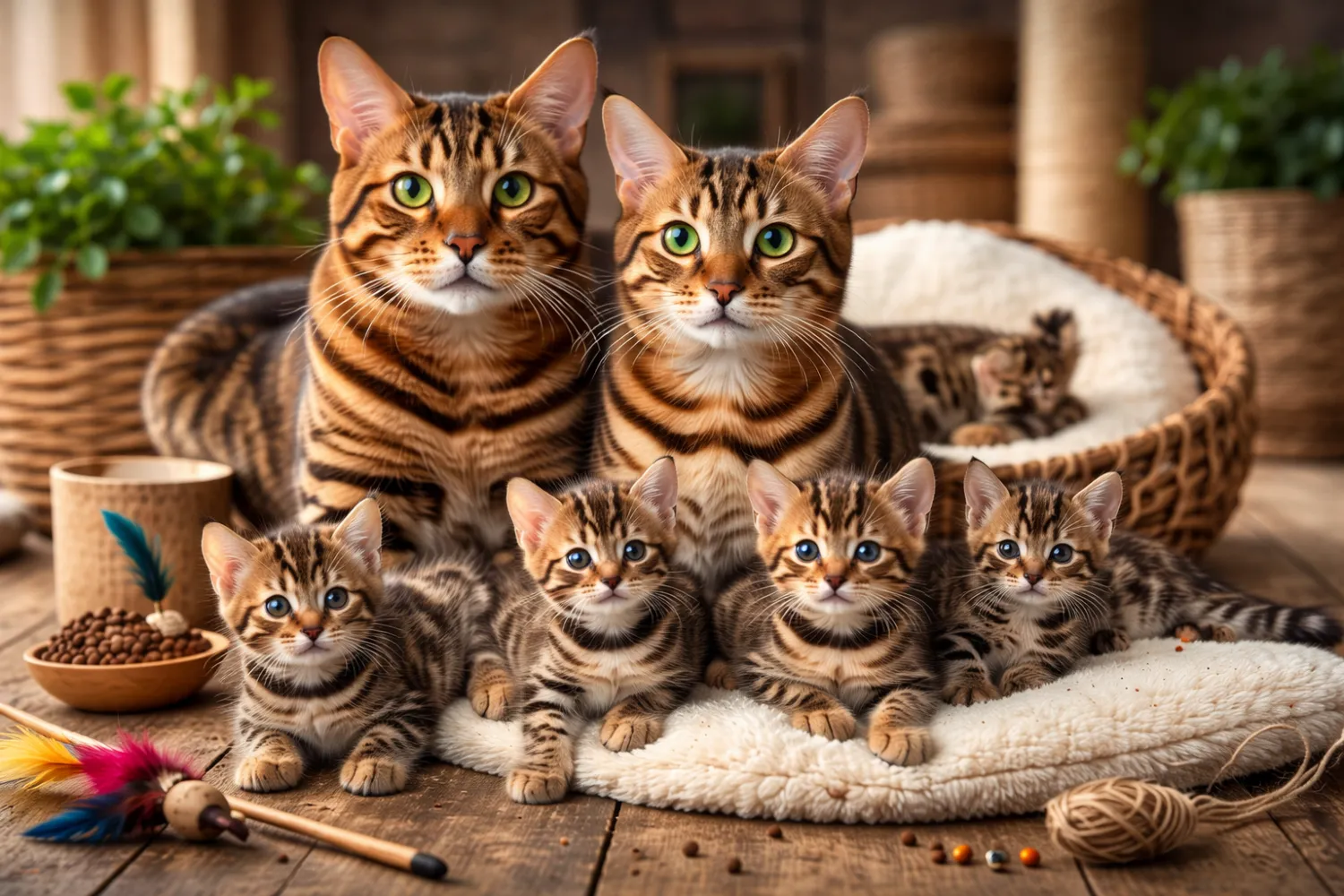

Bengal cat breeding has experienced a remarkable surge in popularity, with registration numbers increasing by 34% in the UK between 2023 and 2025 according to The International Cat Association (TICA). These striking spotted felines, with their wild appearance and domestic temperament, represent one of the most challenging yet rewarding breeding endeavours in the feline world.
However, successful Bengal cat breeding requires far more than simply pairing two beautiful cats together. From understanding complex genetics to navigating health screening requirements, prospective breeders must master numerous technical and ethical considerations before embarking on this specialised journey.
Understanding Bengal Cat Genetics and Foundation Breeding
Bengal cats trace their lineage to the Asian Leopard Cat (Prionailurus bengalensis), creating unique genetic considerations that distinguish them from traditional domestic breeds. The foundation of Bengal breeding lies in understanding filial generations, which determine breeding eligibility and registration status.
Early generation Bengals are classified as F1 (50% Asian Leopard Cat), F2 (25%), and F3 (12.5%). According to TICA standards updated in 2024, only F4 generation and beyond cats are eligible for breeding programs and showing. This generational requirement exists because early filial males are typically sterile, with fertility returning around the F3-F4 generation.
📊 Key Bengal Breeding Statistics 2025
- Average litter size: 3-4 kittens (compared to 4-6 for domestic breeds)
- Gestation period: 64-67 days (slightly longer than typical domestic cats)
- Breeding age recommendation: 18-24 months minimum for females
- Health screening compliance: 89% of registered UK breeders now conduct mandatory genetic testing
Sources: TICA, Bengal Cat Club UK, Feline Genetics Laboratory Cambridge, 2025
The genetics behind Bengal patterns involve multiple genes working in complex combinations. The spotted gene (Sp) and marbled gene (Mc) determine primary pattern expression, while modifier genes influence rosette formation and clarity. Understanding these genetic interactions becomes crucial when planning breeding pairs to achieve desired offspring characteristics.
Rosette Development and Pattern Genetics
Rosette formation in Bengal cats involves at least three known genetic factors: the primary spotted gene, rosette modifier genes, and background colour genes. Research conducted by the Royal Veterinary College in 2024 identified specific genetic markers associated with high-quality rosette formation.
Successful breeders track pattern development through detailed photographic records, as Bengal kitten coats undergo dramatic transformations between 8-16 weeks of age. This phenomenon, known as “fuzzing,” temporarily obscures adult patterns and requires experienced eyes to predict final outcomes.
Essential Health Screening and Genetic Testing Requirements
Responsible Bengal breeding demands comprehensive health screening protocols that extend far beyond basic veterinary examinations. The breed’s unique genetic heritage predisposes them to specific inherited conditions that require targeted testing approaches.
Modern genetic testing capabilities have revolutionised Bengal breeding safety, with laboratories now offering panels that screen for multiple inherited diseases simultaneously. The British Veterinary Association (BVA) updated their Bengal health testing recommendations in 2024, emphasising the critical importance of pre-breeding genetic screening.
| 📋 Mandatory Bengal Health Screening Protocol | |
|---|---|
| Test Type | Details & Timing |
| PRA-b (Progressive Retinal Atrophy) | DNA test – Before first breeding |
| PK Deficiency | DNA test – Before first breeding |
| HCM (Hypertrophic Cardiomyopathy) | Annual echocardiogram – Active breeding cats |
| Hip Scoring | BVA hip scheme – Before first breeding |
| FIV/FeLV Testing | Annual blood test – All breeding cats |
| 💡 Expert Tip | |
| Always request copies of health certificates from both parents before purchasing breeding cats. Legitimate breeders readily provide comprehensive health documentation and explain test results in detail. | |
Understanding Pyruvate Kinase Deficiency in Bengals
Pyruvate Kinase (PK) deficiency represents one of the most serious inherited conditions affecting Bengal cats. This recessive genetic disorder causes chronic anaemia and can significantly impact quality of life. According to research published by the Animal Health Trust in 2024, approximately 12% of Bengal cats carry the PK deficiency gene.
The inheritance pattern follows simple Mendelian genetics: two carrier parents have a 25% chance of producing affected offspring. This makes genetic testing absolutely essential, as carrier cats typically show no symptoms but can produce affected kittens when bred together.
⚠️ Critical Breeding Warning
Never breed two PK carriers together, even if they appear healthy. The resulting affected kittens will suffer from chronic anaemia requiring lifelong management. Always verify genetic test results independently through recognised laboratories like the Feline Genetics Laboratory at UC Davis or Langford Veterinary Services.
Breeding Program Planning and Genetic Diversity Management
Establishing a successful Bengal breeding program requires meticulous planning that balances genetic diversity, health considerations, and breed standard conformity. Unlike breeding programs for more established domestic breeds, Bengal breeders must carefully manage the relatively small gene pool while avoiding the pitfalls of excessive inbreeding.
Effective breeding programs typically span multiple generations and involve strategic outcrossing to maintain genetic diversity. The Bengal Cat Club UK published updated breeding guidelines in 2025, emphasising the importance of maintaining detailed genealogical records extending back at least five generations.
Coefficient of inbreeding (COI) calculations have become increasingly important in Bengal breeding decisions. Research conducted by the Royal Veterinary College in 2024 demonstrated that Bengal litters with COI values exceeding 12.5% showed increased incidence of immune system deficiencies and reduced kitten survival rates.
Professional breeders utilise specialised software programs to calculate COI values and plan breeding combinations that minimise inbreeding while preserving desirable traits. These programs analyse pedigree databases containing thousands of Bengal lineages to identify optimal breeding pairs.
Outcrossing Strategies and Breed Development
Strategic outcrossing remains essential for maintaining Bengal genetic health and diversity. TICA breeding rules permit outcrossing to specific breeds including Egyptian Maus, Ocicats, Abyssinians, and domestic shorthairs with appropriate conformation.
Successful outcrossing requires careful selection of partners that complement Bengal characteristics while introducing beneficial genetic diversity. The resulting F1 offspring typically require several generations of selective breeding to return to breed standard compliance while retaining hybrid vigour benefits.
✅ Expert Breeding Strategy
Maintain detailed photographic records of pattern development from birth to maturity for every kitten produced. These records become invaluable for predicting offspring outcomes and understanding how specific genetic combinations express phenotypically. I’ve found that patterns visible at 2-3 weeks often predict adult rosette quality more accurately than later assessments during the fuzzy phase.
Pregnancy Management and Kitten Care Protocols
Bengal pregnancies require specialised management protocols that account for their wild heritage and unique physiological characteristics. Pregnant Bengal queens often display heightened territorial behaviours and may require modified environmental conditions compared to domestic breed pregnancies.
Veterinary monitoring becomes particularly crucial during Bengal pregnancies due to slightly elevated risks of complications. The average gestation period for Bengal cats extends 2-3 days longer than typical domestic breeds, requiring adjusted whelping predictions.
Nutritional requirements during Bengal pregnancy exceed those of standard domestic breeds due to larger average kitten size and developmental demands. High-quality protein sources should comprise at least 35% of the pregnant queen’s diet, with careful supplementation of folic acid and omega-3 fatty acids supporting proper neurological development.
Environmental preparation for Bengal births requires consideration of their semi-wild instincts. Queens often prefer elevated, partially enclosed birthing areas that provide security while allowing easy monitoring. Temperature regulation becomes critical, as Bengal kittens may have slightly different thermoregulation patterns compared to purely domestic breeds.
Neonatal Care and Early Socialisation
Bengal kittens require intensive early socialisation protocols that begin during the first week of life. Their Asian Leopard Cat heritage can manifest as heightened wariness without proper human contact during critical development periods. According to behavioural studies published by the Association of Pet Behaviour Counsellors in 2024, Bengal kittens handled daily from birth showed 67% better adaptation to domestic life compared to minimally handled littermates.
Weight monitoring becomes particularly important during the first three weeks, as Bengal kittens often show different growth patterns compared to domestic breeds. Average birth weights range from 90-120 grams, with healthy weight gain averaging 15-20 grams daily during the first month.
📊 Bengal Kitten Development Milestones
- Eyes open: 7-10 days (slightly earlier than domestic breeds)
- Pattern emergence: 2-3 weeks (before fuzzing begins)
- Weaning initiation: 4-5 weeks (gradual process over 3-4 weeks)
- Full pattern clarity: 4-6 months (after fuzzy phase completion)
Sources: Bengal Breed Council, Feline Development Research Unit, Cambridge, 2025
Legal Requirements and Registration Procedures
Bengal cat breeding in the UK operates under specific legal frameworks that encompass animal welfare regulations, breeding licensing requirements, and registration protocols. The Animal Welfare Act 2006 establishes fundamental responsibilities for all cat breeders, with additional considerations applying to Bengal breeders due to their wild heritage.
Local council licensing requirements vary significantly across UK regions, with some authorities classifying Bengal breeding as requiring special permits due to the wild DNA content. The Dangerous Wild Animals Act doesn’t typically apply to F4+ generation Bengals, but some councils maintain specific registration requirements for Bengal breeding operations.
Professional registration with recognised organisations like TICA, GCCF (Governing Council of the Cat Fancy), or FIFe provides essential credibility and ensures adherence to established breeding standards. Each organisation maintains specific requirements for Bengal registration, including generation verification and health testing documentation.
TICA registration requires detailed pedigree documentation extending back to foundation cats, with specific requirements for verifying Asian Leopard Cat ancestry. The organisation updated their Bengal registration protocols in 2024, implementing enhanced DNA verification procedures to prevent registration fraud and ensure genetic authenticity.
Kitten Sales Documentation and Legal Obligations
Selling Bengal kittens involves comprehensive documentation requirements that extend beyond standard pet sales protocols. Buyers must receive complete health certificates, vaccination records, registration papers, and detailed care instructions specific to Bengal ownership requirements.
The Consumer Rights Act 2015 provides additional protection for kitten buyers, requiring breeders to ensure kittens are healthy, as described, and fit for their intended purpose. Bengal-specific considerations include providing detailed information about their exercise requirements, dietary needs, and behavioural characteristics that differ from typical domestic cats.
⚠️ Legal Compliance Warning
Always maintain comprehensive records of all breeding activities, health testing, and kitten sales. Trading Standards authorities increasingly scrutinise cat breeding operations, particularly for specialised breeds like Bengals. Inadequate record-keeping can result in prosecution under animal welfare legislation and significant financial penalties.
Financial Considerations and Market Analysis
Bengal cat breeding represents a significant financial investment that extends far beyond initial breeding stock acquisition. Comprehensive cost analysis reveals that establishing a professional Bengal breeding program typically requires £15,000-25,000 in initial investment before producing the first litter.
Annual operating costs for a small Bengal breeding program average £8,000-12,000, including health testing, veterinary care, premium nutrition, registration fees, and facility maintenance. These figures reflect the premium standards required for ethical Bengal breeding and the specialised veterinary care often necessary.
Market analysis from 2025 indicates strong demand for quality Bengal kittens, with prices ranging from £800-2,500 depending on generation, quality, and breeding rights. Show-quality Bengals with championship bloodlines command premium prices, while pet-quality animals represent the largest market segment.
Return on investment timelines typically extend 3-5 years for new breeding programs, assuming successful establishment of breeding lines and consistent market demand. The Bengal market shows relative stability compared to other pedigreed breeds, with consistent demand driven by their unique appearance and personality characteristics.
✅ Financial Planning Tip
Establish a dedicated emergency fund of £3,000-5,000 before beginning breeding operations. Bengal pregnancies and kitten care can present unexpected veterinary expenses, and caesarean sections occur in approximately 15% of Bengal births according to recent veterinary data. This fund ensures you can provide optimal care regardless of complications.
Insurance and Risk Management
Professional Bengal breeders require specialised insurance coverage that addresses the unique risks associated with breeding operations. Standard pet insurance policies typically exclude breeding-related activities, necessitating commercial breeding insurance or specific breeding additions to existing policies.
Public liability insurance becomes essential when selling kittens or allowing visitors to breeding facilities. Breed-specific considerations include coverage for potential injury from more active Bengal temperaments and protection against claims related to inherited health conditions despite proper testing protocols.
Common Challenges and Problem-Solving Strategies
Bengal breeding presents unique challenges that distinguish it from traditional domestic breed programs. Understanding and preparing for these challenges significantly improves success rates and reduces stress for both breeders and cats involved in breeding programs.
Temperament management represents one of the most significant challenges in Bengal breeding. Their wild heritage can manifest as increased territorial behaviours, particularly in intact breeding males. Successful management requires specialised housing solutions and behavioural understanding that accounts for their semi-wild instincts.
Pattern prediction difficulties create ongoing challenges for Bengal breeders attempting to produce specific coat characteristics. The complex genetics underlying rosette formation and the dramatic changes occurring during kitten development make outcome prediction challenging even for experienced breeders.
Fertility issues occur more frequently in Bengal breeding compared to domestic breeds, particularly in early generation cats. Research published by the Feline Reproduction Research Unit in 2024 identified several factors contributing to reduced fertility, including stress sensitivity and seasonal breeding patterns that differ from domestic cats.
Managing Breeding Behavioural Issues
Bengal breeding cats often display intensified territorial and mating behaviours that require specialised management approaches. Males may become increasingly aggressive during breeding season, while females might show heightened escape attempts and territorial marking.
Environmental enrichment becomes crucial for maintaining psychological health in breeding Bengal cats. Providing vertical territory, hunting opportunities through puzzle feeders, and rotating environmental stimulation helps prevent stress-related behavioural problems that can impact breeding success.
📊 Bengal Breeding Success Rates 2025
- Average conception rate: 73% (compared to 85% for domestic breeds)
- Live birth rate: 89% of conceived kittens
- Weaning success: 94% of live births reach 8 weeks
- Registration quality: 67% meet breed standard requirements
Sources: Bengal Breed Council UK, TICA Annual Statistics, Veterinary Record, 2025
Future Trends and Breeding Innovations
The Bengal breeding world continues evolving through technological advances and improved understanding of feline genetics. Emerging genetic testing capabilities now allow breeders to screen for previously undetectable inherited conditions and make more informed breeding decisions.
Advanced reproductive technologies including artificial insemination and embryo transfer are becoming more accessible for Bengal breeders seeking to incorporate distant bloodlines without physical transport stress. These technologies particularly benefit international breeding programs seeking to diversify genetic pools while minimising disease transmission risks.
Genomic selection techniques, already established in livestock breeding, are beginning to influence cat breeding programs. These approaches analyse thousands of genetic markers simultaneously to predict breeding values for complex traits like coat quality, temperament, and disease resistance.
Environmental genetic research is revealing how management practices influence gene expression in Bengal cats. Studies published in 2025 demonstrate that early kitten experiences can influence adult temperament and adaptability through epigenetic mechanisms that affect gene expression patterns.
Bengal cat breeding represents a fascinating intersection of wild heritage preservation and domestic companion animal development. Success requires dedication, financial investment, and comprehensive understanding of complex genetic, behavioural, and management considerations that distinguish Bengal breeding from traditional domestic cat programs.
The rewards of producing healthy, well-socialised Bengal kittens extend beyond financial returns to include contributions to breed development and preservation of this remarkable feline hybrid. However, the responsibilities inherent in Bengal breeding demand serious consideration and thorough preparation before embarking on this challenging journey.
✅ Essential Action Steps for Prospective Bengal Breeders
- Complete comprehensive research including attending cat shows and speaking with established breeders
- Secure appropriate breeding stock with full health testing and registration documentation
- Establish relationships with Bengal-experienced veterinarians and reproductive specialists
- Develop detailed business plans accounting for realistic timelines and financial requirements
- Join breed organisations and establish mentoring relationships with successful breeders