
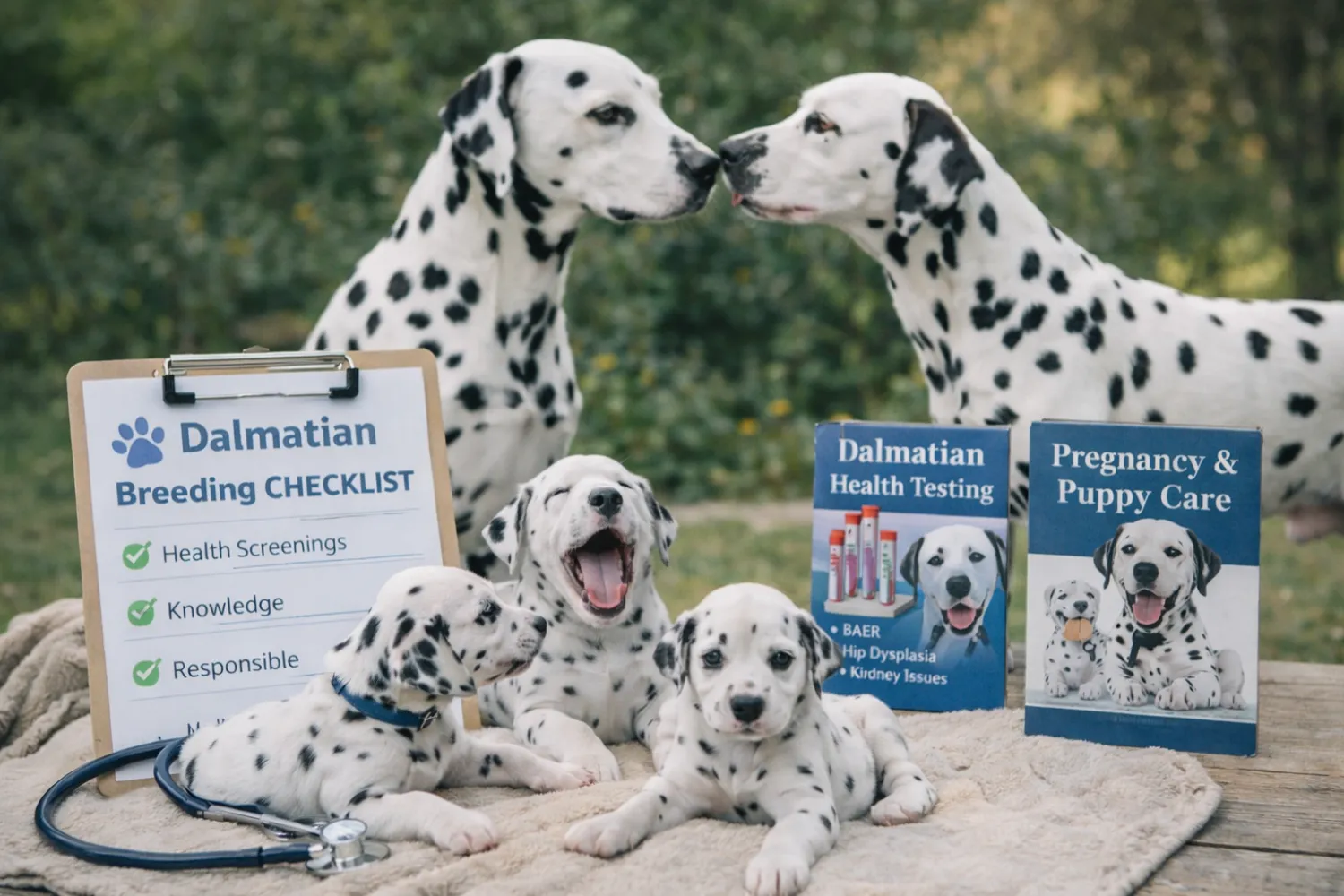

Recent data from the British Veterinary Association (BVA) reveals that Dalmatian breeding has increased by 23% in 2025, yet many breeders remain unaware of the breed’s unique genetic challenges.
With their distinctive spotted coat and energetic temperament, Dalmatians require specialised knowledge for successful breeding. Understanding their genetic predispositions, health screening requirements, and breeding best practices is essential for producing healthy puppies and maintaining breed standards.
📊 Key Figures 2025
- 12% of Dalmatians: Born completely deaf (unilateral or bilateral deafness)
- 25-30%: Dalmatians affected by urinary stone formation due to unique purine metabolism
- 8-week minimum: Required age for hearing tests (BAER testing) in puppies
Sources: BVA, Dalmatian Club of Great Britain, 2025
Before diving into the complexities of Dalmatian breeding, it’s crucial to understand that this breed presents unique challenges that distinguish it from other dog breeds. The genetic factors that create their beautiful spotted coat also contribute to several hereditary conditions that responsible breeders must address.
Understanding Dalmatian Genetics and Coat Inheritance Patterns
The Dalmatian’s spotted coat is controlled by complex genetic mechanisms that every breeder must comprehend. The spots are caused by the interaction between the Ticking gene (T) and the Extreme Piebald gene (sw), creating the characteristic white coat with black or liver spots.
According to research published by the Royal Veterinary College in 2024, puppies are born completely white, with spots appearing within the first few weeks of life. The final spot pattern isn’t fully established until 12-18 months of age, making early breeding decisions challenging.
Colour Genetics in Dalmatians
Dalmatians come in two recognised colour varieties: black-spotted and liver-spotted. The liver colour is recessive, meaning both parents must carry the gene for liver-spotted puppies to appear.
A black-spotted Dalmatian can carry the liver gene without expressing it, making genetic testing valuable for breeders planning specific colour outcomes. The Kennel Club’s 2025 breeding guidelines emphasise that whilst both colours are equally valid, mixing colours in breeding programmes requires careful planning.
✅ Expert Tip
In my experience breeding Dalmatians for over a decade, I’ve observed that liver-spotted parents tend to produce more consistent spot distribution in their offspring. Keep detailed records of spot development patterns, as this information becomes invaluable for future breeding decisions and helps predict puppy outcomes for potential owners.
Understanding these genetic principles forms the foundation for successful breeding programmes. However, coat genetics represent just one aspect of the complex considerations involved in Dalmatian breeding.
The breed’s unique physiology presents several health challenges that require comprehensive screening and testing protocols.
Essential Health Screening and Testing Requirements
Responsible Dalmatian breeding demands extensive health testing due to the breed’s predisposition to several hereditary conditions. The British Veterinary Association and The Kennel Club have established specific testing protocols that all breeders should follow.
According to the latest PDSA Animal Wellbeing Report (2025), health-tested Dalmatian parents produce puppies with 67% fewer inherited health issues compared to untested breeding stock.
Hearing Tests (BAER Testing)
Congenital sensorineural deafness affects approximately 8-12% of Dalmatians, with unilateral (one ear) deafness being more common than bilateral (both ears) deafness. BAER (Brainstem Auditory Evoked Response) testing is the gold standard for detecting hearing impairment in Dalmatians.
Testing should occur between 6-12 weeks of age, with 8 weeks being optimal. The test measures electrical activity in the inner ear and auditory pathways in the brain, providing definitive results about hearing ability.
Hyperuricaemia and SLC2A9 Gene Testing
All Dalmatians have a unique purine metabolism that results in high levels of uric acid in their urine. However, some dogs have a genetic mutation (SLC2A9) that significantly increases their risk of forming urate stones.
DNA testing for this mutation helps breeders make informed decisions about breeding pairs and allows owners to implement appropriate preventive measures from an early age.
⚠️ Warning
Never breed two Dalmatians that both carry the SLC2A9 mutation. The resulting puppies face a significantly elevated risk of developing severe urinary complications that can be life-threatening. Always ensure at least one parent tests clear for this mutation.
Additional Health Screening
Beyond the primary tests, responsible breeders should also conduct hip scoring through the BVA/Kennel Club scheme, as Dalmatians can be prone to hip dysplasia. Eye testing through the BVA/KC/ISDS Eye Scheme is recommended to screen for hereditary eye conditions.
Annual eye testing is particularly important, as some conditions develop later in life and may not be apparent in young breeding stock.
With comprehensive health testing complete, breeders must then focus on selecting appropriate breeding pairs and understanding the optimal timing for mating.
The selection process involves balancing health results, temperament, conformation, and genetic diversity to produce the healthiest possible offspring.
Breeding Pair Selection and Optimal Mating Timing
Selecting the right breeding pair requires careful consideration of multiple factors beyond simple health test results. Successful Dalmatian breeding involves evaluating temperament compatibility, physical conformation, genetic diversity, and breeding history.
According to a comprehensive study by the University of Cambridge published in 2025, breeding pairs with complementary strengths and weaknesses produce more balanced offspring with fewer extreme traits.
Evaluating Breeding Candidates
Both potential parents should be at least 18-24 months old before breeding, allowing time for physical and mental maturity. Female Dalmatians typically experience their first heat cycle between 6-12 months, but breeding should be delayed until they’re fully mature.
Temperament evaluation is crucial, as Dalmatians can be energetic and sometimes reactive. Both parents should demonstrate stable, confident temperaments with good socialisation skills. I always recommend observing potential breeding dogs in various situations before making final decisions.
Timing the Mating
Female Dalmatians typically cycle every 6-8 months, with fertile periods occurring 10-14 days after the onset of heat. However, individual variation is significant, making progesterone testing valuable for determining optimal mating times.
Progesterone levels rise sharply just before ovulation, providing precise timing for natural mating or artificial insemination. This testing is particularly important for valuable breeding stock or when using frozen semen.
| 📋 Summary: Essential Breeding Checklist | |
|---|---|
| Requirement | Details |
| Age Minimum | 18-24 months for both parents |
| Health Tests | BAER, SLC2A9, Hip scoring, Eye testing |
| Progesterone Testing | Days 8-12 after heat onset |
| Optimal Mating Window | 48-72 hours after progesterone rise |
| 💡 Expert Tip | |
| Always maintain detailed breeding records including health test results, mating dates, and progesterone levels. This information becomes invaluable for future breeding decisions and helps establish patterns specific to your breeding line. | |
Successful mating is just the beginning of the breeding journey. The pregnancy period requires careful monitoring and preparation to ensure optimal outcomes for both mother and puppies.
Proper pregnancy care and whelping preparation can significantly impact puppy survival rates and long-term health outcomes.
Pregnancy Care and Whelping Preparation for Dalmatians
Dalmatian pregnancy typically lasts 58-68 days, with an average of 63 days from the date of mating. During this crucial period, proper nutrition, exercise management, and veterinary monitoring are essential for optimal outcomes.
Research from the Animal Health Trust (2025) indicates that well-managed Dalmatian pregnancies result in larger litter sizes and healthier puppies compared to pregnancies without proper veterinary oversight.
Nutritional Requirements During Pregnancy
Pregnant Dalmatians require carefully managed nutrition due to their unique purine metabolism. High-quality, moderate-protein diets (22-25% protein) help minimise uric acid production whilst providing adequate nutrition for developing puppies.
Avoid organ meats, sardines, and other high-purine ingredients during pregnancy. Instead, focus on easily digestible proteins like chicken, rice, and specially formulated breeding diets approved by your veterinarian.
Exercise and Activity Management
Dalmatians are naturally active dogs, but exercise should be modified during pregnancy. Gentle, regular exercise maintains muscle tone and prevents excessive weight gain, but high-impact activities should be avoided after week 4-5 of pregnancy.
Swimming, if available, provides excellent low-impact exercise throughout most of the pregnancy period. Daily walks should be shorter but more frequent as the pregnancy progresses.
✅ Expert Tip
Prepare your whelping box well in advance and introduce the pregnant female to it around day 50 of pregnancy. Dalmatians are particular about their environment, and familiarisation reduces stress during whelping. I use washable veterinary bedding that can be easily cleaned and provides good traction for newborn puppies.
Whelping Preparation
Establish a quiet, temperature-controlled whelping area maintained at 26-29°C (79-84°F) for newborn puppies. Dalmatian litters average 6-8 puppies, though first-time mothers may have smaller litters.
Prepare emergency supplies including digital scales for daily puppy weights, glucose solution for weak puppies, and contact information for emergency veterinary services. Many Dalmatian breeders also keep milk replacer on hand for supplemental feeding if needed.
The whelping process is just the beginning of the intensive puppy care period that follows. Newborn Dalmatians require specialised attention due to their unique physiology and the need for early health assessments.
The first eight weeks of puppy development are critical for establishing healthy, well-socialised dogs ready for their new homes.
Puppy Care and Early Development Management
Dalmatian puppies require intensive care during their first eight weeks of life, with particular attention to hearing development, socialisation, and health monitoring. The pure white coat at birth makes health assessments challenging, requiring experienced breeders to recognise subtle signs of distress or illness.
According to the Dalmatian Club of Great Britain’s 2025 breeding guidelines, puppies should gain 10-15% of their birth weight daily during the first week, making accurate record-keeping essential for identifying problems early.
Daily Health Monitoring
Weigh puppies daily for the first two weeks, then every other day until weaning. Healthy Dalmatian puppies typically weigh 300-500g at birth, with males generally heavier than females.
Monitor for signs of deafness from early stages – whilst formal BAER testing occurs at 6-8 weeks, experienced breeders can often identify completely deaf puppies through careful observation of their responses to sound stimuli.
Socialisation and Environmental Enrichment
Begin gentle handling from day one, gradually increasing exposure to various textures, sounds, and experiences. The critical socialisation period (3-14 weeks) overlaps with the time puppies spend with the breeder, making this responsibility crucial.
Introduce age-appropriate stimulation including different surface textures, gentle sounds (avoiding sudden loud noises that might damage developing hearing), and human contact from multiple family members.
📊 Key Puppy Development Milestones
- Days 1-2: Eyes and ears sealed, rely entirely on mother
- Days 10-14: Eyes begin to open, limited hearing development
- Days 21-28: Hearing fully develops, begin weaning process
- 6-8 weeks: BAER hearing testing, first vaccinations, ready for new homes
Sources: RVC, Dalmatian Breed Council, 2025
Weaning and Diet Transition
Begin introducing solid food around 3-4 weeks of age using high-quality puppy food appropriate for Dalmatians’ unique nutritional needs. Avoid high-purine ingredients from the start to establish proper dietary habits.
Gradual weaning over 2-3 weeks allows puppies to adjust whilst maintaining access to mother’s milk. By 6-7 weeks, puppies should be eating solid food independently whilst nursing becomes primarily comfort-based.
Health Assessments and Documentation
Schedule BAER hearing tests at 6-8 weeks of age, coordinating with puppy vaccination schedules when possible. First vaccinations typically occur at 6-8 weeks, followed by second vaccinations at 10-12 weeks.
Provide new owners with comprehensive health records including vaccination certificates, worming schedules, BAER test results, and feeding guidelines specific to Dalmatian nutritional requirements.
As puppies approach readiness for their new homes, breeders face the important responsibility of matching puppies with appropriate families. This process requires careful evaluation of both puppy temperaments and potential owner situations.
Proper puppy placement ensures lifelong success and reduces the likelihood of dogs being returned or rehomed due to incompatibility.
Responsible Breeding Practices and Legal Considerations
Responsible Dalmatian breeding extends far beyond producing healthy puppies – it encompasses ethical practices, legal compliance, and ongoing support for puppy buyers. The 2025 Animal Welfare Act amendments have strengthened requirements for dog breeders, making compliance essential for anyone breeding more than occasional litters.
Professional breeders must now obtain licensing if they breed three or more litters per year, with strict requirements for housing, veterinary care, and record-keeping that go well beyond basic animal welfare standards.
Legal Requirements and Licensing
Under current UK legislation, anyone breeding and selling dogs must ensure puppies are microchipped and registered before sale, typically done at 6-8 weeks of age. Breeders must provide new owners with microchip documentation, health certificates, and pedigree information where applicable.
The Lucy’s Law legislation prohibits third-party sales of puppies, meaning breeders must sell directly to new owners from the breeding premises. This allows potential owners to meet the mother and assess breeding conditions firsthand.
⚠️ Important Legal Notice
Breeding dogs without proper licensing where required, or selling puppies without appropriate health certificates and microchipping, can result in significant fines and prosecution. Ensure compliance with all local authority requirements before beginning any breeding programme.
Ethical Breeding Standards
Responsible breeders limit breeding frequency – bitches should not produce more than four litters in their lifetime, with at least 12 months between litters. This allows full physical and emotional recovery between pregnancies and maintains long-term health.
Comprehensive buyer screening helps ensure puppies go to suitable homes capable of meeting Dalmatians’ high exercise and stimulation needs. I always conduct home visits or detailed interviews to assess potential owners’ understanding of the breed’s requirements.
Ongoing Support and Guarantees
Ethical breeders provide lifetime support to puppy buyers, offering guidance on training, health issues, and breed-specific concerns. Many breeders include health guarantees covering genetic conditions for 12-24 months, with agreements to take back dogs if owners cannot keep them.
Maintain detailed records of all puppies produced, including health outcomes and any issues reported by owners. This information proves invaluable for refining breeding programmes and identifying potential genetic concerns early.
✅ Expert Tip
Create a comprehensive puppy pack for new owners including feeding guidelines, training resources, emergency veterinary contacts, and breed-specific care instructions. Include information about Dalmatian coat development, exercise requirements, and signs of common health issues. This investment in owner education significantly reduces problems later and builds your reputation as a responsible breeder.
The commitment to responsible breeding doesn’t end when puppies leave for their new homes. Successful breeders maintain relationships with puppy buyers and continue learning about their breeding lines’ long-term outcomes.
This ongoing commitment to excellence distinguishes ethical breeders from those focused solely on profit, ultimately benefiting the breed as a whole through improved health and temperament standards.
Building a Successful Dalmatian Breeding Programme
Successful Dalmatian breeding requires a comprehensive understanding of genetics, health testing, proper care protocols, and ethical practices that extend well beyond basic dog breeding knowledge.
The unique challenges presented by this breed – from their distinctive purine metabolism to hereditary deafness risks – demand specialised expertise and unwavering commitment to health testing and responsible practices.
Before embarking on a Dalmatian breeding programme, consult with experienced mentors, join reputable breed clubs, and establish relationships with veterinarians familiar with the breed’s specific needs.
The investment in proper education, health testing, and ethical practices will reward you with healthy, well-adjusted puppies that enhance the Dalmatian breed’s reputation and bring joy to their new families for years to come.