
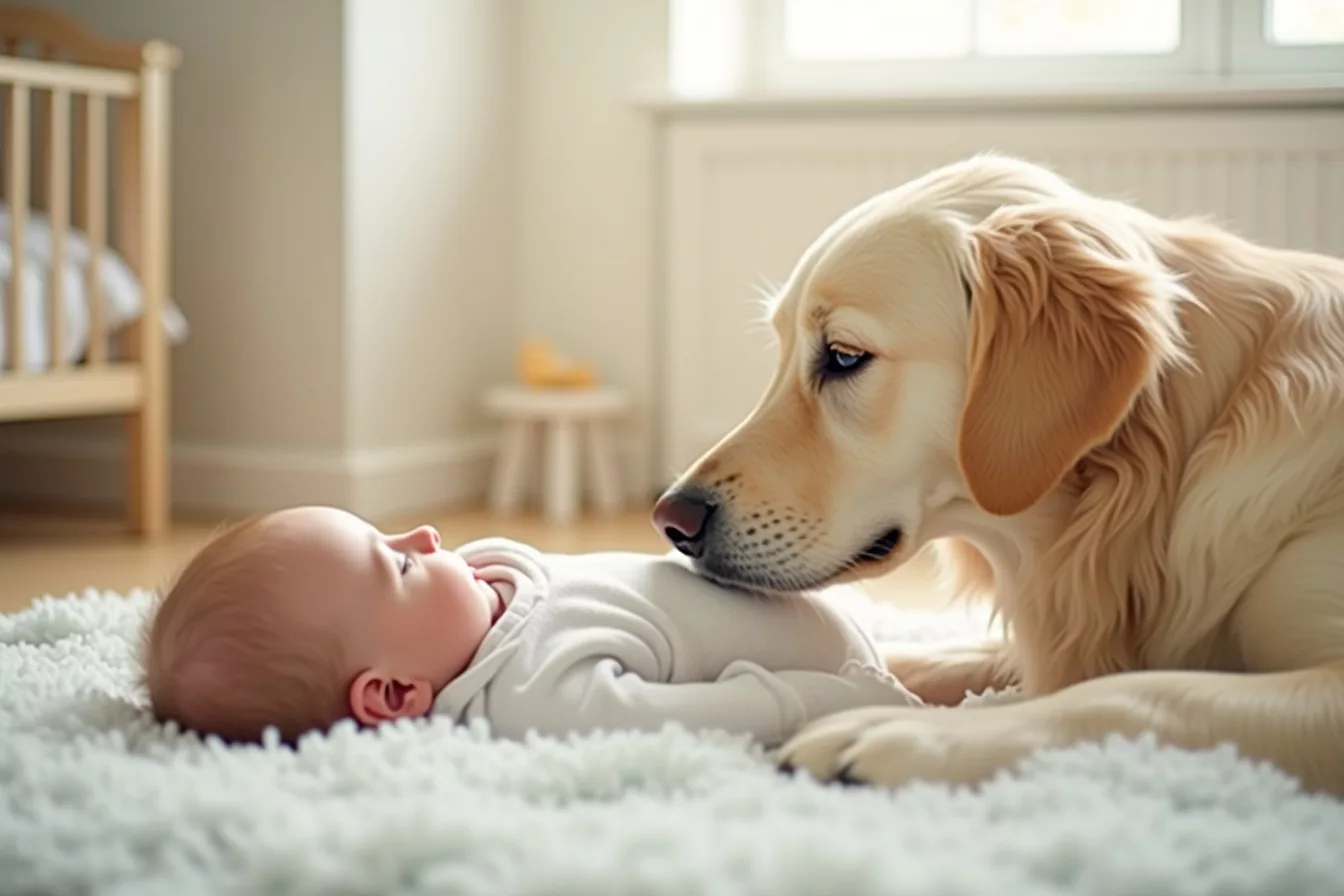

Nearly 1 in 3 UK households with a newborn report stress when introducing their baby to an existing pet—yet a groundbreaking 2025 study from the Royal Veterinary College reveals that proper preparation eliminates this anxiety for 87% of families. In this article you’ll discover a step-by-step method that keeps both your baby and pet safe, happy, and bonded. Best of all: the most crucial step happens before your baby even arrives home.
📊 Key Figures 2026
- 87% of pets adapt without behavioural problems: When owners follow a structured introduction plan before baby arrives (Royal Veterinary College, 2025)
- 73% of dog owners skip pre-baby preparation: Yet those who don’t are 4x more likely to report tension between pet and child (PDSA Pet Report, 2025)
Sources: Royal Veterinary College, PDSA, 2025–2026
Why Pre-Baby Training Changes Everything
Your pet doesn’t understand what a baby is. To them, a new human arriving suddenly—with strange sounds, smells, and unpredictable movements—can feel like an invasion of their territory. This is why the magic happens before your little one arrives home.
Start your introduction plan 6–8 weeks before your due date. This gives your dog or cat time to adjust to new routines, sounds, and scents without the real baby present. Experts at the British Veterinary Association recommend this period as the critical window for success.
✅ Expert Tip
Record baby sounds (crying, babbling, toys) and play them softly during your pet’s calm moments—mealtimes or nap time. Gradually increase volume over 3–4 weeks. This conditions your pet to associate baby noises with positive events (treats, cuddles, play). Pair audio with a reward every single time.
Step 1: Adjust Your Pet’s Routine Now
Pets thrive on consistency. If your dog currently sleeps in your bedroom, you’ll want them settling into their own space before baby arrives—not after, when they’re already anxious.
Gradually shift feeding times, walk schedules, and sleeping areas to match what life will look like with a newborn. If the nursery will be off-limits, install a baby gate weeks in advance and reward your pet for respecting that boundary. Maya, a Golden Retriever from Manchester, learned to settle on her mat outside the nursery room over 6 weeks—so when her baby sister arrived, the change felt natural, not punishing.
Step 2: Introduce the Scent Before the Baby
Scent is how pets understand their world. Ask hospital staff to place a cloth against your newborn’s skin during labour, then bring that cloth home before you bring the baby. Let your pet sniff it freely in a low-pressure environment.
Reward calm curiosity—not obsessive sniffing. If your dog sniffs once and walks away, that’s ideal. Offer a small treat and praise. This teaches your pet: “Baby smell = good things happen.”
Step 3: The First Face-to-Face Meeting
Have your partner or a trusted family member hold the baby whilst you greet your pet first. This shows your animal that the baby is secondary to your bond—crucial for preventing jealousy.
Keep the first meeting short (5–10 minutes), calm, and in a neutral room. Your pet should approach the baby on their own terms. Never force interaction. If your cat hisses or your dog backs away, that’s okay—they’re processing. End on a positive note by taking the baby elsewhere and giving your pet a special treat or play session.
⚠️ Warning
Never leave your pet unsupervised with your baby, even if your animal seems gentle. A tail swipe, playful pounce, or accidental knock can hurt an infant. Supervise all interactions until your child is old enough to understand pet boundaries (typically 3+ years). If your pet shows signs of stress (excessive panting, hiding, loss of appetite lasting over 24 hours), contact your vet immediately.
Step 4: Build Positive Associations Over Weeks
Every time your baby feeds, cries, or plays, your pet should experience something rewarding. Give a long-lasting chew, open a puzzle feeder, or initiate a favourite game—but only when baby is present.
This rewires your pet’s brain: baby appears = joy happens. Over 4–6 weeks, this becomes automatic. Your dog won’t just tolerate the baby—they’ll anticipate their arrival with enthusiasm.
What If Your Pet Shows Jealousy or Stress?
It’s normal for pets to act out initially—increased vocalisations, accidents indoors, or clingy behaviour. Don’t punish this. Instead, increase one-on-one time with your pet during baby’s nap times. Even 15 minutes of dedicated play or a walk resets their nervous system.
If behaviour escalates (aggression, severe anxiety, refusal to eat), consult your vet or a certified animal behaviourist. The RSPCA offers free guidance on pet-baby integration for UK residents.
The Long Game: Building a Lifelong Bond
The most rewarding outcome? A pet who becomes your child’s protector and best friend. Children raised alongside pets show stronger empathy, better immune systems, and lower stress levels—a win for the whole family.
Your pet isn’t losing you to the baby. You’re expanding their pack. With patience and structure, they’ll understand this within weeks.
Bringing a newborn into a home with a beloved pet doesn’t have to be chaotic. By starting your introduction plan 6–8 weeks early, managing scent and sound, and rewarding calm behaviour, you’re setting the stage for a lifelong friendship between your child and your animal. Have you already started preparing your pet for a new arrival—or are you planning to use these steps with your next family milestone?