
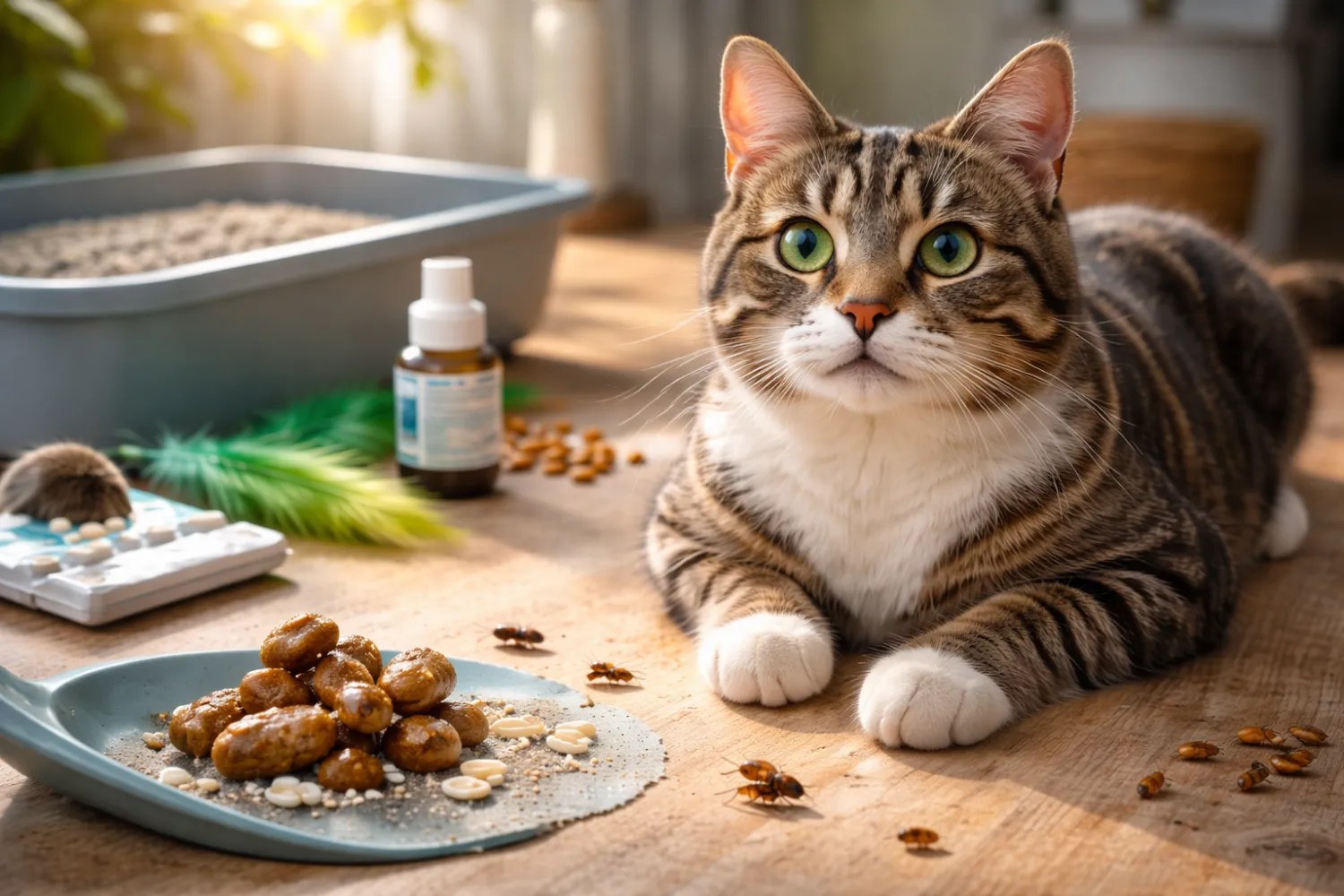

Intestinal worms are a common issue for cats in the United Kingdom—especially kittens, outdoor cats and any cat exposed to fleas or hunting. These parasites can stay “quiet” in the early stages, but they can still cause real damage to a cat’s health if they’re missed or left untreated.
As someone who’s spent more than 10 years working closely with cats and owners, I’ve seen how often early warning signs get brushed off as “just a sensitive tummy” or “a fussy phase”. In reality, the sooner you spot a possible infestation, the easier it is to treat (and the lower the risk of complications). Here’s a complete guide to recognising, understanding and managing intestinal parasites in cats.
📊 Key figures (2025)
- Kittens are highest risk: infestations are far more common in cats under 6 months
- Fleas and hunting: two of the most frequent routes into tapeworm infections
- 4 main groups: roundworms, tapeworms, heartworm (rare in UK), and protozoa
- 15–30 days: typical reproduction cycle for several common intestinal parasites
Sources: UK veterinary guidance and parasitology references, 2025
Types of Worms in Cats: What They Are and How to Recognise Them
Feline intestinal parasites fall into a few main groups, each with its own typical transmission routes and symptom patterns. Knowing the basics helps you recognise a problem early—but it never replaces a vet check and faecal testing.
In day-to-day life, owners often first notice something “off” in the litter tray or around the cat’s bottom. That visual clue can be useful—just remember it’s only a starting point.
Roundworms (nematodes)
Roundworms are among the most common intestinal parasites in cats, particularly in kittens. Adult roundworms can look like pale, spaghetti-like strands and may be visible in vomit or faeces in heavier infestations.
Hookworms are smaller (often only 1–2 cm) but can be more dangerous because they attach to the intestinal lining and feed on blood. In kittens, I’ve seen hookworms contribute to fast-developing anaemia and weakness—so prompt veterinary care matters.
✅ Sophie’s tip
Owners sometimes mistake roundworms for bits of food. A roundworm tends to hold its shape and feel firm, with a fairly uniform pale colour—whereas food debris usually breaks apart easily.
Tapeworms (cestodes)
Tapeworms are often spotted as small, rectangular segments (around 3–5 mm) that look like grains of rice. You may notice them in the litter tray, on bedding, or stuck to fur around the anus. These segments contain tapeworm eggs.
In the UK, infection most commonly happens when a cat swallows an infected flea during grooming—or through eating small prey (such as mice). In real-life cases, it’s very common to see tapeworms after a flea problem, which is why flea control is a key part of prevention.
Protozoa
Coccidia and Giardia are microscopic parasites that are especially common where many cats share space (rescues, multi-cat households, boarding settings). They can cause ongoing diarrhoea and rapid dehydration—particularly in kittens or cats with another health issue.
Because these parasites are microscopic, they won’t be seen with the naked eye. Diagnosis usually depends on a faecal test (and sometimes specific lab testing).
Symptoms and Warning Signs to Watch For
Early detection comes down to noticing small changes in your cat’s routine—especially litter tray habits, appetite and energy levels. In my experience, owners who know what’s “normal” for their cat often spot early signs a couple of weeks before symptoms become obvious.
Signs can vary depending on the parasite, your cat’s age and overall health.
Digestive symptoms
Gut upsets are often the first clue:
- Intermittent or ongoing diarrhoea: often watery with protozoa
- Repeated vomiting: sometimes with visible worms in heavier roundworm cases
- Constipation-diarrhoea pattern: can happen with mixed infections
- Blood or mucus in stools: possible sign of hookworms or more severe intestinal irritation
⚠️ When to treat as urgent
Vomiting with live worms can indicate a heavy infestation and needs prompt veterinary advice—especially in kittens. It can be a sign the parasite load has become too high for the gut to cope with.
Physical and behavioural changes
Behaviour can be a surprisingly useful clue:
- Weight loss despite a normal appetite: parasites steal nutrients
- Pot-bellied, firm tummy: especially common in kittens with roundworms
- Dull, scruffy coat: linked to poor nutrient absorption
- Excessive licking around the bottom: irritation from tapeworm segments
In practice, many parasitised cats show changes in eating behaviour too—either increased appetite (trying to “catch up”), or reduced appetite if the gut is inflamed.
Age-related differences
Kittens under 6 months tend to develop symptoms faster and more severely because their immune systems are still developing.
In senior cats (around 8+), signs can be more subtle—often fatigue, weight loss or reduced activity that may be mistaken for “just ageing”. Any persistent change is worth a vet chat.
How Cats Catch Worms: Transmission Routes and Risk Factors
Understanding how infections happen helps you prevent them more effectively. In everyday UK homes, the biggest risk factors tend to be fleas, outdoor access, hunting, and multi-cat living.
Transmission follows fairly predictable patterns depending on your cat’s lifestyle.
Direct transmission
Swallowing parasite eggs is a common route—often via contaminated litter trays, soil, or grooming paws/fur after outdoor time. Key sources include:
- Poor litter tray hygiene: a common reinfection route in multi-cat homes
- Contact with faeces: gardens, shared outdoor areas, sand/soil
- Grooming: licking paws or fur after contact with contaminated surfaces
- Shared bowls: higher risk in group settings
Indirect transmission
Many parasites rely on intermediate hosts:
- Fleas: key route for tapeworm (Dipylidium caninum)
- Prey: rodents and birds can carry larval stages
- Slugs and snails: involved in the life cycle of certain lungworms (more relevant than heartworm in the UK)
- Other insects: may mechanically carry parasite eggs
✅ Sophie’s tip
Even indoor-only cats can pick up eggs that are tracked in on shoes—especially in wet, muddy weather. A good door mat and leaving outdoor shoes by the door can help reduce what gets carried inside.
Major risk factors
Some cats are simply more likely to pick up parasites:
- Age: kittens and seniors are more vulnerable
- Immune status: chronic illness, or cats with FIV/FeLV
- Lifestyle: outdoor access, hunting, multi-cat homes
- Hygiene: dirty litter trays or high-contamination environments
- Diet: raw feeding or access to prey
Veterinary Diagnosis: Tests and What to Expect
A proper parasite diagnosis usually needs veterinary testing. Visual clues can help, but they don’t catch everything—many infestations won’t show obvious worms in the tray.
Your vet will typically combine history + clinical exam + a stool test to identify the most likely culprit and choose the right treatment.
Initial clinical exam
A veterinary check often includes:
- Abdominal palpation: checking for distension, discomfort, masses
- Rear-end check: looking for tapeworm segments
- Overall assessment: hydration, gum colour, temperature
- History: diet, outdoor access, flea control, symptoms, past worming
In many cases, the exam points the vet in the right direction—but faecal testing is what confirms it.
Faecal testing (stool analysis)
A stool test remains the go-to tool:
- Direct smear: quick microscope look
- Flotation: concentrates lighter eggs
- Sedimentation: helps find heavier eggs
- Special stains: useful for protozoa
📊 Diagnostic reliability (practical overview)
- Single sample: may miss intermittent shedding
- Multiple samples: improves detection significantly
- Flotation methods: commonly used in first-line testing
- Best timing: fresh sample is ideal for accurate results
Source: veterinary diagnostic references, 2024–2025
Extra tests (when needed)
Sometimes your vet may suggest additional testing:
- ELISA: antigen tests for Giardia and similar parasites
- PCR: genetic detection for harder-to-find infections
- Bloodwork: checking for anaemia, inflammation, eosinophilia
- Ultrasound: if severe disease or complications are suspected
Effective Parasite Treatments
Treating intestinal parasites depends on choosing the right product for the right parasite, and dosing accurately for your cat’s weight. In real-world cases, treatment “failures” are often down to under-dosing, missing repeat doses, or not tackling the source (such as fleas).
Broad-spectrum wormers
Broad-spectrum options are commonly used first (your vet will advise what’s appropriate):
- Pyrantel + praziquantel: targets common roundworms and tapeworms
- Milbemycin + praziquantel: broader spectrum; may be used depending on risk
- Selamectin: spot-on option with systemic parasite control
- Moxidectin + imidacloprid: combined parasite approach in spot-on form
✅ Sophie’s tip
If your cat is tricky with tablets, ask your vet about palatable options or spot-on formats. If you do need to use a tablet, giving it in a tiny amount of favourite wet food can help—but don’t mix it into a full meal in case they refuse and you can’t be sure they got the full dose.
Targeted treatments
Some infections need specific medication prescribed by a vet:
- Metronidazole: sometimes used for protozoa/giardia (vet-directed)
- Fenbendazole: commonly used for Giardia treatment in many protocols
- Sulfadimethoxine: used for coccidiosis in some cases
- Other antiprotozoals: your vet may choose based on test results and local guidance
Typical treatment schedules (overview)
Exact dosing and duration depend on your vet and the product, but the broad pattern often looks like this:
- Roundworms: dose, then repeat after ~2 weeks (common for breaking the life cycle)
- Tapeworms: often a single dose, plus flea treatment
- Protozoa: 5–10 day course is common (varies by medication)
- Mixed infections: may need a staged plan over several weeks
| 📋 Summary: Treatment approach (overview) | |||
|---|---|---|---|
| Parasite type | Typical medication group | Typical plan | Notes |
| Roundworms | Common wormers (vet-advised) | Dose + repeat in ~2 weeks | Repeat helps break the life cycle |
| Tapeworms | Praziquantel-based | Often single dose | Flea control is essential |
| Giardia/Protozoa | Antiprotozoals (prescription) | 5–10 day course | Re-test may be advised |
| Mixed infections | Combination plan | Staged over weeks | Follow vet schedule closely |
| 💡 Sophie’s note | |||
| Always weigh your cat before dosing—guessing leads to under-dosing or over-dosing. If your cat vomits soon after a dose, call your vet for advice rather than automatically repeating it. | |||
Prevention and Hygiene: The Most Cost-Effective Protection
Prevention is almost always easier (and cheaper) than treating a heavy infestation or complications. A good plan typically combines routine parasite control, litter tray hygiene, and managing exposure risks like fleas and hunting.
Preventive worming
Worming schedules in the UK are usually tailored to lifestyle:
- Kittens: frequent early worming as advised by your vet (very common due to early exposure)
- Indoor-only cats: often 2–4 times per year depending on risk
- Outdoor cats: typically more frequent worming (especially if they hunt)
- Hunting cats: may need monthly parasite control in higher-risk periods
✅ Sophie’s tip
A simple way to stay consistent is to set reminders around seasonal change in the UK (March, June, September, December). It’s easy to remember and helps many owners stay on track—especially when life gets busy.
Home hygiene basics
Good environmental hygiene reduces reinfection risk:
- Litter trays: scoop daily; deep-clean weekly with hot water and pet-safe disinfectant
- Bowls: wash with hot water regularly
- Bedding: wash at 60°C where the fabric allows
- Vacuuming: frequent vacuuming helps reduce flea eggs/larvae in the home
Vector control: fleas and prey
External parasite control supports internal parasite prevention:
- Flea treatment: consistent, vet-advised products year-round (UK homes can have fleas even in winter)
- Prey management: reduce hunting opportunities where possible; remove prey promptly
- New cat quarantine: isolate and check newcomers before full mixing
- Routine stool checks: your vet may recommend periodic testing, especially in multi-cat homes
⚠️ Important
“Natural wormers” (such as diatomaceous earth or essential oils) don’t have reliable evidence for treating intestinal worms in cats—and some can be unsafe. If you suspect parasites, speak to your vet so you can use an effective, cat-safe treatment.
Potential Complications and Emergencies
Untreated infestations can become serious, especially in kittens and vulnerable cats. Heavy parasite loads may lead to dehydration, malnutrition, anaemia—and in rare cases, intestinal blockage. If your cat seems unwell, don’t wait it out.
Intestinal blockage
Blockage from a mass of worms is most likely in kittens with heavy roundworm burdens. Warning signs include:
- Repeated vomiting: sometimes with worms present
- No stools: for 24–48 hours
- Swollen, painful belly: firm to touch
- Severe lethargy: weakness and dehydration
Severe anaemia
Blood-feeding parasites (like hookworms) can cause significant blood loss. Red flags include:
- Pale gums: white or yellowish mucous membranes
- Weakness: struggling to move normally
- Rapid heartbeat: especially at rest
- Low body temperature: feeling unusually cold
📊 When it’s urgent
- Very pale gums: possible critical anaemia
- Ongoing vomiting/diarrhoea: dehydration risk rises quickly in cats
- Rapid weight loss: especially dangerous in kittens
- Marked lethargy: your cat isn’t acting “like themselves”
Sources: feline veterinary emergency guidance, 2025
Poor growth and malnutrition
In growing kittens, parasites can disrupt normal development:
- Weight: stalled or falling weight gain
- Growth: smaller than expected for age
- Immunity: more frequent secondary infections
- Behaviour: reduced play, less curiosity, more sleep
Worming Kittens: A More Intensive Plan
Kittens need a tailored approach because they’re more vulnerable and can be exposed very early. Many kittens pick up worms from their environment and, depending on the parasite, may be affected soon after birth—so early, vet-guided worming is a standard part of kitten care.
Early exposure and the role of mum
Early infestation can happen because:
- Shared environment: contaminated bedding or litter areas
- Close contact: grooming and shared sleeping spaces
- Fleas: can quickly bring tapeworm risk into the picture
Early worming schedule (UK-style overview)
Exact timing and product choice should come from your vet, but a common approach is:
- Start early: worm kittens from a young age (often from 2–3 weeks, vet-guided)
- Repeat regularly: frequent treatments through the early weeks to break life cycles
- Treat mum too: where appropriate, to reduce reinfection pressure
- Consider stool testing: particularly if diarrhoea persists or a litter is struggling
✅ Sophie’s tip
With very small kittens, your vet may recommend a liquid wormer for accurate dosing. The biggest practical win is weighing kittens regularly—tiny changes in weight matter for safe dosing.
Monitoring after treatment
After worming, keep a close eye on:
- Daily weights: for a week after treatment in small kittens
- Stools: consistency and any visible parasites
- Appetite and energy: kittens should stay curious and active
- Temperature and warmth: kittens can chill quickly if unwell
When to Contact a Vet Urgently
Some situations need urgent veterinary help—don’t wait for things to “settle”. Kittens and frail cats can deteriorate quickly with parasites due to dehydration, anaemia or gut complications.
Major red flags
Seek urgent veterinary advice (same day, or sooner) if you see:
- Vomiting with live worms: possible heavy infestation
- Profuse bloody diarrhoea: dehydration risk rises quickly
- Severe lethargy: your cat can’t/doesn’t want to move
- Very pale gums: possible critical anaemia
- Seizures: rare, but an emergency
Higher-risk situations
These contexts can make parasite illness more dangerous:
- Kittens under 8 weeks: can crash quickly
- Immunocompromised cats: FIV/FeLV, chronic illness, steroid use
- Pregnancy: both queen and kittens need vet-guided care
- Recent surgery: higher complication risk if unwell
⚠️ Important
If a kitten fails to gain weight for 48 hours despite normal feeding, treat it as urgent and call your vet. In small kittens, this can be an early warning sign before rapid deterioration.
How to prep for the appointment
To help your vet make a faster diagnosis:
- Fresh stool sample: ideally under 2 hours old (or ask your practice how they prefer it stored)
- Clear timeline: when symptoms started and how they’ve changed
- Health record: vaccines, past worming, flea treatment used
- Photos/videos: useful if symptoms come and go
Managing intestinal parasites in cats is all about combining early recognition, the right treatment, and consistent prevention. With today’s veterinary treatments, most infestations are straightforward to clear—especially when you act early.
Key takeaways:
- Regular monitoring: watch stools, appetite and behaviour
- Professional diagnosis: faecal testing is the most reliable route
- Targeted treatment: choose a wormer based on the likely parasite (vet-guided)
- Tailored prevention: match worming frequency to your cat’s lifestyle
- Know the red flags: seek urgent help for severe symptoms
If you suspect your cat may have worms or protozoa, speak to your vet—especially if your cat is young, elderly or unwell. Early treatment helps prevent complications, and prevention is a small investment compared to the cost (and stress) of treating advanced illness.
Your attention at home, combined with your vet’s expertise, is the best protection you can give your cat.