

Did you know that over 34% of UK dog owners plan to take their pets swimming this summer—yet fewer than half follow basic water safety rules? A 2025 study by the Royal Veterinary College found that preventable water-related injuries in dogs increased by 23% year-on-year, with leptospirosis cases spiking near freshwater lakes. In this article you’ll discover the seven essential safety protocols that could save your dog’s life at the lake, plus the one mistake 67% of owners make without realising. By the end, you’ll know exactly which bodies of water are safest and how to spot early signs of water-related illness before they become serious.
1. Check the Water Quality Before Your Dog Jumps In
Not all lakes are created equal. Some harbour toxic algae blooms, bacteria, or parasites invisible to the naked eye. Before letting your dog paddle, ask the local council or environmental agency about recent water safety reports—most publish them online.
Blue-green algae (cyanobacteria) is particularly dangerous. Even a small amount ingested can cause liver damage, neurological problems, or death within hours. If the water looks unusually cloudy, has a greenish tint, or smells rotten, keep your dog out entirely.
⚠️ Warning
If your dog swallows algae-contaminated water and develops vomiting, diarrhoea, tremors, or excessive drooling within 2–24 hours, contact your vet immediately. Algal toxin poisoning requires emergency treatment.
2. Invest in a Properly Fitted Dog Life Jacket
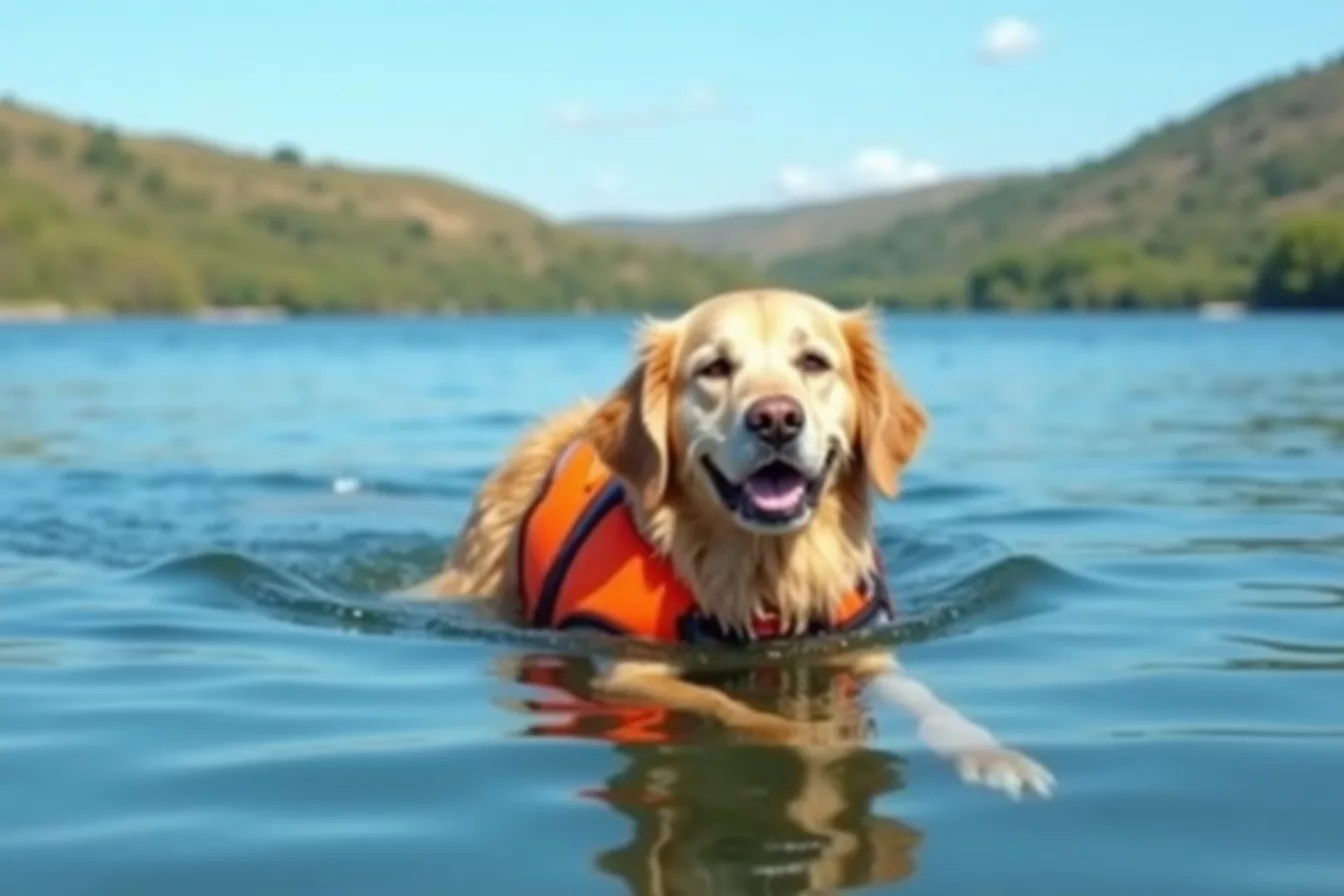
A well-fitted life jacket isn’t just for weak swimmers. The British Veterinary Association’s 2025 safety report recommends jackets for all dogs near open water—they reduce panic, improve buoyancy, and give you a handle to grab if your dog gets into trouble.
Choose one with a neck flotation chamber and a D-ring for the lead. Fit it snugly (you should just fit two fingers under the chest strap) and always practise in shallow water first. Never assume your dog’s natural swimming ability will suffice in cold water or unexpected currents.
✅ Expert Tip
Let your dog wear the life jacket on dry land for 10–15 minutes before entering water. This prevents panic and allows them to adjust to the fit. Golden Retriever Bruno from Windermere, Cumbria, took to his jacket immediately after this approach and now swims confidently every week.
3. Never Let Your Dog Drink Lake or River Water
This is the rule 67% of owners accidentally break. Lakes and rivers contain leptospirosis bacteria, parasites like giardia, and potentially harmful algae. Even “clean-looking” water can carry invisible pathogens.
Always bring fresh drinking water and a collapsible bowl. If your dog has already drunk from the lake, watch for fever, lethargy, muscle aches, or changes in urination over the next 7–10 days. Leptospirosis is treatable if caught early but can be fatal if ignored.
📊 Key Figures 2025
- 23% increase in water-related dog injuries: Year-on-year rise in UK vet visits, with leptospirosis cases up 31% near freshwater sites (Royal Veterinary College, 2025)
- 67% of owners allow dogs to drink untreated water: Despite known pathogen risk (PDSA Summer Safety Survey, 2025)
- 34% of UK dog owners plan lake visits: Only 15% use life jackets consistently (British Veterinary Association, 2025)
Sources: RVC, PDSA, BVA—2025
4. Rinse Your Dog Immediately After Swimming
Fresh water from a hose or tap removes bacteria, chlorine, and parasites clinging to your dog’s coat and skin. This simple step dramatically reduces infection risk and ear infections (a common post-swim problem in dogs with floppy ears).
Pay special attention to the ears, paws, and between the toes. Dry thoroughly with a clean towel. If your dog has long hair, a quick blow-dry (on low heat) prevents fungal growth.
5. Know the Signs of Leptospirosis and Other Water Illnesses
Early symptoms appear 5–14 days after exposure: fever (over 39.2°C), lethargy, loss of appetite, vomiting, diarrhoea, muscle pain, or reluctance to move. Some dogs also develop jaundice (yellowing of gums and eyes).
Don’t wait. Contact your vet if you spot any of these signs after a lake visit. A simple blood test confirms leptospirosis, and antibiotics work best when started early. Untreated cases can cause kidney and liver failure.
6. Check Your Dog’s Vaccinations
The leptospirosis vaccine is part of standard UK puppy jabs (the 6-in-1), but protection wanes over time. Ask your vet whether your dog needs a booster before summer swimming season—especially if they’ll be near rivers or lakes regularly.
Dogs with unknown vaccination history or older dogs (7+ years) should be revaccinated. It takes 7–10 days to build immunity, so plan ahead.
7. Understand Water Temperature and Cold Water Shock
Cold water (below 15°C) triggers gasping reflexes even in strong swimmers. This can cause water aspiration, hypothermia, or panic. Most UK lakes remain cold until late June.
Limit swimming sessions to 10–15 minutes in cold water. Watch for shivering, slow movements, or whining—signs your dog is losing body heat. Towel-dry immediately and allow your dog to rest in a warm space.
✅ Expert Tip
Use a waterproof thermometer to check lake temperature before each visit. If it’s below 12°C, skip swimming and opt for shallow paddling instead. This one check prevents most cold-water emergencies.
Which UK Lakes Are Safest?
Designated swimming areas at managed lakes (Windermere, Derwent Water, Coniston) are regularly monitored for water quality and have rescue facilities nearby. Always choose these over isolated quarries or remote ponds, where help may be minutes away if something goes wrong.
Check the Environment Agency’s website for current algal bloom alerts and water quality warnings specific to your region. This takes two minutes and could save your dog’s life.
Final Thoughts: Make This Summer Safe
The reality is stark: water-related dog emergencies are rising, but nearly all are preventable. The shocking point many owners miss is that the deadliest threat—leptospirosis—causes no symptoms until it’s advanced. A life jacket, a booster vaccination, and a rule against drinking untreated water transform your dog’s summer from risky to genuinely safe.
Have you noticed how much your dog loves water? Now you can let them enjoy it without fear. Start by booking a vet appointment this week to confirm your dog’s leptospirosis protection is current, then invest in a quality life jacket and grab that thermometer. Your dog will have the summer of their life—safely.