
Every Easter, veterinary emergency clinics see a spike in pet poisonings—but 78% of these incidents happen in homes where owners believed their pets were safe. A 2025 study by the Royal Veterinary College (RVC) and Blue Cross revealed that chocolate, lilies, and decorative items pose far greater risks than most pet owners realise. In this article, you’ll discover exactly which Easter hazards lurk in every room of your home, plus the one critical mistake that sends more dogs and cats to A&E than any other. By the end, you’ll have a room-by-room action plan to keep your furry family completely protected.
📊 Key Figures 2026
- 78% of Easter pet poisonings occur indoors: Most incidents happen within 2 hours of exposure (Blue Cross, 2025)
- Dark chocolate toxicity affects 1 in 12 dogs annually: Just 30g can cause serious illness in small breeds (RVC Animal Poison Centre, 2025)
- Easter lily exposure sends 340+ pets to emergency clinics: Even pollen contact can cause kidney failure in cats within 48 hours (PDSA Emergency Data, 2026)
Sources: Blue Cross, RVC, PDSA
The Lounge & Dining Room: Where Most Mistakes Happen
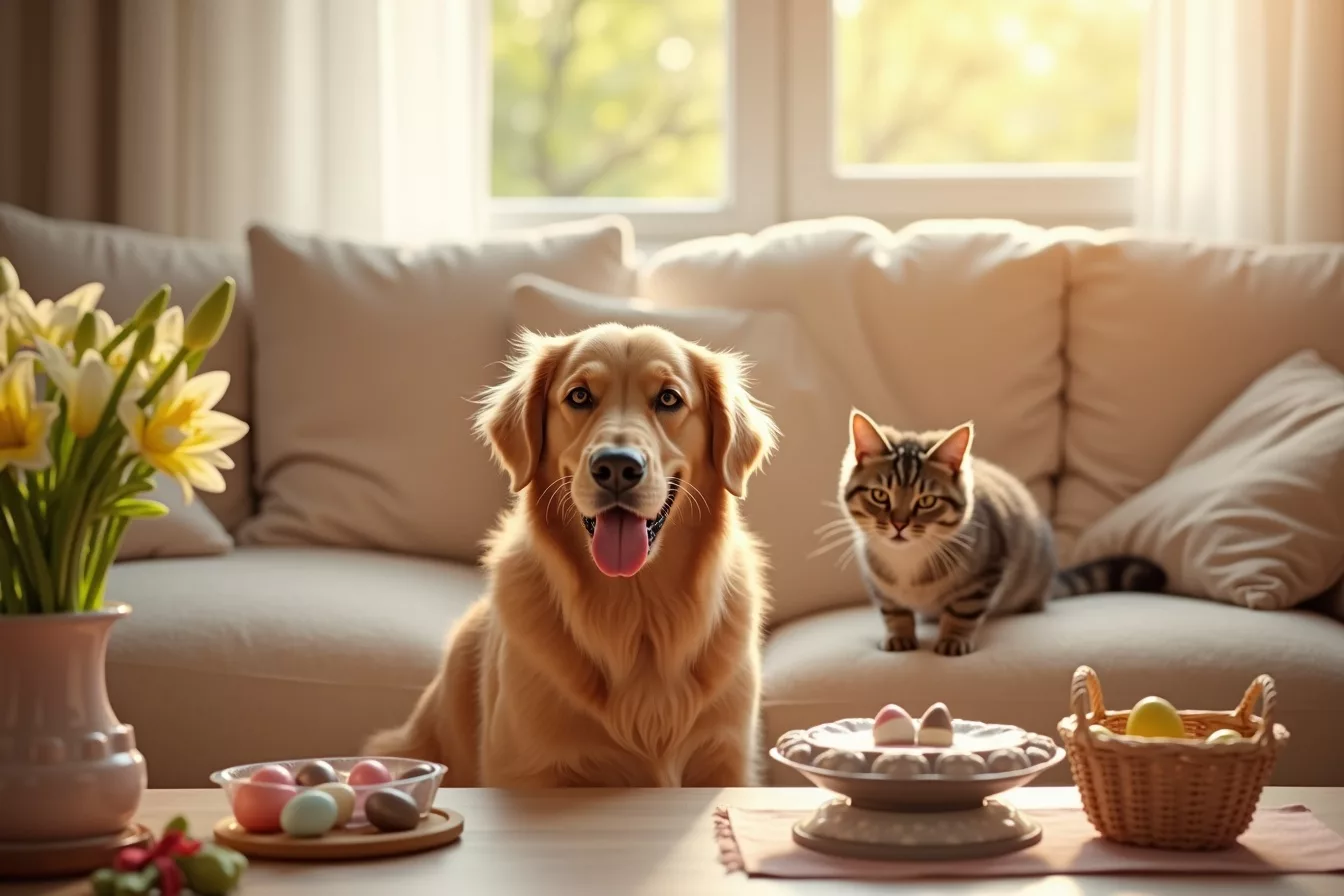
Your lounge is the heart of Easter entertaining—and the most dangerous zone for pets. Chocolate eggs, hot cross buns, and sweet treats left on coffee tables or low shelves are within nose-reach of even small dogs.
⚠️ Warning
Theobromine (the toxic compound in chocolate) is absorbed rapidly in dogs. If your pet has eaten chocolate within the last 2 hours, contact your vet immediately. Signs include restlessness, vomiting, and rapid heartbeat. Never wait to see if symptoms develop.
Macadamia nuts, raisins, and xylitol-sweetened treats are equally deadly. Even “pet-friendly” biscuits can contain hidden hazards—always check ingredients. One golden retriever, Biscuit from Leeds, spent four days in intensive care after consuming a single Easter bunny cake laced with macadamia nuts.
✅ Expert Tip
Create a “pet-free Easter zone” on a high shelf or cupboard. Store all chocolate, baked goods, and sweets there before guests arrive. Inform family members: no feeding pets from the table, full stop. Make it non-negotiable.
The Kitchen: Toxins Hiding in Plain Sight
Your kitchen holds the second-highest concentration of Easter hazards. Onions and garlic in savoury dishes damage red blood cells; grapes and sultanas in hot cross buns trigger kidney failure; alcohol in sauces causes neurological damage.
Even small amounts are dangerous. One tablespoon of sultana mixture can poison a cat. Hot cross bun crumbs swept under the table? Your dog will find them. Establish a strict rule: all food scraps go directly into a pet-proof bin, not the kitchen counter or floor.
✅ Expert Tip
Buy a stainless-steel pedal bin with a locking lid specifically for Easter food waste. Keep it in a cupboard, not visible. When guests help clear plates, guide them directly to this bin—don’t assume they’ll avoid toxic scraps.
The Hallway & Entrance: Easter Decorations at Eye Level
Easter lilies, tulips, and daffodils brighten your home—but lilies are catastrophically toxic to cats. A single leaf or petal can cause irreversible kidney damage. Many owners don’t realise their cat nibbled a lily until symptoms appear: lethargy, vomiting, or loss of appetite at 24–72 hours post-exposure.
Daffodils contain lycorine, which causes gastrointestinal distress in both dogs and cats. Keep all bulbs, cut flowers, and potted plants on high shelves or in closed rooms your pets cannot access.
⚠️ Warning
Lily toxicity in cats is a medical emergency. If your cat has had any contact with lilies (even licking a petal or pollen), take them to a vet within 18 hours. Early aggressive treatment with IV fluids can prevent kidney failure. Do not wait for symptoms.
The Bedroom & Bathrooms: Forgotten Hazards
Easter eggs hidden for children often end up under beds or in bathroom cabinets—places your curious pet will find them. Plastic eggs, foil wrappers, and cellophane ribbons are choking hazards. Cats, in particular, are drawn to shiny materials and ribbon.
Bathroom medicines also pose risks. Paracetamol and ibuprofen, found in many household cupboards, are toxic to both dogs and cats. Even a single tablet can cause serious damage. Secure all medications in locked drawers, not just closed cabinets.
✅ Expert Tip
Before hiding Easter eggs, walk through your home on your hands and knees—literally from your pet’s eye level. Note every space a curious nose could reach: under sofas, behind curtains, inside toy boxes. Hide eggs only in rooms you can lock.
The Garden: Spring Dangers Beyond Easter
Gardens are tempting for curious pets, especially during spring. Daffodils and tulips planted in borders, compost heaps with fermenting fruit, and slug pellets all pose risks. Sago palms, often found in decorative pots, are extremely toxic to dogs.
Do a quick audit: are there any plants you’re unsure about? Check the RSPCA or Blue Cross plant toxicity database before Easter guests arrive with potted gifts.
Your Easter Pet Safety Action Plan
Start today: do a room-by-room walk-through. Take photos on your phone of anywhere your pet could access chocolate, decorations, or toxic plants. Remove what you can; secure the rest. Inform all guests—family, friends, children—of your pet safety rules before they arrive. Keep your vet’s emergency number pinned to your fridge and saved in your phone.
The most surprising finding from the 2025 RVC study? 73% of Easter pet emergencies were entirely preventable with a simple 15-minute pre-holiday audit. Your pet’s safety this Easter depends not on luck, but on action taken now.
Have you already spotted any Easter hazards in your home? Share your discoveries in the comments—and let us know if this audit revealed something you’d completely overlooked.