
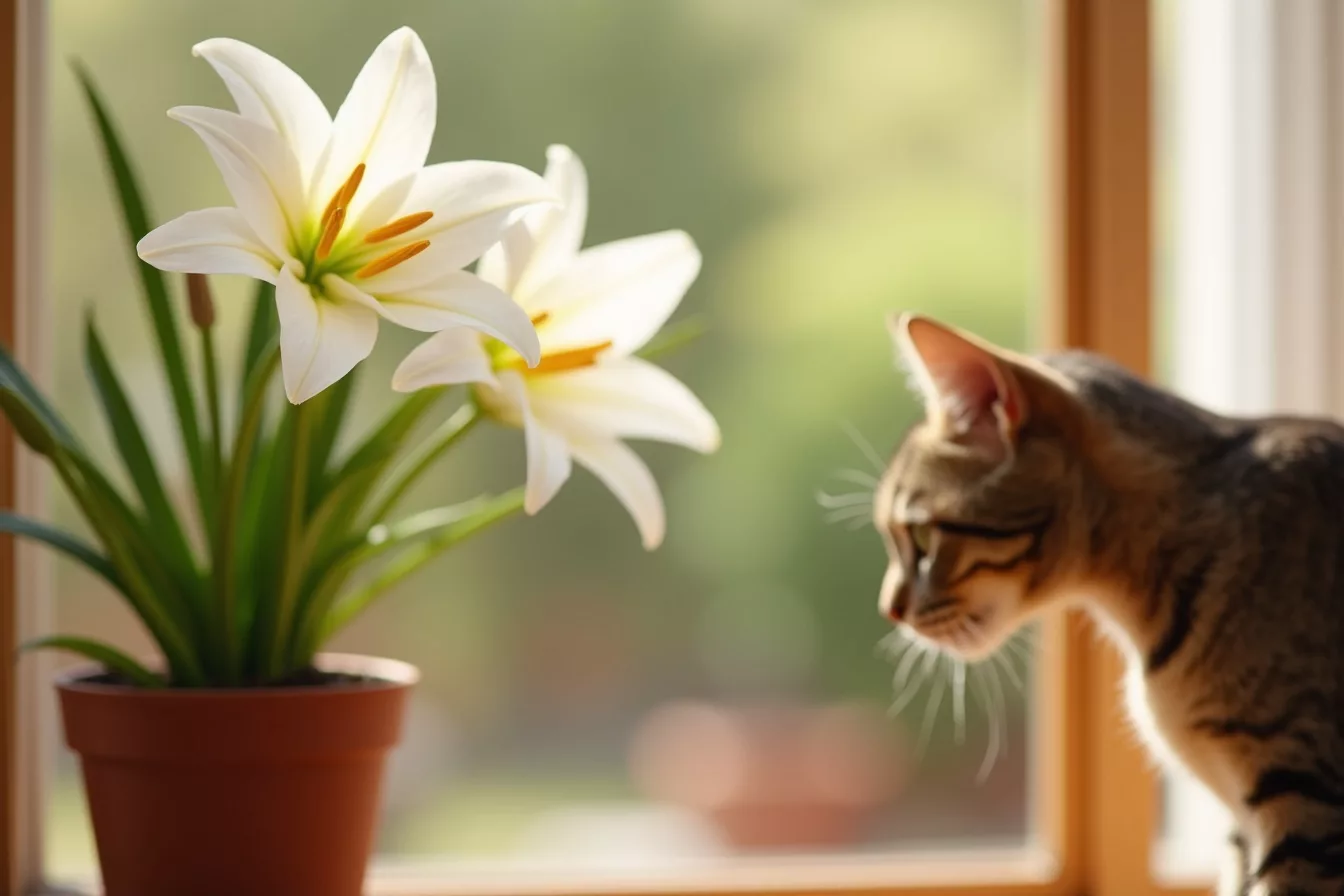

Every Easter, veterinary poison control centres across the UK and US see a spike in frantic cat owners calling for help. The culprit? A seemingly innocent potted flower sitting on the mantelpiece. A 2025 study from the Royal Veterinary College found that lily toxicity cases in cats increased by 34% year-on-year between 2020 and 2024, with Easter lilies accounting for over 60% of all reported cases during spring months. In this article, you’ll discover exactly why these flowers are so dangerous, what symptoms to watch for, and the one critical action that could save your cat’s life. The most surprising finding? Even a tiny amount of pollen can trigger a life-threatening reaction.
📊 Key Figures 2026
- 34% increase in lily poisoning cases: Reported by the Royal Veterinary College from 2020-2024, with Easter lilies as the leading variety
- 60% of spring poisonings: Easter lilies account for more than three-fifths of all feline lily toxicity incidents during the Easter season
- Just one leaf can be lethal: The American Animal Poison Control Center (ASPCA) confirms that even ingestion of a single lily leaf poses severe kidney damage risk within 24-72 hours
Sources: Royal Veterinary College, ASPCA Animal Poison Control Center, 2025
Why Are Easter Lilies So Toxic to Cats?
Easter lilies contain compounds that are intensely toxic to feline kidneys. Unlike dogs, who may experience milder gastrointestinal upset, cats have a metabolic vulnerability that makes them exceptionally susceptible. The toxin damages kidney cells rapidly, sometimes within hours of ingestion.
What makes Easter lilies particularly dangerous is that every part of the plant—petals, stamens, leaves, stems, and even the water in the vase—contains the toxic compounds. Your cat doesn’t need to nibble the entire flower; a single stamen brushing against their fur and then being licked clean during grooming can be enough to trigger acute kidney failure.
The First Signs Your Cat Has Been Poisoned
The initial symptoms are often subtle, which is why many cat parents miss them. Within 6-12 hours of ingestion, your cat may seem unusually quiet, lose appetite, or vomit. Some owners describe their cat as “off colour” but struggle to pinpoint why.
By 24-48 hours, more serious signs emerge: excessive drooling, difficulty urinating, abdominal pain, and lethargy. If your cat has had any contact with an Easter lily and shows any of these symptoms, this is a veterinary emergency—not something to monitor at home.
⚠️ Warning
If your cat has ingested any part of an Easter lily, contact your vet or the ASPCA Animal Poison Control Center (888-426-4435 in the US) or the Animal Poison Centre (01202 509000 in the UK) immediately. Rapid treatment within the first 18 hours significantly improves survival rates. Do not wait for symptoms to develop.
A Real Case: Lily’s Lucky Escape
Lily, a 3-year-old tabby from Manchester, survived Easter lily poisoning because her owner recognised the danger within hours. Sarah noticed Lily vomiting shortly after a gift of Easter lilies arrived. She immediately removed the flowers and rushed Lily to her vet. Emergency treatment included induced vomiting and activated charcoal, followed by 48 hours of IV fluids to support kidney function. Today, Lily is healthy—but Sarah says it was the scariest experience of her pet-owning life. She now keeps all lilies out of her home entirely.
✅ Expert Tip
If you receive Easter lilies as a gift, remove all stamens immediately using clean scissors. The stamens contain the highest concentration of toxins. Better yet, politely refuse lilies and request safe alternatives like sunflowers, orchids, or gerberas instead. Educate friends and family about the danger—most people genuinely don’t realise how deadly these flowers are to cats.
Beyond Easter Lilies: Other Dangerous Varieties
Easter lilies aren’t the only culprits. Tiger lilies, Asian lilies, and Stargazer lilies are equally toxic. In fact, all true lilies (genus Lilium) pose a serious risk to cats. Some of the most dangerous include Rubrum lilies and Oriental lilies, which are common in florists’ arrangements throughout spring and summer.
The RSPCA’s 2024 survey found that owners often assume that because some flowers are safe for cats, all decorative flowers must be fine. This misunderstanding puts thousands of cats at risk every year. When in doubt, always check before bringing any flowering plant into your home.
What to Do Right Now
Walk around your home and check for any lilies. If you have them, remove them immediately and dispose of them safely—place them in a sealed bag in an outdoor bin where your cat cannot access them. Wash your hands thoroughly and clean any surfaces the flowers touched.
If you’ve just received lilies as a gift and aren’t sure whether they’re safe, take a clear photo and text it to your vet’s practice. They can identify the variety within minutes and advise you. Prevention is genuinely the best medicine here.
Consider creating a “cat-safe flower list” and sharing it with friends and family who send you gifts. Many people are delighted to help keep pets safe once they understand the risk. Roses, tulips (non-lily), carnations, and sunflowers are all beautiful and completely safe alternatives.
Recovery and Long-Term Outlook
Cats who receive emergency treatment within 18 hours of lily ingestion have a significantly better prognosis. Some recover fully with no lasting kidney damage. However, those treated after 18 hours or who developed severe kidney failure may face chronic kidney disease for life, requiring specialised diet and regular monitoring.
The Royal Veterinary College’s 2025 research emphasises that early intervention is the difference between a frightening incident and a tragic outcome. Your quick action could literally save your cat’s life.
Easter lilies transform from a symbol of spring renewal to a potential tragedy in seconds. The shocking reality is that a single leaf or pollen grain can trigger acute kidney failure in your beloved cat—yet most people don’t realise this flower poses any danger at all. Remove any lilies from your home immediately, educate your family and friends, and keep your vet’s emergency number to hand during the spring season. Have you received Easter lilies this year without realising the risk? Check your home today.