
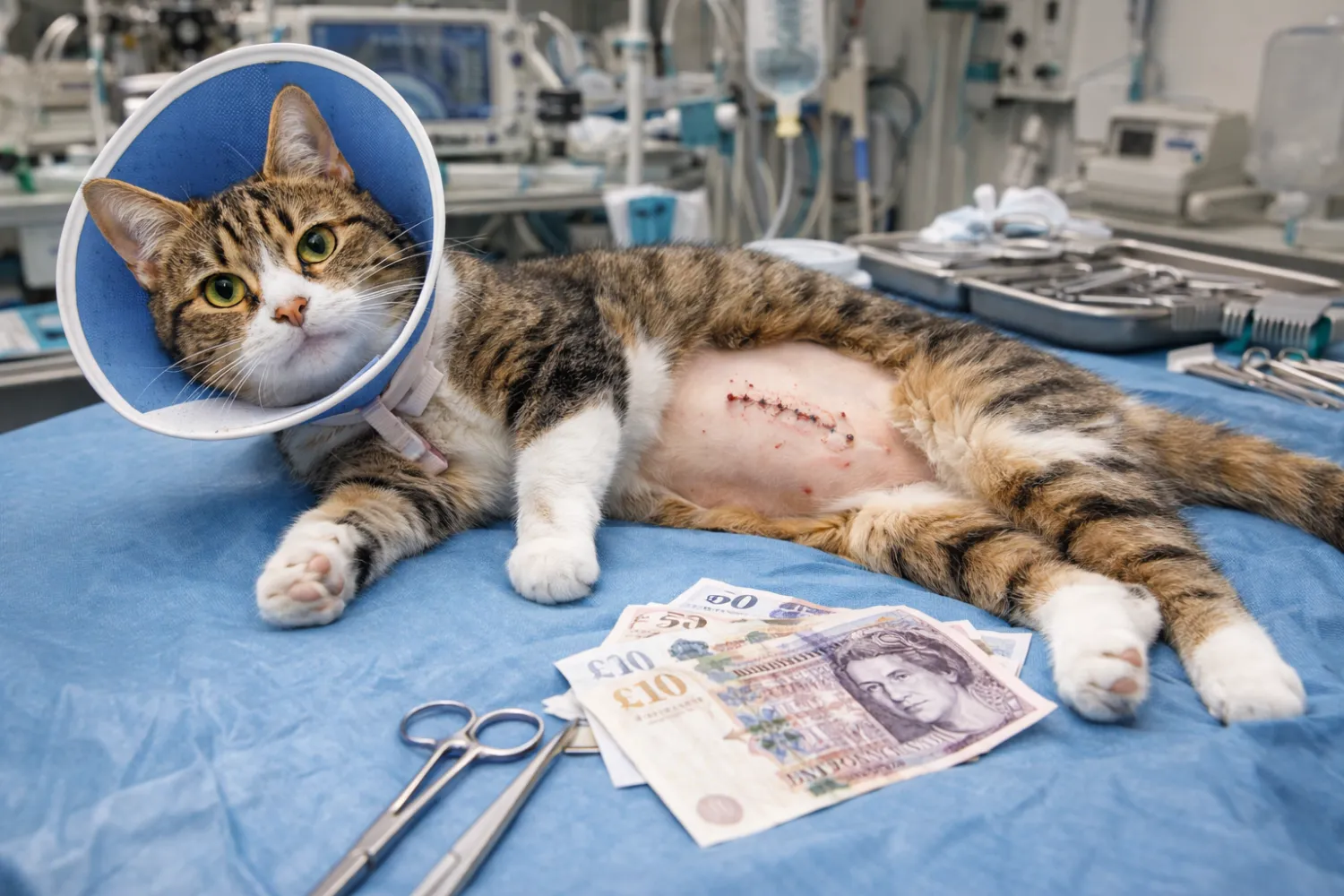

Cat spaying costs in the UK range from £150 to £450, with significant variations depending on your location, veterinary practice, and cat’s individual circumstances. According to the People’s Dispensary for Sick Animals (PDSA) 2025 Pet Health Report, surgical neutering represents one of the most important preventive healthcare investments for cat owners.
With an estimated 10.9 million domestic cats in UK households, understanding these costs helps owners make informed decisions about their pet’s reproductive health.
📊 Key UK Cat Spaying Statistics 2025
- Average cost: £250-£350 for routine spaying
- Regional variation: London practices charge 30-40% more than northern England
- Success rate: 99.7% with modern anaesthetic protocols
- Recovery time: 7-10 days for complete healing
Sources: RCVS Practice Standards Scheme, BVA Surgical Guidelines, 2025
The cost of spaying varies considerably across different regions and practice types, making it essential to understand the factors that influence pricing. Many cat owners are surprised by the range of options available, from charity clinics to specialist surgical centres.
Let’s examine the detailed breakdown of spaying costs to help you budget appropriately for this crucial procedure.
Complete Breakdown of Cat Spaying Costs Across UK Regions
Regional price differences significantly impact the total cost of cat spaying, with London and South East practices typically charging premium rates. According to the Royal College of Veterinary Surgeons’ 2025 Practice Survey, these variations reflect differences in property costs, staff wages, and local market conditions.
London and South East England
London veterinary practices charge between £300-£450 for routine cat spaying, reflecting the capital’s higher operational costs. Central London practices often include additional services such as pre-operative blood testing and extended monitoring periods.
Home Counties practices (Surrey, Hertfordshire, Essex) typically charge £280-£380, offering similar standards with slightly lower overheads.
Northern England and Scotland
Northern regions offer more affordable options, with practices in Manchester, Leeds, and Newcastle charging £180-£280 for standard spaying procedures. Scottish practices follow similar pricing patterns, though remote Highland areas may charge premium rates due to limited veterinary availability.
These regions often provide excellent value whilst maintaining high surgical standards.
Wales and South West England
Welsh practices charge between £200-£320, with rural areas offering competitive rates compared to Cardiff and Swansea. Devon and Cornwall practices range from £220-£350, with some coastal areas reflecting seasonal tourism pricing.
Many practices in these regions offer payment plans to support local communities.
| 📋 Regional Cat Spaying Costs 2025 | |
|---|---|
| Region | Price Range |
| London Central | £350-£450 |
| South East | £280-£380 |
| Northern England | £180-£280 |
| Scotland | £190-£290 |
| Wales | £200-£320 |
| South West | £220-£350 |
| 💡 Expert Tip | |
| Ring multiple practices within a 20-mile radius for quotes. I’ve found price differences of £80-£120 between practices in the same town, with identical surgical standards. | |
These regional variations highlight the importance of comparing local options, as quality doesn’t always correlate with price. Understanding what influences these costs helps owners make informed decisions about their cat’s care.
The breakdown of actual procedure costs reveals where your money goes during the spaying process.
What’s Included in Your Cat Spaying Fee
Modern cat spaying involves comprehensive care that extends far beyond the surgical procedure itself. According to the British Veterinary Association’s 2025 Surgical Standards, best practice includes multiple components that justify the overall cost.
Understanding these elements helps owners appreciate the value provided by professional veterinary services.
Pre-Operative Assessment and Preparation
Every spaying begins with thorough pre-operative examination including weight assessment, heart rate monitoring, and general health evaluation. Many practices now include pre-anaesthetic blood testing (£35-£65) to identify potential complications before surgery.
Intravenous catheter placement and fluid therapy support (£25-£45) ensure optimal surgical conditions and faster recovery.
Anaesthetic and Pain Management
Modern veterinary anaesthesia uses sophisticated monitoring equipment including pulse oximetry, capnography, and ECG monitoring. The anaesthetic protocol typically costs £45-£85 of the total fee, reflecting the complexity of safe surgical anaesthesia.
Multi-modal pain relief includes pre-operative analgesics, local anaesthetic blocks, and post-operative pain medication for home use.
Surgical Procedure and Materials
The ovariohysterectomy procedure requires sterile surgical instruments, disposable materials, and skilled surgical time. Modern techniques use absorbable sutures that eliminate the need for suture removal, adding convenience for owners.
Surgical time averages 30-45 minutes for routine cases, with experienced surgeons ensuring minimal tissue trauma and faster healing.
✅ Expert Tip
Ask specifically about post-operative pain medication included in your quote. Some practices charge extra for take-home analgesics (£15-£25), whilst others include them in the surgical fee. Adequate pain relief significantly improves recovery outcomes.
Post-Operative Monitoring and Care
Post-surgical monitoring includes recovery room supervision, vital sign monitoring, and comfort assessment until full consciousness returns. Many practices include a post-operative check 2-3 days after surgery to assess healing progress.
Some practices offer 24-hour telephone support for post-operative concerns, providing valuable peace of mind for worried owners.
These comprehensive services justify the investment in professional veterinary care, though budget-conscious owners have several money-saving options available.
Exploring different types of veterinary providers reveals significant cost variations whilst maintaining appropriate care standards.
Money-Saving Options: Charity Clinics vs Private Practices
Veterinary charity organisations provide substantially reduced-cost spaying for eligible cat owners, making this essential procedure accessible regardless of financial circumstances. The PDSA, Blue Cross, and RSPCA operate nationwide networks offering subsidised veterinary care.
Understanding eligibility criteria and comparing options helps owners access appropriate care within their budget.
PDSA PetAid Program
The PDSA operates 48 Pet Hospitals across the UK, offering free spaying for cats belonging to owners receiving qualifying benefits. Eligible benefits include Universal Credit, Pension Credit, Housing Benefit, and Council Tax Support.
Non-benefit holders with household incomes below £28,000 annually may qualify for reduced-cost treatment at £65-£95 for spaying procedures.
Blue Cross and RSPCA Services
Blue Cross operates 12 animal hospitals providing subsidised spaying from £80-£150 for qualifying owners. Their means-testing considers household size, location, and total income rather than benefit receipt alone.
RSPCA Greater Manchester Animal Hospital and other regional centres offer similar schemes, with online eligibility checkers simplifying the application process.
Local Animal Welfare Charities
Regional charities often provide the most competitive rates for cat spaying, with some offering procedures from £120-£180. Cats Protection branches frequently subsidise spaying through their neutering voucher schemes.
These vouchers can be used at participating local practices, combining charity funding with convenient local access.
⚠️ Important Consideration
Charity clinic waiting lists can extend 6-12 weeks during peak periods. Book early if planning to use these services, especially before the spring breeding season when demand increases significantly.
Veterinary Training Schools
Veterinary universities occasionally offer supervised student surgeries at reduced rates (£100-£200), though availability is limited and procedures take longer than private practice. The Royal Veterinary College and University of Liverpool provide such programs seasonally.
These procedures maintain high standards under qualified supervision, though owners must be comfortable with the educational environment.
Whilst these budget options provide excellent value, certain circumstances may justify premium pricing for specialised care.
Age-related factors and health complications can significantly influence both surgical complexity and associated costs.
Age-Related Factors That Affect Spaying Costs
Cat age significantly influences spaying complexity, anaesthetic risk, and overall cost, with optimal timing balancing health benefits against surgical considerations. According to the Journal of Feline Medicine and Surgery 2025 guidelines, early spaying (4-6 months) offers the safest and most cost-effective approach.
However, many cats require spaying at various life stages, each presenting unique considerations.
Kitten Spaying (4-6 months)
Paediatric spaying represents the gold standard for timing, offering faster recovery, reduced surgical complications, and standard pricing (£150-£350). Young cats have minimal abdominal fat, making surgical access straightforward and reducing anaesthetic time.
Recovery typically completes within 5-7 days, with minimal post-operative complications compared to older cats.
Adult Cat Spaying (1-5 years)
Healthy adult cats undergo routine spaying at standard rates, though pregnant cats incur additional charges of £50-£120 due to increased surgical complexity. Late-pregnancy spaying requires careful consideration of ethical and practical factors.
Adult cats in heat (oestrus) may require delayed surgery, as increased blood supply and tissue friability elevate surgical risks.
Senior Cat Considerations (6+ years)
Senior cats often require pre-operative blood panels (£45-£85) and extended monitoring, potentially increasing costs by £80-£150. Age-related conditions such as heart murmurs or kidney disease require specialised anaesthetic protocols.
However, spaying senior cats prevents pyometra, a life-threatening uterine infection that affects 25% of unspayed females over 6 years old.
📊 Age-Related Surgical Statistics
- Kitten complications: Less than 1% experience significant post-operative issues
- Adult success rate: 99.5% complete recovery within 10 days
- Senior considerations: 8% require extended monitoring due to age-related factors
- Pregnancy surcharge: Additional £50-£120 depending on gestation stage
Sources: British Small Animal Veterinary Association Surgery Guidelines, 2025
Emergency Spaying Situations
Pyometra or other emergency conditions requiring immediate spaying can cost £400-£800, reflecting out-of-hours fees, intensive monitoring, and surgical complexity. These procedures often require overnight hospitalisation and intensive fluid therapy.
Emergency situations emphasise the cost-effectiveness of routine preventive spaying during optimal timing windows.
Timing considerations directly impact the overall investment required, though additional services may further influence final costs.
Understanding optional extras helps owners make informed decisions about comprehensive care packages.
Additional Services and Hidden Costs to Consider
Many veterinary practices offer additional services that can significantly impact the total cost of cat spaying, from essential extras to optional upgrades. According to the RCVS Practice Standards Scheme 2025 audit, transparency in pricing helps owners make informed decisions about their cat’s care.
Understanding these potential additions prevents unexpected bills and allows proper budgeting.
Pre-Operative Testing Options
Blood chemistry panels (£45-£85) identify underlying health conditions that could complicate anaesthesia, particularly important for cats over 5 years or those with unclear health histories. FIV/FeLV testing (£35-£55) may be recommended for outdoor cats with unknown vaccination status.
Whilst not always essential for young healthy cats, these tests provide valuable peace of mind and identify potential complications before they become serious.
Advanced Anaesthetic Monitoring
Some practices offer enhanced monitoring packages including capnography and blood pressure monitoring (£25-£45 additional) beyond standard pulse oximetry and ECG. Intravenous fluid therapy (£20-£40) supports blood pressure and kidney function during surgery.
These additions particularly benefit senior cats or those with pre-existing health conditions.
Post-Operative Care Packages
Extended recovery monitoring (£30-£60) allows cats to remain hospitalised until fully alert and mobile, reducing owner stress about post-anaesthetic care. Some practices include post-operative telephone consultations and priority appointment access for concerns.
Protective clothing alternatives to traditional Elizabethan collars (£15-£25) improve comfort during the healing period.
✅ Expert Tip
Request an itemised quote before booking surgery. I’ve seen final bills increase by 40-60% due to ‘routine’ additions not discussed beforehand. Essential additions for senior cats include blood testing and IV fluids, whilst young healthy cats rarely require extras.
Microchipping and Vaccination Services
Many practices offer microchipping during anaesthesia (£15-£25) as a convenient additional service, taking advantage of the cat’s unconscious state for stress-free placement. Vaccination updates (£45-£75) can be administered simultaneously in some cases.
These combinations provide excellent value whilst minimising stress from multiple veterinary visits.
Potential Complication Costs
Whilst complications remain rare (less than 2% of routine cases), understanding potential additional costs helps with financial planning. Post-operative infections requiring antibiotic treatment add £40-£80 to the total cost.
Serious complications requiring revision surgery or extended hospitalisation can increase costs by £200-£500, though comprehensive pet insurance typically covers these unexpected expenses.
These additional considerations highlight the importance of discussing all options with your veterinary practice during initial consultations.
Proper preparation and understanding of total potential costs ensures owners can provide optimal care without financial surprises.
Insurance Coverage and Payment Options for Cat Spaying
Pet insurance policies vary significantly in their coverage of routine procedures like spaying, with most standard policies excluding preventive treatments whilst covering complications arising from surgery. Understanding these nuances helps owners plan financially for their cat’s reproductive health needs.
Several payment strategies can make this essential procedure more manageable for household budgets.
Pet Insurance Policy Variations
Most UK pet insurance providers, including Petplan, Animal Friends, and Direct Line, exclude routine spaying from standard accident and illness policies. However, some comprehensive policies include ‘preventive care’ add-ons covering routine procedures for an additional £8-£15 monthly premium.
Complications arising from spaying surgery, such as post-operative infections or anaesthetic reactions, are typically covered under standard policies once the procedure is complete.
Veterinary Payment Plans
Many veterinary practices partner with companies like VetPay or Payl8r to offer interest-free payment plans spreading costs over 6-12 months. These schemes typically require credit checks and charge no interest if payments are maintained according to schedule.
Practice-specific payment plans may offer more flexible terms for established clients, particularly useful for unexpected complications or additional treatments.
Veterinary Care Plans
Monthly healthcare plans (£15-£35 monthly) offered by many practices include routine procedures like spaying alongside vaccinations, health checks, and preventive treatments. These plans provide budget predictability whilst ensuring comprehensive care.
Plans typically require 12-month commitments but offer significant savings compared to individual procedure pricing.
📊 Financial Planning Options
- Insurance with preventive cover: Additional £8-£15/month for routine procedures
- Veterinary payment plans: 0% APR over 6-12 months (subject to credit approval)
- Practice healthcare plans: £15-£35/month including spaying and routine care
- Charity assistance: Means-tested support reducing costs by 60-90%
Sources: Association of British Insurers, RCVS Practice Survey, 2025
Credit Card and Personal Loan Considerations
Specialist veterinary credit cards offer promotional 0% periods for veterinary expenses, though standard rates apply after promotional periods end. Personal loans may provide lower long-term rates for owners requiring extended payment terms.
Some practices accept PayPal Credit or Klarna for smaller procedures, offering alternative short-term financing options.
These financial options ensure that cost doesn’t prevent essential veterinary care, supporting responsible pet ownership across all income levels.
Regional differences in pricing structures reflect varying local economic conditions and operational costs.
When to Book Your Cat’s Spaying Appointment
Optimal timing for cat spaying balances health benefits, surgical safety, and practical considerations including practice availability and seasonal factors. According to the International Society for Feline Medicine 2025 guidelines, early spaying between 4-6 months provides maximum health benefits whilst minimising surgical complexity.
Strategic booking ensures access to preferred practitioners whilst avoiding peak demand periods.
Seasonal Booking Considerations
Spring months (March-May) represent peak demand for spaying procedures as owners prepare for breeding season and holiday periods. Booking 6-8 weeks in advance during these months ensures appointment availability at preferred practices.
Autumn scheduling (September-November) often provides more flexible appointment times and occasional promotional pricing from practices building winter schedules.
Physiological Timing Factors
Spaying before the first heat cycle (typically 5-6 months) provides optimal mammary cancer protection and eliminates unwanted pregnancy risks. Cats showing early signs of sexual maturity (increased vocalisation, restless behaviour) should be scheduled immediately.
Avoiding surgery during active heat cycles reduces surgical complexity and associated risks, with most veterinarians recommending 2-3 week delays until hormone levels normalise.
Practice-Specific Scheduling
Popular veterinary practices may have 6-12 week waiting lists for routine procedures, particularly in urban areas with limited veterinary availability. Emergency practices typically charge premium rates (20-30% additional) for urgent non-emergency procedures.
Some practices offer cancellation lists for earlier appointments, particularly useful during peak demand periods.
✅ Expert Tip
Book your kitten’s spaying appointment at their first vaccination visit (8-10 weeks old) for procedures at 4-5 months. This ensures optimal timing whilst securing appointments at preferred practices before high-demand periods.
Understanding these timing considerations helps owners provide optimal care whilst managing practical and financial constraints.
The investment in professional spaying provides lifelong health benefits that far outweigh the initial costs.
Cat spaying costs in the UK range from £150-£450 depending on location, practice type, and individual circumstances. Regional variations significantly impact pricing, with London practices charging premium rates whilst northern regions offer more affordable options.
Charity organisations provide excellent alternatives for eligible owners, with costs ranging from free to £150 for qualifying households.
Key factors influencing total costs include your cat’s age, additional services required, and choice of veterinary provider. Young cats (4-6 months) undergo the safest and most cost-effective procedures, whilst senior cats may require additional monitoring and testing.