
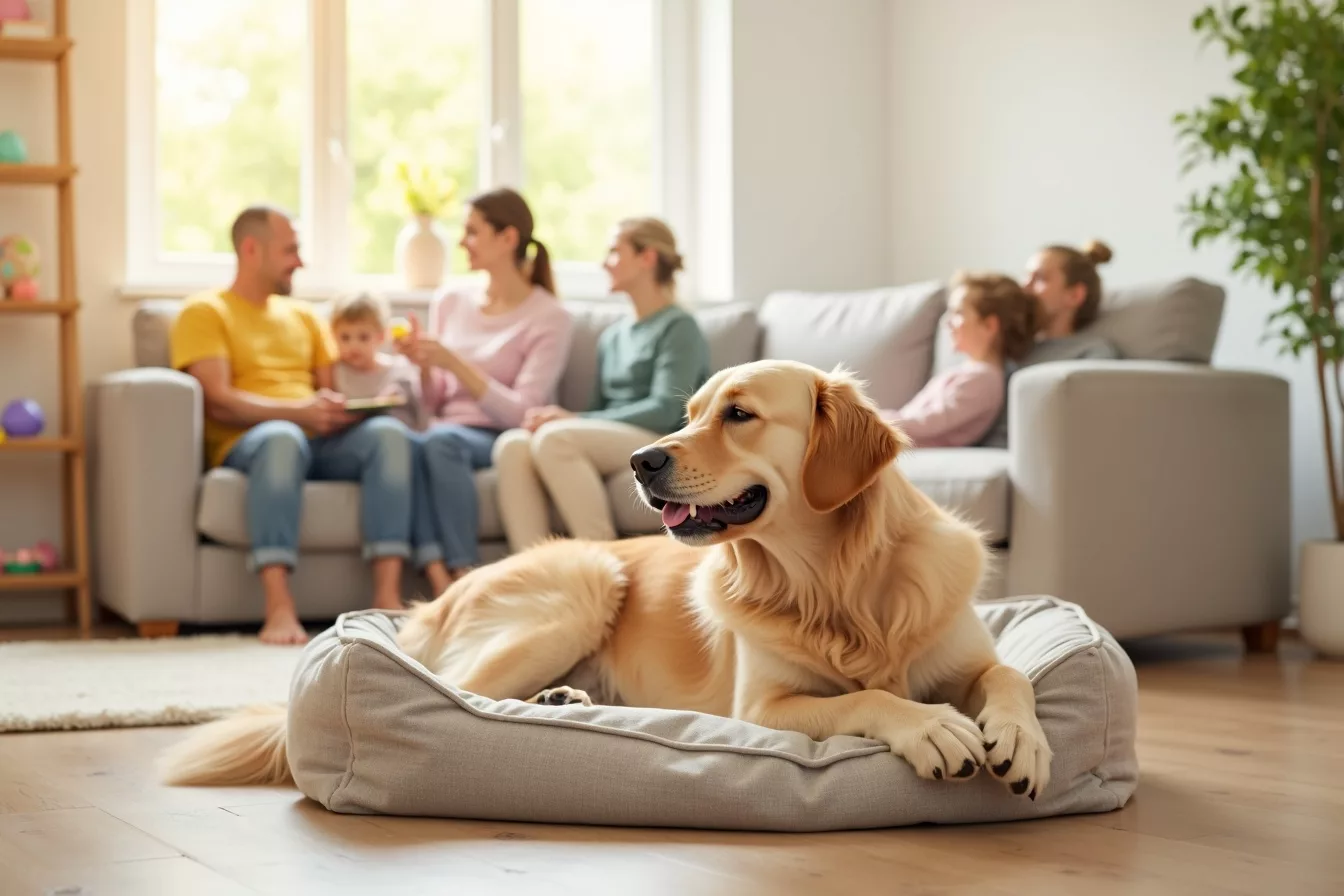

Did you know that 68% of dog owners report increased anxiety in their pets during holiday gatherings? A 2025 study from the University of Bristol’s Animal Welfare and Behaviour group found that poorly managed introductions to visitors can trigger stress behaviours lasting up to 48 hours. In this article, you’ll discover proven strategies to keep your dog calm and your Easter gathering joyful—including a little-known technique that works in under five minutes.
📊 Key Figures 2025
- 68% of UK dog owners report their pets show signs of stress during holiday visits, according to the Dogs Trust 2025 Behaviour Survey
- 73% of anxious dogs display jumping, barking, or excessive greeting behaviours within the first 10 minutes of visitor arrival
Sources: Dogs Trust, University of Bristol Animal Behaviour Centre, 2025
Why Easter Visitors Overwhelm Your Dog
Your dog doesn’t understand that Aunt Margaret visits once a year—all they perceive is sudden chaos: unfamiliar voices, movement, and scents flooding their safe space. During Easter, when multiple guests arrive together, this sensory overload escalates quickly.
Dogs communicate excitement and anxiety in remarkably similar ways. A wagging tail doesn’t always mean happiness; it can signal uncertainty. When visitors arrive unannounced and greet your dog enthusiastically, your pup may interpret this as a threat or a demand for immediate interaction.
✅ Expert Tip: The “Pre-Arrival Protocol”
Create a calm arrival space 30 minutes before guests arrive. Close curtains, play soft dog-specific music (try Through a Dog’s Ear on Spotify), and give your dog a long-lasting chew or puzzle toy. When visitors knock, your dog will already be in a settled mindset rather than jolted into high alert. Bella, a Cocker Spaniel from Bristol, went from jumping on every guest to calmly staying on her bed within just three Easter gatherings using this method.
The Five-Minute Introduction Technique
Rather than letting visitors bombard your dog, control the introduction. When your first guest arrives, ask them to completely ignore your dog for the first two minutes. No eye contact, no talking, no reaching down.
This feels counterintuitive—but it works brilliantly. Your dog will approach the visitor out of curiosity rather than responding to attention-seeking behaviour. After two minutes, your guest can offer a single hand for sniffing (not petting yet). Only after your dog has inspected the scent should gentle stroking begin.
Repeat this with each guest. Yes, it takes discipline, but the difference in your dog’s behaviour is remarkable. They remain calm because they’ve initiated the interaction, not reacted to it.
⚠️ Warning
If your dog shows signs of resource guarding (stiffening around toys or food), removes themselves to hide, or displays whale eye (whites of the eyes visible), contact a certified behaviourist before hosting large gatherings. These are stress indicators that may escalate if ignored. The RSPCA can recommend qualified professionals in your area.
Setting Up Your Home for Success
Designate a quiet room as your dog’s sanctuary. Set it up with their bed, water bowl, and a few familiar toys. If your dog becomes overwhelmed during the gathering, they can retreat without feeling trapped.
Brief your guests beforehand: “Please don’t follow Max into his safe room.” Most visitors appreciate clear boundaries and understand you’re protecting your dog’s wellbeing.
Keep the house temperature cool and ensure adequate ventilation. Anxious dogs often pant excessively, and an overheated room amplifies stress.
Managing Treat-Related Chaos
Easter means chocolate, hot cross buns, and other human treats. Dogs can smell these tempting items from across the house. Keep all treats in sealed containers in a high cupboard, away from both guests and your pup.
Instead, prepare dog-safe treats to offer your guests to give to your dog. Pre-portioned treats in small bowls mean no spontaneous overfeeding and give visitors a structured way to engage positively with your dog.
What NOT to Do
Never apologise for your dog’s behaviour or act anxious yourself. Dogs pick up on our tension and mirror it. If you’re stressed about managing your pup during the gathering, they’ll sense that apprehension and become more reactive.
Avoid punishing excitement or jumping. This creates negative associations with visitors, making future gatherings harder. Instead, reward calm behaviour with quiet praise and treats.
Don’t force interaction. Some dogs need more time to warm up than others. Introverted pups are perfectly normal, and pushing them to socialise causes lasting stress.
✅ Expert Tip: The “Greeting Ritual”
Teach your dog a specific behaviour to perform when guests arrive—sit, down, or go to their bed. Reward this ritual consistently. After three weeks of practice, your dog will automatically shift into calm mode when the doorbell rings. This redirects their impulse to jump and gives them a job that earns praise.
After the Guests Leave
Your dog may feel emotionally drained after hosting a busy Easter gathering. Plan a quiet evening: gentle walks, minimal stimulation, and early bedtime. Some dogs sleep deeply after social events—this is normal recovery, not laziness.
Monitor their behaviour over the next few days. If your dog seems withdrawn or shows changes in appetite, consult your vet to rule out stress-related illness.
The Easter gathering doesn’t have to be a stressful ordeal for your four-legged family member. By setting clear boundaries, managing introductions thoughtfully, and creating safe spaces, you’ll transform visiting season into a calm, enjoyable experience for everyone. The most surprising discovery? Your guests will actually appreciate a well-behaved dog far more than they would a chaotic one—and they’ll respect your commitment to your dog’s wellbeing. Have you noticed changes in your dog’s behaviour during busy family events? Try one of these techniques at your next gathering and let us know how your pup responds.