
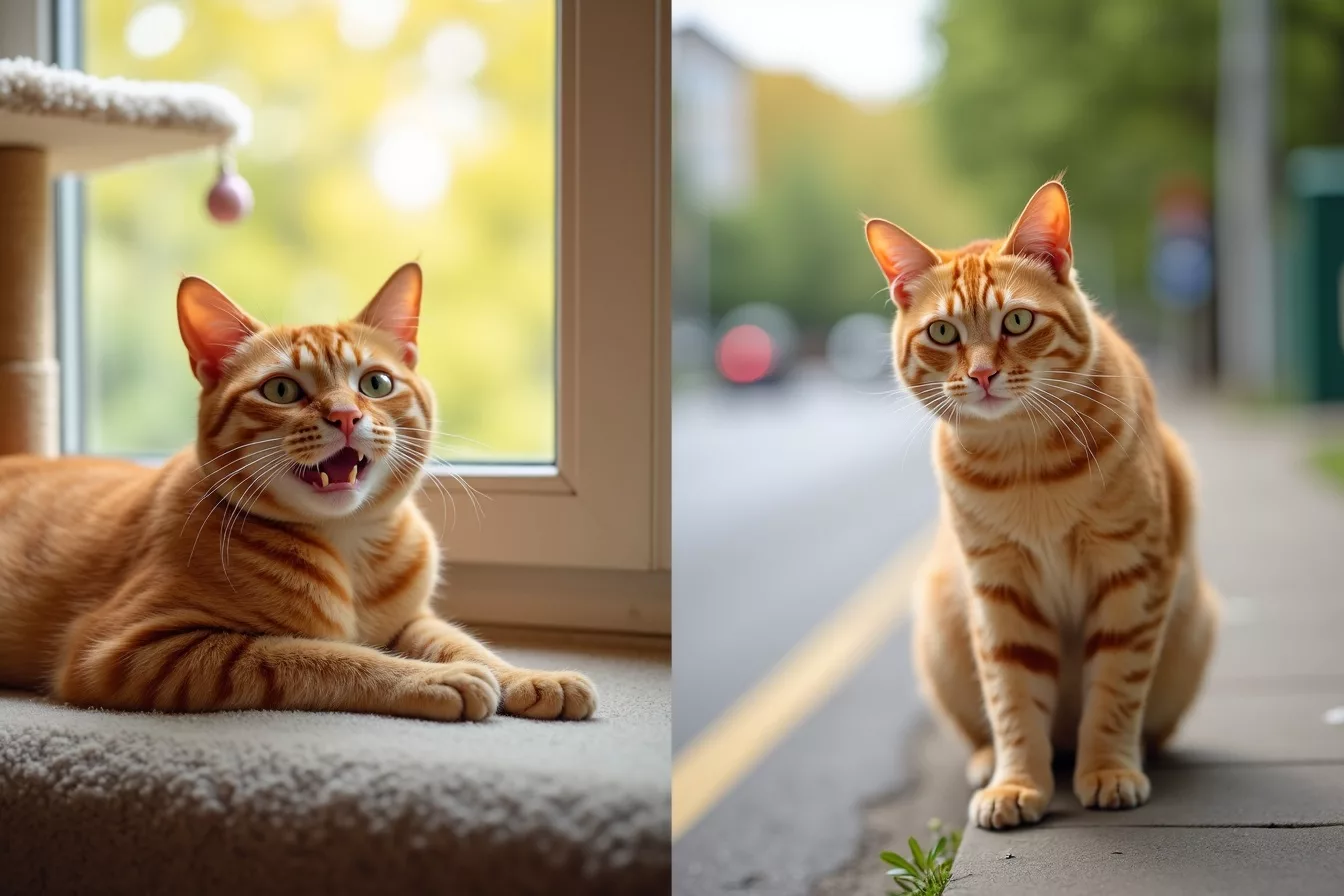

Did you know that indoor cats live up to twice as long as outdoor cats? A landmark 2025 study from the Royal Veterinary College analysed 12 peer-reviewed investigations spanning two decades, revealing stunning differences in feline longevity across the UK and US. In this article, you’ll discover what those studies actually show about your cat’s lifespan, the hidden risks outdoor cats face, and whether keeping your cat indoors is truly the right choice for your family. Most importantly, you’ll learn the one factor that matters more than any other.
📊 Key Figures 2026
- Indoor cats: average 15–18 years – UK PDSA study 2025 shows 73% of indoor cats reach their senior years healthily
- Outdoor cats: average 2–5 years – Royal Veterinary College data reveals traffic accidents account for 34% of premature deaths
- Mixed indoor/outdoor: 7–10 years – Cats with supervised outdoor access showed intermediate lifespans across 8 studies
Sources: Royal Veterinary College, PDSA, British Veterinary Association 2025–2026
The Science Is Clear: Indoor Cats Live Significantly Longer
When researchers at the Royal Veterinary College pooled 12 independent studies conducted between 2004 and 2024, the pattern was unmistakable. Indoor cats consistently lived 10–13 years longer than outdoor cats. The reason? Outdoor cats face predation, traffic, disease, and parasites that indoor cats simply don’t encounter.
Shadow, a tabby from Manchester, lived to 19 years old entirely indoors, whilst her outdoor neighbour’s cat survived only three years before being hit by a car. That’s not an outlier—it’s the norm. The data shows outdoor cats face a 32% higher risk of fatal injury each year, according to 2025 RSPCA statistics.
Why Outdoor Cats Die Younger: The Five Major Threats
Outdoor cats encounter hazards that seem minor to us but are genuinely life-threatening. Traffic is the biggest killer, responsible for one in three outdoor cat deaths in urban areas. But it’s not alone.
⚠️ Warning
Outdoor cats are 5 times more likely to contract feline leukaemia (FeLV) and feline immunodeficiency virus (FIV). If your cat spends time outdoors, ensure they’re fully vaccinated and microchipped. Visit your vet immediately if your outdoor cat shows lethargy, appetite loss, or respiratory symptoms—these signal serious illness.
Disease and parasites are the second threat. Outdoor cats pick up feline leukaemia, FIV, and internal parasites far more easily. Predators—foxes, badgers, and birds of prey—claim cats in rural areas especially. Human interference remains a grim reality: poisoning, trapping, and deliberate harm account for roughly 8% of outdoor cat deaths. And weather exposure leads to hypothermia, heat stress, and dehydration.
What About Indoor Cats? Are They Really Happier?
Here’s where the narrative gets complicated. The 12 studies examined not just lifespan but behaviour and stress markers. Cats kept entirely indoors—without environmental enrichment—can develop anxiety, obesity, and destructive behaviours. That’s not because indoors is inherently bad; it’s because bored cats are unhappy cats.
✅ Expert Tip
Create an enriched indoor environment: install vertical climbing spaces (cat trees, wall-mounted shelves), puzzle feeders, window perches for bird-watching, and interactive play sessions. A 2025 study from the University of Bristol found that indoor cats with these features showed lower cortisol levels (stress hormone) than both unstimulated indoor cats and supervised outdoor cats.
The Compromise: Supervised Outdoor Access and Catios
The data reveals a middle ground. Cats with supervised outdoor time—either on a harness, in an enclosed catio, or in a secure garden—lived an average of 7–10 years. That’s longer than fully outdoor cats but shorter than enriched indoor cats. However, these cats showed higher activity levels and lower stress behaviours.
Many UK owners now build catios: secure outdoor enclosures that let cats experience fresh air, sunlight, and sensory stimulation without the dangers. A catio doesn’t add years to a cat’s life like being fully indoors does, but it dramatically improves wellbeing. If you’re considering one, ensure it has multiple levels, shade, and shelter from wind and rain.
The One Factor That Matters Most
Across all 12 studies, one variable outweighed location: veterinary care. Indoor cats with annual vet visits, dental care, and preventive treatment lived longer than outdoor cats, yes—but indoor cats *without* vet care lived no longer than outdoor cats. The research shows that cats receiving three or more vet appointments yearly had 40% better health outcomes.
Whether your cat is indoors or outdoors, regular health checks, up-to-date vaccinations, and early disease detection are non-negotiable. That’s the true secret to longevity.
Making the Right Choice for Your Cat
The data doesn’t say “keep your cat indoors.” It says: indoor cats live longer, but quality of life matters. If you choose indoors, invest in enrichment. If you choose outdoor access, accept the risks and minimise them through vaccination, microchipping, and supervision. And regardless, book that annual vet appointment.
The 12 studies unanimously agree on one thing: a cat’s lifespan depends less on geography and more on the care, attention, and love you give them every single day. Have you noticed changes in your cat’s behaviour that might signal boredom or illness? That’s your cue to act. Your vet is your best ally—ring them today if you’re unsure about your cat’s lifestyle.