

Your cat sleeps 16 hours a day—but is she actually content, or slowly going mad with boredom? A 2025 feline behaviour study by the Royal Veterinary College found that 73% of indoor cats display recognisable signs of boredom that owners routinely overlook. The difference between a bored cat and an enriched one isn’t always obvious. In this article you’ll discover the seven subtle signals vets wish every cat owner knew, plus the one overlooked sign that changes everything. Ready to find out if your cat is desperately trying to tell you something?
📊 Key Figures 2026
- 73% of indoor cats show boredom-related behaviours monthly, per Royal Veterinary College 2025
- 42% increase in destructive behaviours linked to under-enrichment since 2023 (PDSA survey, 2025)
- Indoor cats without enrichment develop 3.5x more stress-related health issues by age 5 (University of Lincoln study, 2024)
Sources: Royal Veterinary College, PDSA, University of Lincoln
Sign 1: Excessive Grooming (But Not Overgrooming)
Your cat licks her paws and face constantly, even when already clean. This isn’t normal feline fastidiousness—it’s soothing behaviour triggered by lack of mental stimulation. When a cat has nothing engaging to focus on, repetitive grooming becomes a coping mechanism.
Luna, a 4-year-old tabby from Manchester, started obsessive face-washing that baffled her owner until her vet explained: boredom. Once Luna’s owner introduced puzzle feeders and daily interactive play, the behaviour dropped by 80% within three weeks.
Sign 2: Sudden Aggression During Petting
Your cat purrs, then suddenly bites or swats your hand. Vets call this redirected aggression—your cat has pent-up hunting energy with nowhere to channel it. A bored cat becomes a frustrated cat, and that frustration explodes without warning.
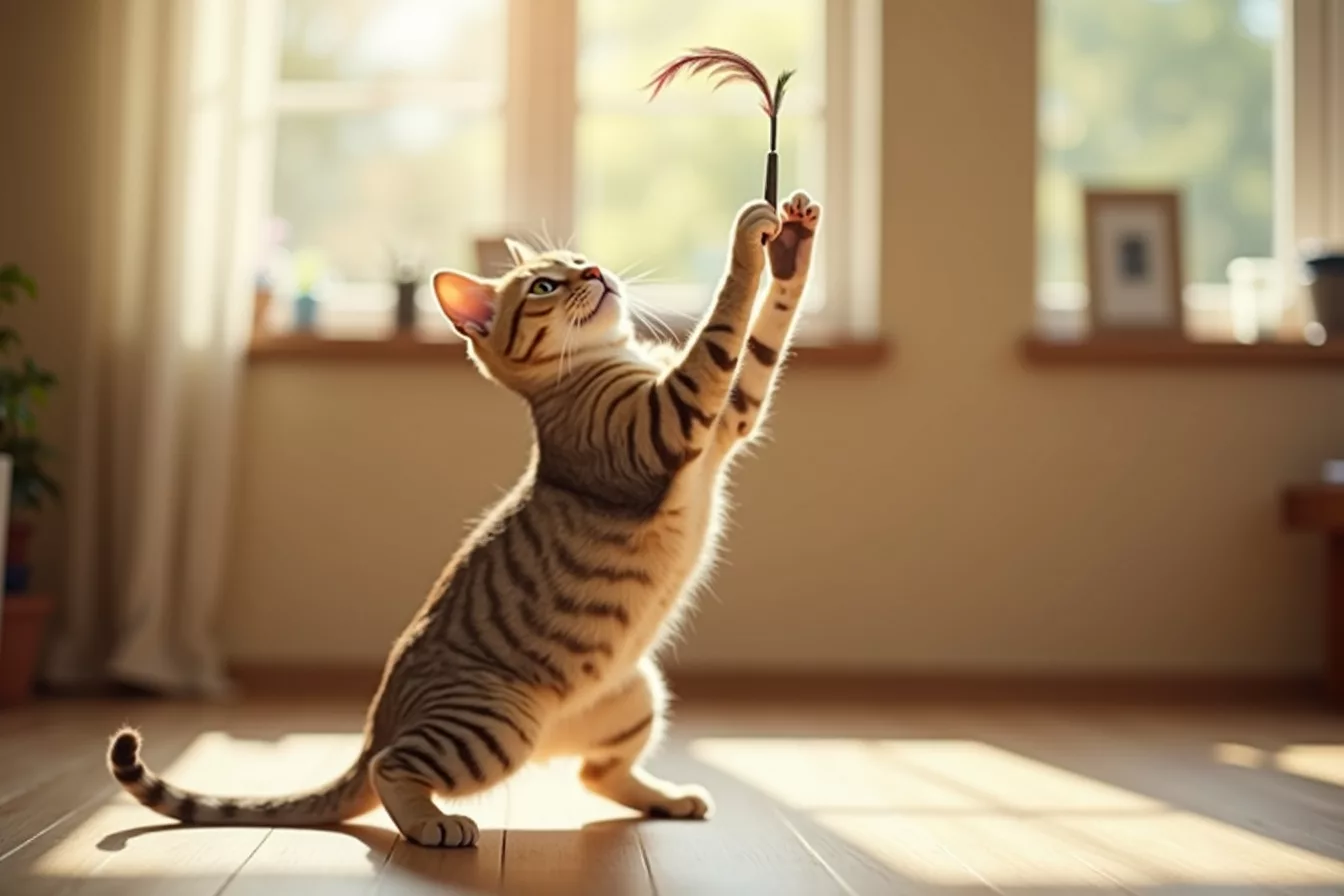
The fix: interactive play sessions mimicking prey movements (feather wands, laser toys) for 10–15 minutes twice daily. This isn’t optional enrichment—it’s essential neurological discharge.
Sign 3: Staring Out Windows or at Walls
Some owners find this cute. Vets see it differently: a cat with no indoor stimulation mentally escaping to an external world she can’t reach. Extended window-staring signals frustration, not contentment.
✅ Expert Tip
Install window perches with bird feeders visible outside. Add 2–3 indoor vertical spaces (wall shelves, cat trees) so your cat can survey her domain actively, not passively. Rotation of toys every three days combats habituation faster than constant availability.
Sign 4: Knocking Things off Surfaces
The classic “my cat is a chaos agent” behaviour is actually investigative play gone wrong. A bored cat creates stimulation by making things happen—the object falls, she watches the reaction, her brain lights up. It’s problem-solving on autopilot.
Instead of scolding, provide legal outlets: knock-proof puzzle boxes, balls in bathtubs (silent, safe to bat), or cardboard boxes with holes punched through them.
Sign 5: Excessive Vocalisations (Yowling, Not Just Meowing)
Repeated, loud yowling—especially in younger, neutered cats—is your cat calling out for engagement. This is the sign that shocks owners most: they assume it’s distress, when really it’s boredom-driven communication.
A 2025 PDSA survey found owners misidentified vocalisation-based boredom as illness 61% of the time, leading to unnecessary vet visits. Once enrichment increased, yowling decreased dramatically.
Sign 6: Sleeping Far More Than Average (Even for Cats)
Yes, cats nap constantly. But 18+ hours of sleep daily, with no active play periods, suggests learned helplessness—your cat has given up seeking stimulation because the environment provides none.
Healthy, enriched cats still nap 14–16 hours, but their remaining hours include hunting-play, exploration, and climbing. If your cat barely moves except to eat, the environment is too passive.
Sign 7: Destructive Behaviour Toward Furniture
Scratching and clawing furniture isn’t spite—it’s physical and emotional release. A bored cat shreds your sofa because she lacks designated scratching outlets and the anxiety that comes with under-stimulation demands physical expression.
⚠️ Warning
If your cat displays signs 1, 5, or 6 persistently alongside changes in appetite or litter box habits, consult your vet. Boredom and illness can overlap; rule out hyperthyroidism, diabetes, or urinary issues first (especially in cats over 8 years old).
How to Combat Boredom: Quick-Win Actions
Daily hunting play: 10–15 minutes with interactive toys twice daily. Your cat’s hunting instinct remains hardwired regardless of indoor status.
Vertical territory: Cats don’t just need floor space; they crave height. Wall-mounted shelves, tall cat trees, and perches aren’t luxuries—they’re neurological necessities.
Puzzle feeders: Slow feeding time and engage her problem-solving brain. Even 30% of meals through puzzles yields measurable behavioural improvement.
Rotate toys weekly: Novel objects trigger exploration. Storing toys and reintroducing them prevents habituation faster than constant availability.
Window access with live interest: Bird feeders, squirrel-attracting plants, or even a small indoor water feature provide passive but engaging stimulation.
Why Vets Stress This Matters Now
The RVC’s 2025 research highlighted that enrichment-deprived cats develop stress-related illnesses—urinary tract disease, inflammatory bowel syndrome, obesity—at significantly higher rates. Preventing boredom isn’t entertainment; it’s preventative medicine.
Indoor cats have lifespans 40% longer than outdoor cats, but only if their environment matches their psychological needs. A 20-year-old cat spending years under-stimulated suffers unnecessarily.
The Surprising Takeaway
Most owners assume their cat is content because she’s quiet and safe indoors. But contentment requires active engagement, not just absence of danger. Your cat’s boredom might be silent, but it’s real—and fixable.
Have you noticed any of these seven signs in your own cat? Start with just two enrichment changes this week—perhaps a puzzle feeder and 15 minutes of interactive play. Your cat’s next purr might be the most genuine one yet.