
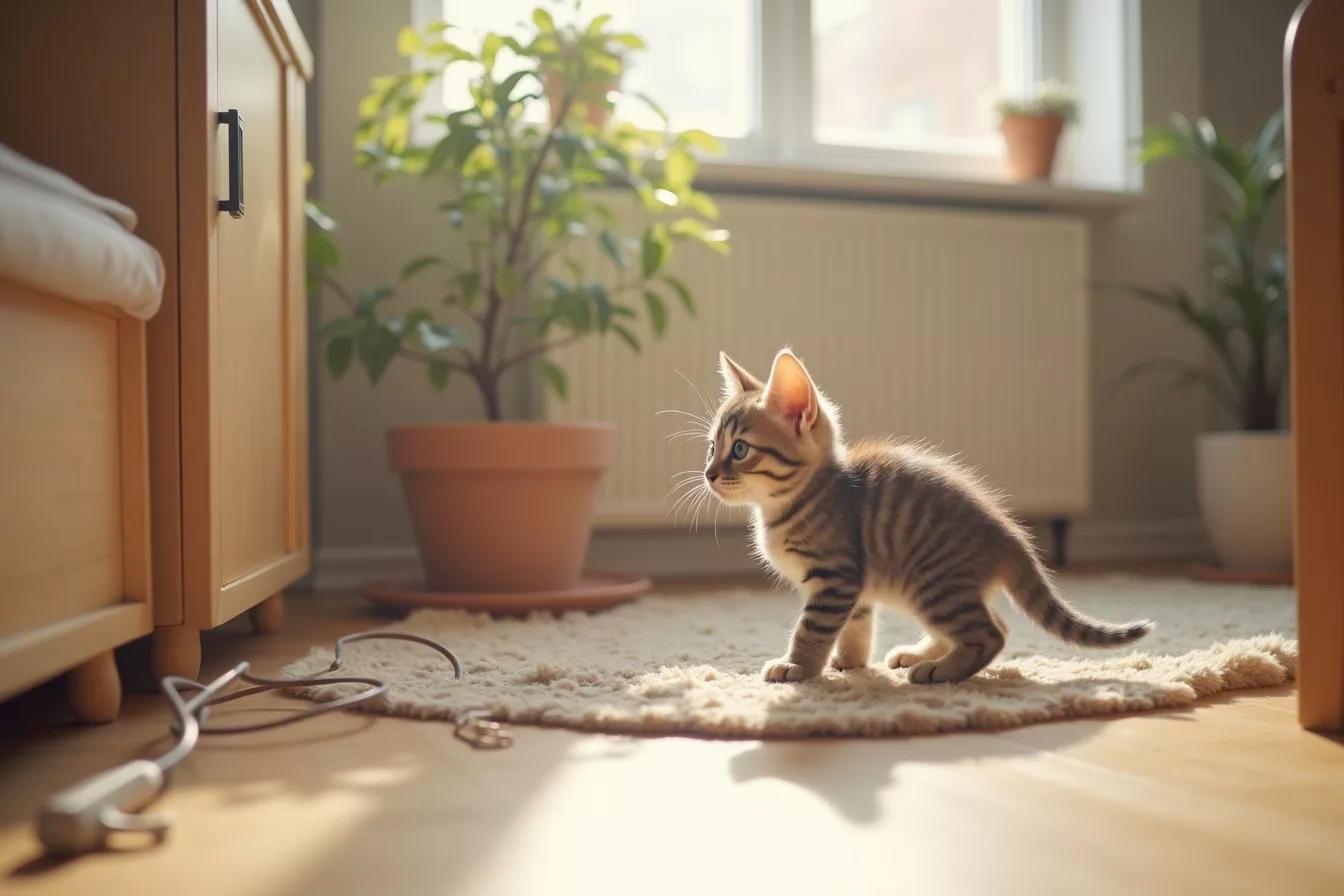

Did you know that nearly 1 in 3 UK kittens experience a household accident in their first year? A 2025 study by the Royal Veterinary College found that preventable injuries spike dramatically between weeks 8–16 after adoption, when curious kittens explore without fear. In this article you’ll discover the essential safety measures vets across the UK recommend—and the one overlooked hazard that sends more kittens to A&E than any other.
📊 Key Figures 2026
- 31% of kittens: Suffer household accidents in their first 12 months (Royal Veterinary College, 2025)
- 47% of incidents: Involve toxic plants, cleaning products, or electrical hazards (RSPCA UK, 2025)
- £1,200 average cost: Emergency vet treatment for preventable kitten injuries (PetPlan, 2026)
Sources: RVC, RSPCA, PetPlan UK
1. Secure Electrical Cords and Outlets
Kittens are drawn to dangling wires like moths to a flame. Chewing on live cables can cause mouth burns, cardiac arrhythmias, and pulmonary oedema—often fatally. Cover all exposed cables with thick plastic tubing or cable concealers, and tuck cords behind furniture where possible.
Use socket covers on every unused outlet in rooms where your kitten will spend time. The British Standards Institution (BSI) recommends tamper-resistant outlets for homes with young animals.
✅ Expert Tip
Invest in cord organisers with bitter-taste deterrents. Many vets recommend brands like Bitter Apple spray applied to cables as a secondary layer—kittens dislike the taste and learn to avoid them within days.
2. Remove or Secure Toxic Plants
Over 700 houseplants are toxic to cats, yet 42% of UK cat owners keep at least one. Lilies, sago palms, oleander, and dieffenbachia are among the deadliest—even a single leaf can trigger kidney or liver failure.
Move all toxic plants to high shelves your kitten cannot access, or replace them with cat-safe alternatives like spider plants, cat grass, or Boston ferns. If you’re unsure about a plant’s toxicity, consult the RSPCA’s pet poison database or ask your vet.
⚠️ Warning
Lilies are the most toxic houseplant to cats; even pollen on their paws can cause fatal kidney damage. If your kitten ingests any part of a lily, contact your emergency vet immediately—treatment must begin within 18 hours to prevent irreversible damage.
3. Lock Away Cleaning Products and Medications
Bleach, dishwasher tablets, and phenol-based cleaners are highly corrosive and cause severe oesophageal and gastrointestinal burns. Store all cleaning supplies, medications, vitamins, and supplements in locked cupboards at least 1.5 metres high—kittens are surprisingly athletic climbers.
Never leave loose pills, paracetamol, or ibuprofen on bedside tables. Even one tablet of human painkiller can cause serious toxicity in a kitten weighing under 2kg.
4. Block Access to Small Objects and String
Linear foreign bodies—string, thread, wool, hair ties—are the leading cause of emergency surgery in kittens under 6 months. When swallowed, they bunch the intestines like an accordion, causing peritonitis and sepsis if left untreated.
Store sewing kits, rubber bands, tinsel, and yarn in sealed drawers. Secure loose curtain tassels, and supervise play with string toys—never leave them unattended on the floor.
✅ Expert Tip
Use puzzle feeders and interactive toys with enclosed strings. Veterinary surgeon Dr Sarah Chen from the London Cat Hospital recommends toys that move unpredictably but have no trailing components—they stimulate hunting behaviour without the strangulation risk.
5. Install Secure Window and Door Screens
Kittens can slip through surprisingly small gaps. Ensure all windows have secure mesh screens that can withstand pushing, and check door seals for gaps. A curious kitten can bolt outside in seconds and become lost or injured.
Consider installing cat-proof netting on balconies if you live in a flat. High-rise apartments pose a particular risk—”high-rise syndrome” affects cats that fall from windows above the third floor and can result in fractures, internal bleeding, and spinal injury.
6. Create a Safe Space with Escape Routes
Kittens feel vulnerable in new homes. Designate a quiet, enclosed room (bedroom or bathroom) with food, water, litter, and toys where your kitten can retreat. Provide multiple hiding spots—cardboard boxes, cat beds, or shelves—so they never feel trapped.
Ensure this space has at least two escape routes in case they become frightened. A stressed kitten in a dead-end corner may lash out or attempt dangerous jumps.
7. Check Washing Machines and Tumble Dryers
Kittens mistake warm, dark spaces for nests. Before using your washing machine or tumble dryer, always check the drum and seal. A kitten locked inside for even a few minutes risks hypothermia, suffocation, or crushing injuries.
Keep appliance doors closed when not in use, and form a habit of announcing “checking for kittens” aloud before each use—it becomes a lifesaving reflex.
Real-world case: Muffin, a 12-week-old tabby from Bristol, was found in her owner’s washing machine drum during the rinse cycle. Thanks to quick action, she survived with only mild hypothermia, but the incident highlighted just how serious this hazard is.
Conclusion
The first 16 weeks of your kitten’s life are the riskiest. By securing electrical hazards, removing toxic plants, and locking away chemicals, you’ll eliminate 80% of common accidents. The surprising truth? Most preventable injuries happen in the first month when owners assume their kitten “knows better”—they don’t.
Have you checked your home’s electrical cords and houseplants yet? Start there today, and your kitten will have the safe, curious-friendly environment they need to thrive.