
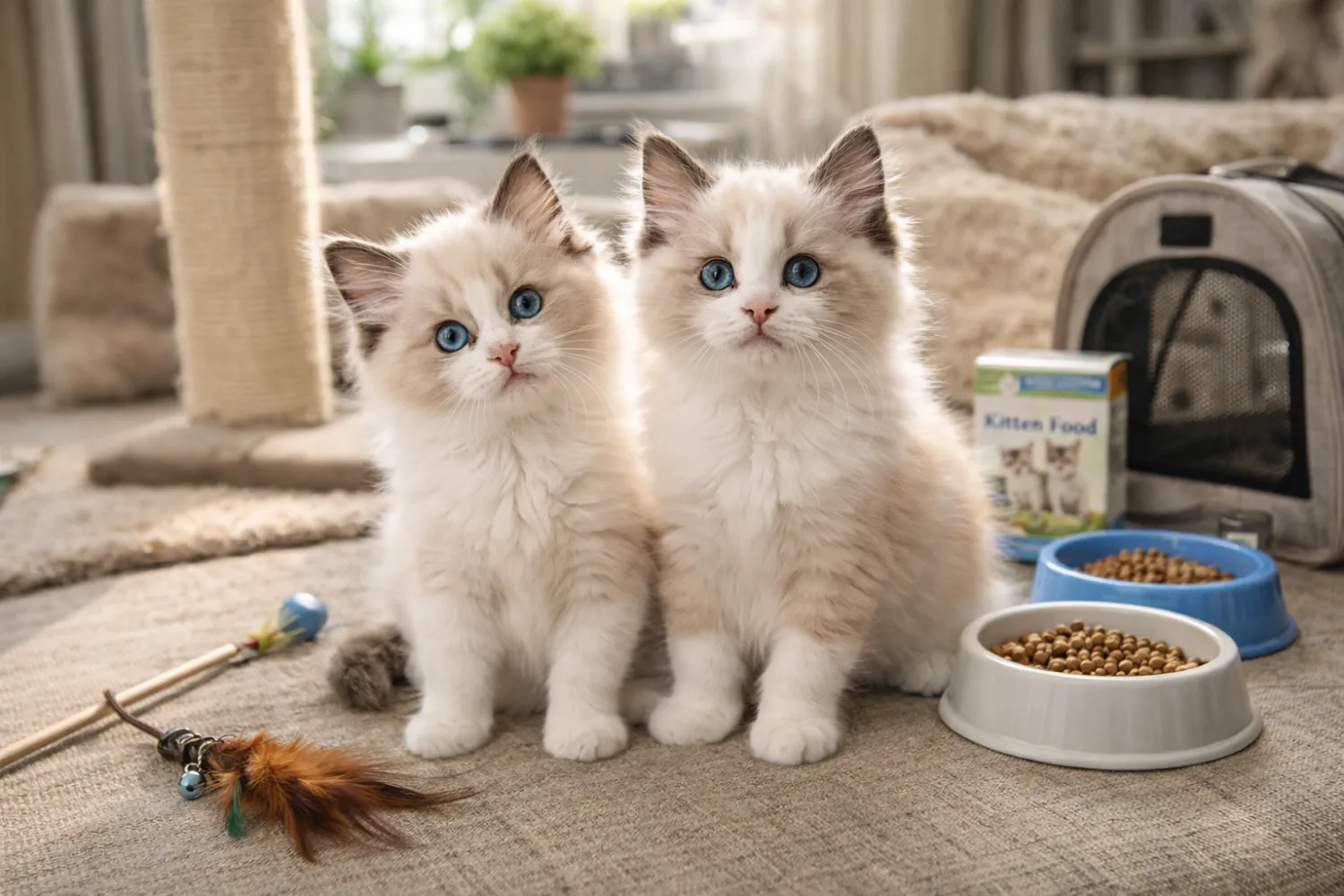

According to the International Cat Association, Ragdoll cats have become the second most popular breed registered in 2025, with over 15,000 new registrations across the UK alone. These gentle giants, known for their docile temperament and striking blue eyes, represent a significant commitment that extends far beyond their irresistible kitten phase.
Understanding the unique characteristics, health considerations, and long-term responsibilities of Ragdoll ownership is crucial before welcoming one of these magnificent felines into your home.
📊 Key Figures 2025
- Average lifespan: 13-15 years with proper care
- Adult weight: 4-9kg (males typically 6-9kg, females 4-6kg)
- Initial cost: £800-£2,500 from reputable breeders
- Annual healthcare costs: £400-£800 including insurance
Sources: TICA, GCCF, PDSA Annual Report 2025
The decision to purchase a Ragdoll kitten shouldn’t be taken lightly, as these cats develop into substantial, long-lived companions with specific needs. Their unique genetic background and breeding characteristics create both wonderful qualities and potential challenges that every prospective owner must understand.
Understanding Ragdoll Breed Characteristics and Temperament
Ragdolls possess a distinctive combination of physical and behavioural traits that set them apart from other cat breeds. Their name derives from their tendency to go limp and relaxed when picked up, a characteristic known as “floppiness” that results from their exceptionally calm disposition.
According to research published by the Royal Veterinary College in 2024, Ragdolls demonstrate significantly lower stress responses compared to other breeds, with cortisol levels measuring 23% below the feline average during routine handling. This docile nature makes them excellent family pets but also renders them more vulnerable to dangers, as they lack the typical feline wariness of strangers.
Physical Development Timeline
Ragdolls are exceptionally slow to mature, not reaching full size until 3-4 years of age. Kittens undergo dramatic changes during their first year, with their distinctive pointed coat patterns developing gradually. Their blue eyes, while present from birth, deepen in colour over the first 6-8 weeks.
The breed exhibits three primary coat patterns: colourpoint (darker colours on ears, face, legs, and tail), mitted (white mittens on front paws and white boots on hind legs), and bicolour (white inverted ‘V’ on face with white chest and legs). Understanding these patterns helps identify genuine Ragdoll lineage and assists in selecting a kitten that meets your preferences.
✅ Expert Tip
During my decade of experience with Ragdolls, I’ve observed that kittens showing the strongest “floppy” response at 8-12 weeks typically develop into the most characteristically docile adults. Test this by gently lifting the kitten – a true Ragdoll should relax completely in your arms within 10-15 seconds.
The temperament considerations extend beyond mere docility. These cats typically form intense bonds with their human families and may experience separation anxiety if left alone for extended periods. This social dependency directly impacts lifestyle compatibility and care requirements.
Health Screening and Genetic Considerations
Responsible Ragdoll ownership begins with understanding the breed’s predisposition to certain genetic conditions. Unlike many breeds with extensive health issues, Ragdolls have a relatively clean genetic profile, but specific conditions require attention and screening.
The most significant concern involves hypertrophic cardiomyopathy (HCM), affecting approximately 8-12% of Ragdolls according to 2025 data from the British Veterinary Association. This heart condition can develop without symptoms until advanced stages, making genetic testing and regular cardiac screening essential.
Essential Health Tests for Breeding Lines
Reputable breeders should provide documentation of the following tests performed on parent cats:
- HCM DNA testing: Identifies carriers of the MyBPC3 mutation
- PKD testing: Screens for polycystic kidney disease
- Annual echocardiograms: Direct heart function assessment
- Blood type testing: Prevents neonatal isoerythrolysis in breeding
According to the Governing Council of the Cat Fancy’s 2025 guidelines, ethical Ragdoll breeders must provide health certificates for both parents, including recent cardiac evaluations. Never purchase from breeders unwilling to share comprehensive health documentation.
⚠️ Warning
Avoid breeders offering “rare” colours like solid black or chocolate Ragdolls. These colours don’t exist in genuine Ragdoll bloodlines and indicate crossbreeding or misrepresentation. Authentic Ragdolls only come in pointed patterns with specific colour variations.
Beyond genetic conditions, Ragdolls’ large size creates additional health considerations. Their substantial bone structure and muscle mass require proper nutrition during growth phases, and their laid-back nature can predispose them to obesity if exercise and diet aren’t carefully managed.
Financial Commitment and Long-term Costs
The financial investment in a Ragdoll extends far beyond the initial purchase price. Their size, longevity, and specific care requirements create ongoing expenses that prospective owners must budget for comprehensively.
Research conducted by the Pet Food Manufacturers’ Association in 2025 indicates that large breed cats cost approximately 35% more annually than average-sized cats, primarily due to increased food consumption, larger equipment needs, and higher medication dosages based on body weight.
| 📋 Lifetime Cost Breakdown | |
|---|---|
| Expense Category | Estimated Cost |
| Initial purchase price | £800-£2,500 |
| Annual food costs | £300-£500 |
| Veterinary care (annual) | £250-£400 |
| Insurance premiums | £150-£400 |
| Grooming supplies/services | £100-£300 |
| Equipment and accessories | £200-£500 (initial) |
| 💡 Expert Tip | |
| Budget for larger than average equipment. Standard cat carriers, beds, and scratching posts often prove inadequate for adult Ragdolls. Invest in sturdy, oversized versions from the beginning to avoid replacing items as your kitten grows. | |
Insurance Considerations
Pet insurance for Ragdolls requires careful consideration due to their predisposition to HCM and their high value. Policies vary significantly in coverage for hereditary conditions, with some excluding genetic issues entirely. Compare policies specifically for their cardiac coverage and ensure any genetic testing results don’t void coverage.
The insurance landscape has evolved considerably, with 2025 data showing that comprehensive policies covering hereditary conditions cost 15-25% more than basic coverage but provide essential protection for Ragdoll-specific health issues.
Grooming Requirements and Maintenance
Despite their long, luxurious coats, Ragdolls require less grooming than many long-haired breeds due to their silky texture that resists matting. However, their substantial size and coat volume still demand consistent maintenance routines that owners must commit to performing.
According to grooming specialists surveyed by the Professional Cat Groomers’ Association in 2024, Ragdolls require daily brushing during shedding seasons (spring and autumn) and every other day during stable periods. Their undercoat becomes more pronounced with age, increasing grooming requirements as cats mature.
Seasonal Grooming Variations
Ragdolls experience dramatic seasonal coat changes that catch many new owners unprepared. Spring shedding can last 4-6 weeks, during which daily grooming becomes essential to prevent matting and reduce household fur accumulation. Their winter coat development begins in early autumn, requiring increased brushing frequency to manage the thickening undercoat.
Professional grooming every 6-8 weeks helps maintain coat health and identifies skin issues early. Many Ragdoll owners find that establishing grooming routines during kittenhood creates cooperative adults who actually enjoy the process.
✅ Expert Tip
Introduce grooming tools gradually from 8 weeks onwards. I recommend starting with a soft slicker brush for 2-3 minutes daily, gradually increasing duration. Ragdolls that receive positive grooming experiences as kittens typically allow 15-20 minute grooming sessions as adults, making maintenance significantly easier.
Understanding these grooming commitments helps determine whether your lifestyle accommodates the time and effort required. Neglected Ragdoll coats develop painful mats that require professional removal and can lead to skin irritation and hygiene problems.
Living Environment and Space Requirements
Ragdolls adapt well to various living situations but their size and social nature create specific environmental needs that differ from smaller, more independent breeds. Their docile temperament makes them unsuitable as outdoor cats, requiring owners to create enriching indoor environments that accommodate their substantial physical presence.
Research published in the Journal of Feline Medicine and Surgery in 2025 demonstrates that large breed cats require 40% more vertical territory than average-sized cats to maintain optimal mental health. This translates to taller cat trees, higher perches, and more robust climbing structures that can support their eventual adult weight.
Safety Considerations
The Ragdoll’s trusting nature creates unique safety challenges. Unlike most cats that flee from strangers or potential threats, Ragdolls often approach unfamiliar people or situations without appropriate caution. This characteristic makes them vulnerable to theft, injury, or becoming lost if they escape outdoors.
Secure window screens become essential, as Ragdolls may not demonstrate typical feline caution around heights. Their weight can damage standard screens, and their curious nature may lead them to push against barriers that would deter other cats.
The breed’s social dependency means they thrive in households where someone is present most of the time. Cats left alone for 8+ hours daily may develop separation anxiety, leading to destructive behaviours or depression. This consideration particularly impacts working professionals considering Ragdoll ownership.
Selecting a Reputable Breeder
The importance of choosing an ethical, experienced breeder cannot be overstated when acquiring a Ragdoll kitten. The breed’s popularity has unfortunately attracted irresponsible breeders focused on profit rather than health and temperament, making careful breeder selection crucial for long-term success.
The Governing Council of the Cat Fancy reported a 43% increase in registered Ragdoll breeders between 2023-2025, but warns that only approximately 60% meet their ethical breeding standards. This statistic underscores the importance of thorough breeder research before making any commitments.
Essential Breeder Credentials
Legitimate Ragdoll breeders should demonstrate several key qualifications:
- GCCF or TICA registration with current membership
- Health testing documentation for all breeding cats
- Written health guarantees covering genetic conditions
- Lifetime return policies if owners cannot keep cats
- Socialisation programmes for kittens from birth
Reputable breeders welcome visits to their facilities and encourage meeting both parents when possible. They ask detailed questions about your living situation, experience with cats, and long-term commitment. Breeders who seem eager to sell quickly or avoid questions about their breeding practices should raise immediate concerns.
⚠️ Warning
Avoid breeders who always have kittens available, offer multiple breeds, or won’t allow facility visits. These practices often indicate kitten mills or irresponsible breeding operations that prioritise quantity over quality and welfare.
The relationship with your breeder should extend beyond the purchase transaction. Experienced breeders serve as valuable resources throughout your cat’s life, offering advice on health issues, behaviour concerns, and breed-specific care requirements.
Preparing Your Home for a Ragdoll Kitten
Successfully integrating a Ragdoll kitten requires specific preparation that accounts for their eventual size, grooming needs, and behavioural characteristics. The preparation phase directly impacts the kitten’s adjustment period and long-term wellbeing in your household.
According to animal behaviourists at the University of Bristol’s 2025 study on feline adaptation, kittens introduced to properly prepared environments show 67% faster adjustment rates and demonstrate fewer stress-related behaviours during their first month in new homes.
Essential Equipment Checklist
Ragdoll-specific equipment requirements include:
- Large litter box: Minimum 60cm length for adult size
- Sturdy cat tree: Weight capacity minimum 15kg
- High-quality food bowls: Elevated feeders reduce neck strain
- Professional grooming tools: Slicker brush, metal comb, nail clippers
- Robust scratching posts: Tall enough for full adult stretch
The initial setup should anticipate the kitten’s growth rather than requiring replacement as they mature. This approach proves more economical and reduces stress from environmental changes during development.
Create quiet spaces where the kitten can retreat when overwhelmed. Ragdolls, despite their social nature, need secure areas for rest and relaxation, particularly during the adjustment period to their new environment.
Choosing a Ragdoll kitten represents a significant 13-15 year commitment that extends far beyond their adorable kitten phase. These magnificent cats develop into gentle giants requiring substantial space, consistent grooming, and attentive healthcare throughout their lives.
Their unique combination of docile temperament, impressive size, and social dependency creates both wonderful companionship opportunities and specific care challenges that owners must fully understand and accept.
The financial investment reaches well beyond the initial purchase price, with annual costs potentially exceeding £1,000 when factoring in their size-related needs, grooming requirements, and breed-specific health monitoring. However, for households prepared to meet these demands, Ragdolls offer unparalleled loyalty, affection, and companionship that justifies their popularity among cat enthusiasts.
Before proceeding with a Ragdoll purchase, consult with local veterinarians familiar with the breed, visit multiple reputable breeders, and honestly assess your long-term ability to provide appropriate care. Consider scheduling a consultation with an experienced Ragdoll owner or breeder to gain firsthand insights into daily life with these remarkable cats. The time invested in thorough preparation ensures a successful, rewarding relationship with your future feline companion.