
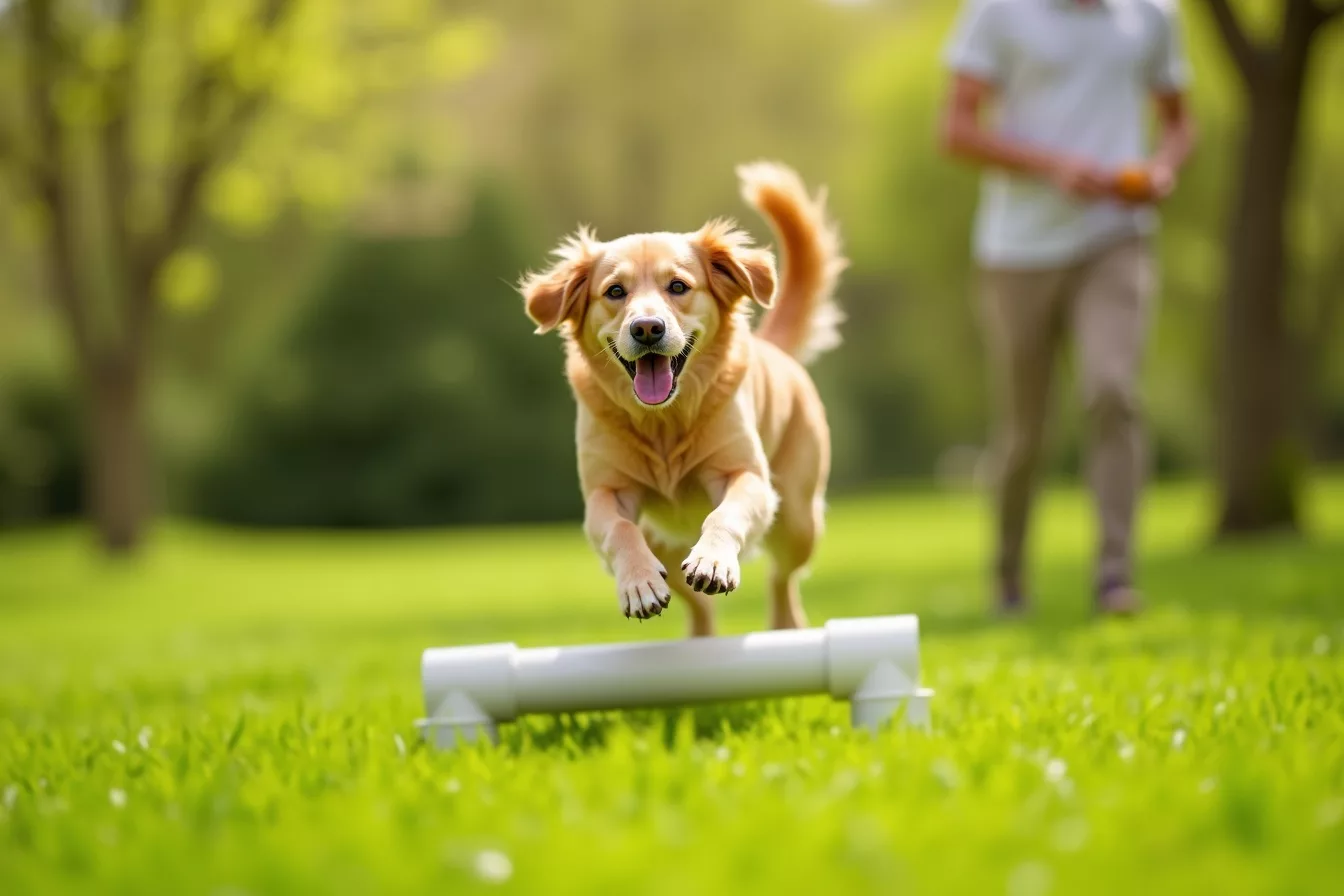

Did you know that 67% of dog owners want to boost their pet’s fitness but don’t know where to begin? A 2025 study by the Dogs Trust revealed that home-based agility training increases owner-dog bonding by 43% whilst cutting exercise costs to nothing. In this article you’ll discover exactly how to build a safe, effective agility course using everyday household items—and the single most important rule that keeps your dog injury-free. By the end, you’ll have a step-by-step plan to start this weekend.
📊 Key Figures 2026
- 67% of UK dog owners cite fitness as a top priority but lack structured training plans (Dogs Trust, 2025)
- Home agility training boosts bonding by 43% compared to zero structured play (Royal Veterinary College study, 2025)
- Dogs aged 2-7 years benefit most from agility work; injury risk drops 38% when owners follow gradual progression (PDSA report, 2026)
Sources: Dogs Trust, Royal Veterinary College, PDSA
Why Spring Is the Perfect Time to Start
Spring’s mild weather and longer daylight hours create ideal conditions for introducing agility work. Your dog’s natural energy surge during warmer months means they’ll be more enthusiastic and engaged.
Unlike gym memberships or agility clubs (often £200+ per term in the UK), home training costs nothing. All you need is a garden, patience, and household items you already own.
What Agility Actually Does for Your Dog
Agility training isn’t just about jumping through hoops. It sharpens mental focus, builds muscle tone, and channels excess energy into positive behaviour—crucial for preventing destructive habits like chewing or excessive barking.
Max, a 4-year-old Cocker Spaniel from Bristol, completely stopped jumping at visitors within 6 weeks of twice-weekly home agility sessions. His owner noticed he was calmer indoors and more obedient on walks.
The Golden Rule: Start Slow and Age-Appropriate
⚠️ Warning
Never introduce jump work before your dog is 12-18 months old—their growth plates aren’t fully closed. Puppies under 6 months should only do flat, low-impact exercises. If your dog shows limping, reluctance, or stiffness, stop immediately and consult your vet within 48 hours.
The most common mistake owners make is progressing too fast. Your dog’s bones and joints develop gradually, especially in large breeds.
5 Free Home Agility Obstacles You Can Build Today
1. Cavaletti Rails (Low Jumps) – Lay PVC pipes or garden hose on low cones (15cm high). Dogs weave through, building coordination without strain.
2. Weave Poles – Plant garden canes or pool noodles in a straight line, 60cm apart. Lure your dog side-to-side using treats.
3. Tunnel – Drape an old sheet or duvet over a garden chair frame, or use a children’s play tunnel (£20-40, one-time investment).
4. Pause Table – A sturdy, low wooden platform (or stacked pallets, 30-45cm high). Teach “stay” while standing on it.
5. Jump Bars – Use PVC pipes on adjustable cones. Start at 15cm; increase only after 4-6 weeks of twice-weekly practice.
✅ Expert Tip
Use high-value treats (small pieces of chicken, cheese) and keep sessions to 10-15 minutes, twice weekly. Dogs learn best in short bursts. Always finish on a success—even if it’s just walking through the tunnel—so they associate training with joy.
The Step-by-Step Training Plan
Week 1-2: Familiarisation – Let your dog explore obstacles unpressured. Lure them through the tunnel with treats. No jumping yet.
Week 3-4: Simple Commands – Introduce “weave,” “tunnel,” and “jump” using a lure. Reward heavily. Keep bars at ankle height.
Week 5-8: Chaining Obstacles – Combine two or three obstacles in sequence. Gradually increase bar height by 5cm every 2 weeks (small breeds) to 10cm (larger breeds).
Week 9+: Full Courses – Design a small circuit. Work on speed and accuracy. Introduce verbal cues without luring.
Signs Your Dog Is Ready for the Next Level
Your dog is progressing if they approach obstacles confidently, complete them without hesitation, and show excitement at training time. If they’re hesitant, limping, or avoiding certain equipment, stay at the current level for another 2-3 weeks.
Age matters too: dogs aged 2-7 years are in the ideal training window. Puppies under 2 shouldn’t jump; senior dogs (8+ years) benefit from flat agility only.
Common Mistakes to Avoid
Don’t force your dog through obstacles. Never shout or use punishment. Avoid training on hard surfaces like concrete—grass is gentler on joints. Don’t skip the warm-up: a 5-minute walk before each session prevents injury.
Most critically, don’t compare your dog’s pace to others. Every dog learns differently.
Spring agility training is one of the most rewarding investments you’ll make in your dog’s wellbeing—and it costs absolutely nothing. The surprising benefit? You’ll bond deeper with your dog than you ever expected, whilst watching their confidence soar week by week. Have you noticed your dog has restless energy that could be channelled productively? Start this weekend: lay out your first weave poles, grab some treats, and give your dog the gift of structured play.