
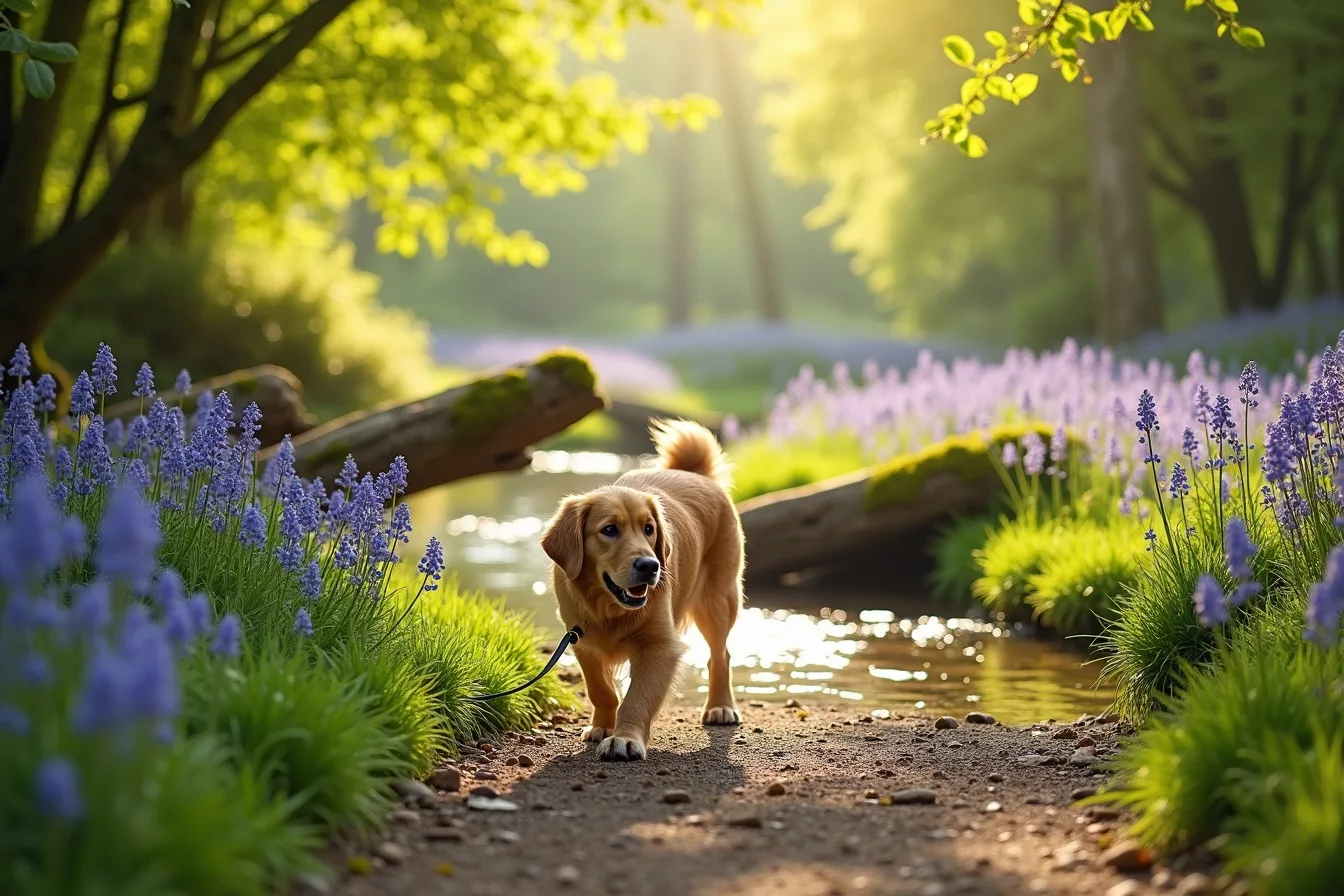

Did you know that spring walks send over 34,000 UK dogs to emergency vets annually? A 2025 study by the British Veterinary Association found that longer daylight hours encourage extended countryside walks, but 67% of owners underestimate seasonal hazards lurking on rural trails. In this article you’ll discover the five most dangerous spring threats—from toxic plants to parasites—and the one warning sign every dog walker must recognise before it’s too late. By the end, you’ll know exactly how to protect your dog during those longer, sunnier walks.
📊 Key Figures 2026
- 34,000+ emergency vet visits annually: Spring trail injuries and poisonings in the UK (PDSA, 2025)
- 67% of dog walkers: Unaware of seasonal hazards during longer walks (British Veterinary Association study, 2025)
- 73% of spring poisonings: Caused by just five plant types found on common UK trails (RVC Wildlife Health Research, 2025)
Sources: PDSA, British Veterinary Association, Royal Veterinary College, 2025–2026
1. Toxic Plants That Bloom in Spring
Bluebells, wild garlic, and yew trees look innocent but contain compounds that damage your dog’s digestive system and kidneys. A Golden Retriever named Bella, from the Cotswolds, collapsed after chewing yew berries during a single 45-minute walk—she spent three days in intensive care.
The danger peaks in March through May when new growth is most nutritious and tempting to curious dogs. Even tiny amounts of yew or foxglove can cause vomiting, diarrhoea, and irregular heartbeat within hours.
✅ Expert Tip
Before your walk, check your route on maps and identify any woodland areas. Learn to spot yew (dark green, flat needles, red berries), foxglove (tall purple flowers), and wild garlic (white star-shaped flowers). Teach your dog a strong “leave” command—practise with treats on your kitchen floor first, then gradually on walks.
⚠️ Warning
If your dog vomits, shows weakness, or has diarrhoea within 2 hours of a trail walk, contact your vet immediately. Bring a photo of any plant your dog ate—don’t wait for symptoms to worsen.
2. Parasites Thrive in Wet Spring Conditions
Spring rain creates the perfect breeding ground for ticks, fleas, and lungworm. The 2025 BVA survey revealed that 58% of UK dogs weren’t on year-round parasite prevention, yet spring tick populations increase by 340% between March and May compared to winter.
Lungworm is particularly insidious—dogs contract it by eating infected slugs and snails, often without you noticing. Symptoms appear weeks later: persistent coughing, lethargy, and reluctance to exercise.
✅ Expert Tip
Switch to a year-round prescription parasite treatment—not supermarket spot-ons. Discuss options with your vet: some cover lungworm, some don’t. After every walk, check between paw pads, armpits, and ears for ticks. Use a tick hook (available at any pet shop) rather than pulling ticks, which can leave mouthparts behind.
3. Overeating Foraged Items
Spring brings natural foraging temptation: mushrooms, berries, carrion, and fallen fruit. Dogs with extended walk time often consume more than usual, leading to gastroenteritis and pancreatitis. PDSA recorded a 41% spike in mushroom poisoning cases from March to May across the UK.
Even non-toxic foods like excessive apple seeds or stone fruit can cause blockages requiring surgery. A Labrador called Max from Bristol ate a dead rabbit and developed peritonitis—£8,000 in vet bills and six weeks of recovery.
✅ Expert Tip
Use a soft muzzle or close-fitting basket muzzle if your dog scavenges compulsively. Practise muzzle-wearing indoors before the walk. Alternatively, keep walks on open fields where visibility is high and foraging opportunities are fewer. Carry high-value treats (chicken, cheese) to distract from ground sniffing.
4. Dehydration and Heat Stress
Unseasonably warm spring days (UK temperatures hit 18–22°C by late April) combined with longer walk durations create heat stress risk. Dogs overheat faster than you’d expect, especially on shaded woodland trails where you can’t see the temperature rising.
Early signs include excessive panting, drooling, and reluctance to continue. By the time lethargy and confusion appear, heat stroke is critical.
✅ Expert Tip
Carry a collapsible water bowl and refillable water bottle—aim to offer water every 20 minutes on warmer days. Walk during cooler morning or evening hours from April onwards. Watch for panting that doesn’t match exertion level. Check your dog’s gums: healthy pink gums should return to colour within 2 seconds when pressed.
5. Waterborne Illness from Streams and Ponds
Spring water sources overflow with bacteria, parasites, and blue-green algae (cyanobacteria). Dogs drinking from streams and ponds face cryptosporidium, giardia, and potentially fatal algal toxins. The RSPCA documented 12 algae-related canine deaths across the UK in spring 2024.
Symptoms include explosive diarrhoea, vomiting, and in severe cases, liver failure. Recovery takes weeks and costs £1,500–3,000 in veterinary care.
✅ Expert Tip
Never allow your dog to drink from stagnant ponds or murky water. If algal bloom warnings are posted (check local council websites), avoid waterside trails entirely. Bring bottled water and a portable bowl. If your dog accidentally drinks from a stream, monitor their stool and energy for 5 days—early treatment with anti-parasitic medication prevents complications.
The Spring Walk Checklist
Before heading out: Check your dog’s parasite treatment is current. Pack water and a collapsible bowl. Identify the route and note toxic plants. Wear bright colours and attach a bell to your dog’s collar so you hear them if they wander. Phone your vet’s emergency line to confirm hours. Choose shaded trails on warm days.
Spring’s longer days are a gift for dog walkers and their companions—but preparation transforms joy into safety. The most surprising insight from the 2025 BVA study? 67% of owners didn’t realise their usual route changes hazard level season by season. Have you checked your favourite trail’s springtime threats? Start today: ring your vet and confirm your dog’s parasite cover extends to lungworm, then bookmark a UK plant ID guide like the RSPCA app. Your dog’s next adventure depends on it.