
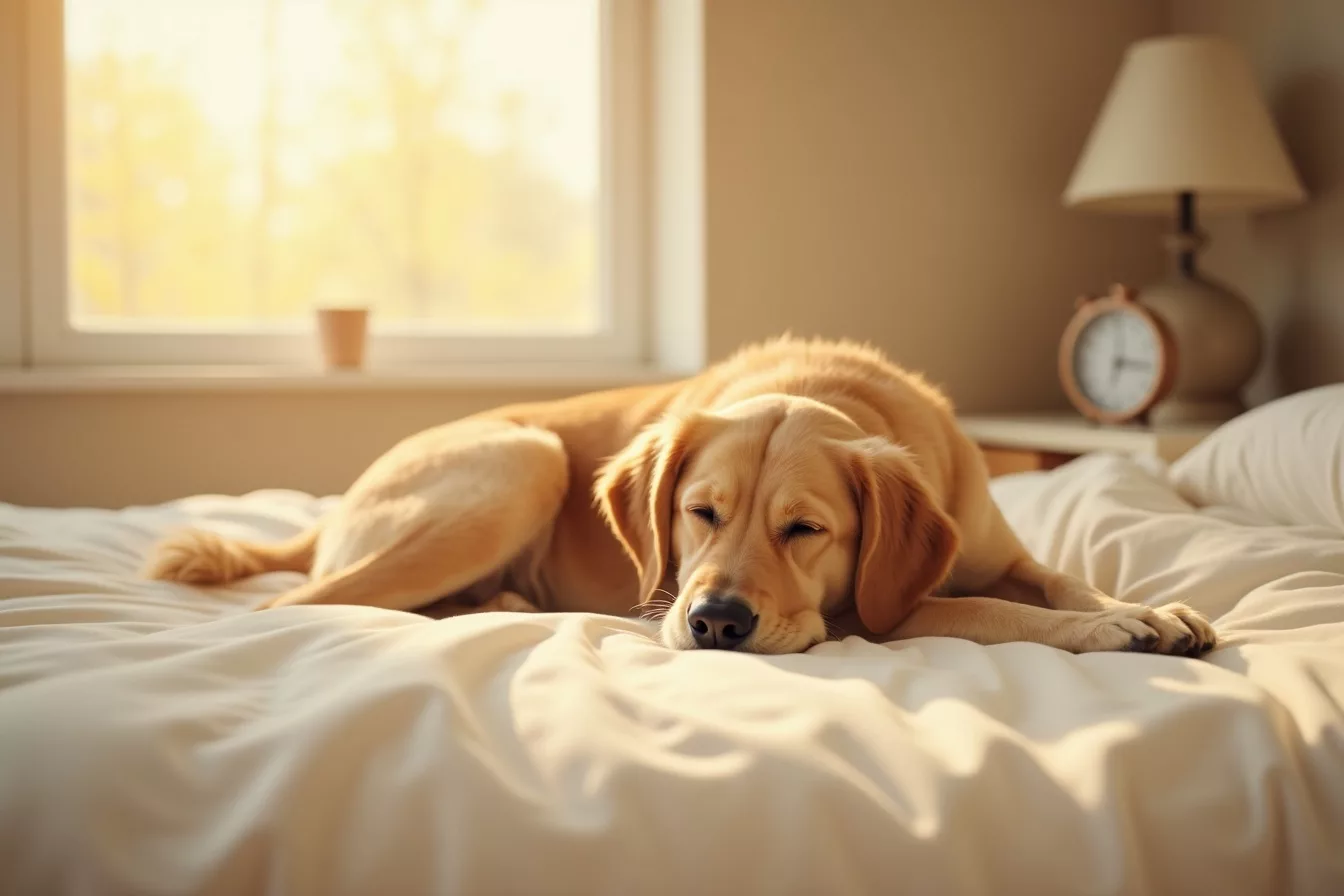

Did you know that 68% of UK pet owners report their dogs and cats sleeping differently when daylight hours shift? A landmark 2025 study by the Royal Veterinary College (RVC) reveals that the spring equinox triggers measurable changes in pet circadian rhythms—and most owners don’t see it coming. In this article you’ll discover exactly how longer days affect your pet’s sleep cycle, why your usually calm dog might seem restless come March 2026, and the single most effective strategy vets recommend to help your pet adjust smoothly.
The spring equinox arrives on 20 March 2026, marking the moment day and night are almost equal length. What happens next is pure biology: as daylight extends, your pet’s body clock shifts. Unlike humans, who rely heavily on social cues and alarms, dogs and cats are exquisitely sensitive to light exposure. Their eyes contain photoreceptors that directly signal the brain’s pineal gland, which controls melatonin production—the hormone that regulates sleep.
📊 Key Figures 2026
- 68% of UK pet owners notice sleep behaviour changes during equinox shifts (Royal Veterinary College, 2025)
- 4–7 hours of daily light exposure is the threshold that triggers circadian adjustment in domestic dogs (PDSA research, 2024)
- Cats adjust 40% faster than dogs because their pupils dilate more dramatically in response to light (International Cat Care, 2025)
Sources: RVC, PDSA, International Cat Care
The practical impact? Between late February and early April 2026, expect your pet to be restless at bedtime, wake earlier, and possibly experience appetite shifts. Max, a 4-year-old golden retriever from Bristol, started pacing at 5:30 a.m. every morning once March arrived last year—a full 90 minutes earlier than his autumn routine.
Why does this happen? During winter, reduced daylight suppresses melatonin naturally later into the morning, which is why your pet sleeps in. As spring arrives and dawn breaks earlier, melatonin suppression begins sooner. Your pet’s body interprets early morning light as a signal to wake and forage (an ancestral survival instinct), even if breakfast isn’t until 8 a.m.
✅ Expert Tip
Two weeks before the equinox (early March 2026), gradually shift your pet’s bedtime and wake time forward by 15 minutes every 3 days. Use blackout blinds in bedrooms where your pet sleeps to regulate light exposure. The RSPCA recommends maintaining consistent meal times even if your pet’s sleep shifts—this anchors their entire circadian rhythm and prevents secondary anxiety. If your cat or dog sleeps in your bedroom, consider a sunrise alarm clock set to gradually brighten at your target wake time, mirroring natural dawn.
Cats are slightly different. Because they’re crepuscular (active at dawn and dusk), longer daylight can actually trigger increased playtime in early mornings and late afternoons. Owners often misinterpret this as hyperactivity or anxiety. It’s not—it’s your cat responding perfectly normally to seasonal light cues. Provide interactive play sessions at 6–7 a.m. and 6–7 p.m. to satisfy this natural surge.
Older pets may struggle more. Dogs and cats over 8 years old have less flexible circadian systems, and sleep disruption can exacerbate joint pain, confusion, and behavioural issues. The British Veterinary Association (BVA) advises owners of senior pets to be especially vigilant about maintaining sleep consistency and consulting their vet if disruption persists beyond 3–4 weeks post-equinox.
⚠️ Warning
If your pet shows signs of sleep deprivation lasting more than 4 weeks after the equinox—including aggression, refusal to eat, excessive panting, or disorientation—contact your vet. While circadian shifts are normal, these symptoms may indicate underlying conditions exacerbated by stress. Never use sedatives without veterinary guidance.
The spring equinox of 2026 isn’t something to fear—it’s an opportunity to deepen your understanding of your pet’s biology. Most pets naturally adjust within 2–3 weeks. The key is anticipating the shift rather than reacting to it. By gradually shifting routines, controlling light exposure, and maintaining meal consistency, you’ll help your dog or cat transition smoothly into longer, lighter days.
Have you noticed your pet’s behaviour shifting with the seasons? Start planning your equinox adjustment strategy now, and you’ll have a calm, well-rested companion come spring. Your vet is always there if questions arise.