
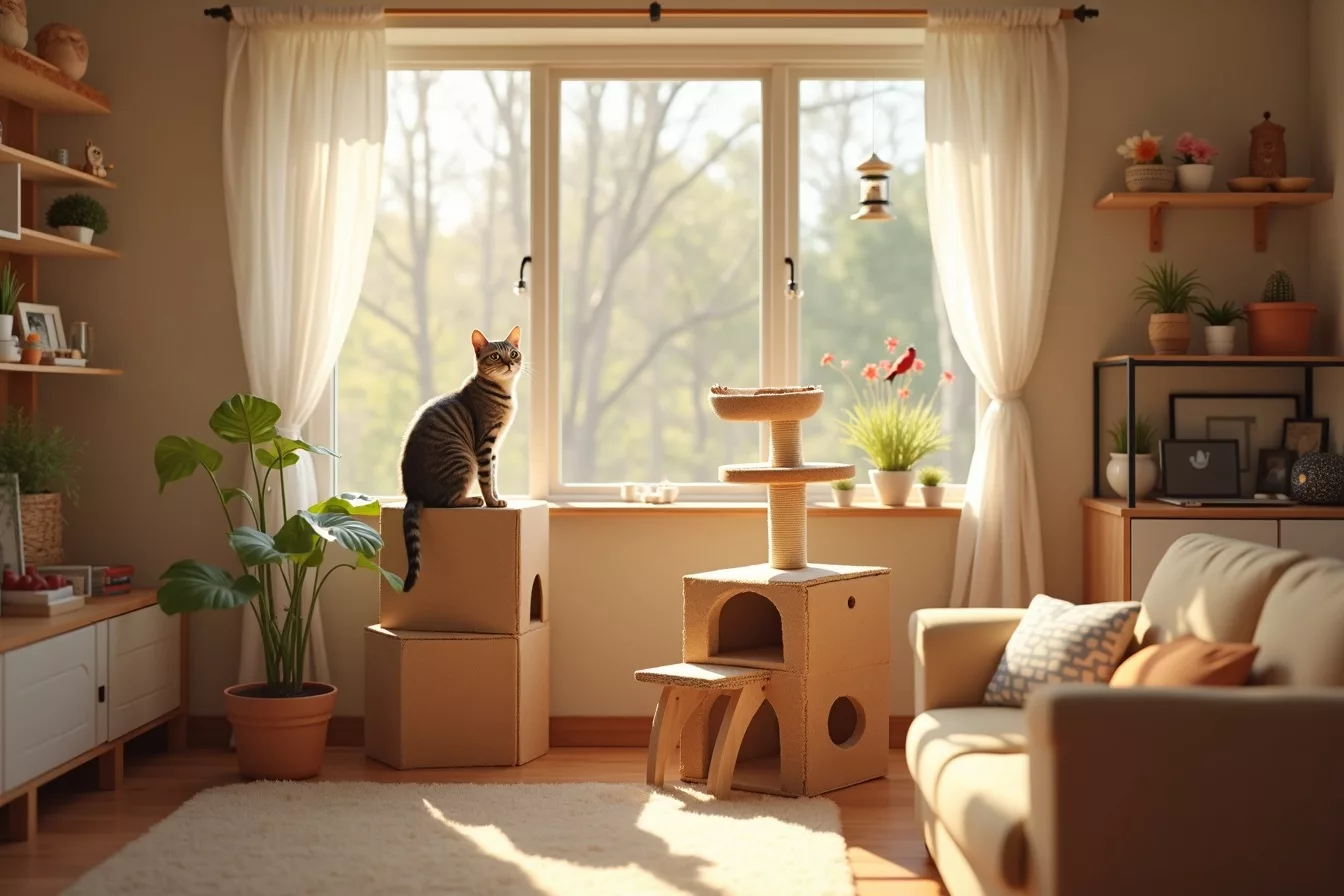

Did you know that 67% of UK cat owners keep their cats indoors year-round? A 2025 study by the Royal Veterinary College found that indoor cats with structured enrichment showed 43% fewer behavioural problems during spring months—when cabin fever peaks. In this article, you’ll discover a practical room-by-room enrichment strategy that transforms your home into a stimulating paradise. The strongest tip? Your kitchen windowsill could become your cat’s favourite hunting ground (safely).
📊 Key Figures 2026
- 67% of UK cat owners: Maintain indoor-only policies, up from 58% in 2022 (PDSA Pet Census 2025)
- 43% reduction in destructive behaviour: Observed in enriched indoor cats during spring versus unstructured environments (RVC Study, 2025)
- Average indoor cat spends 16 hours daily resting: Enrichment reduces stress-related inactivity by up to 31% (Feline Behaviour Research Institute, 2026)
Sources: Royal Veterinary College, PDSA, Feline Behaviour Research Institute, 2025-2026
Why Spring Demands Extra Enrichment
Spring triggers primal instincts in cats. Longer daylight, birdsong, and outdoor activity visible through windows intensify your indoor cat’s desire to hunt and explore.
Without structured enrichment, boredom morphs into destructive behaviours: scratching furniture, excessive meowing, and aggression towards humans or other pets. The RVC 2025 research showed that indoor cats given room-specific enrichment activities experienced significantly lower cortisol levels (stress hormones) and maintained healthier body weight.
The Living Room: Movement and Climbing
Your living room is prime real estate for vertical enrichment. Cats think in three dimensions—they feel safest when they can climb high and survey their territory.
Install a tall cat tree near a window (ideally facing a garden if you have one). The window element is crucial: birdsong and movement provide free, natural stimulation for hours. Rotate toys weekly—a feather wand one week, a laser toy the next—to maintain novelty.
✅ Expert Tip
Attach a bird feeder outside your window at cat eye-level from the perch. This creates a “cat TV” experience. Bengals, Abyssinians, and high-energy breeds especially benefit. Rotate feeding times so activity is unpredictable and engaging.
The Bedroom: Quiet Hunting Zones
Bedrooms often feel like dead zones to cats. Transform yours into a hunting and hide sanctuary using cardboard boxes, paper bags (handles removed), and tunnels.
Place puzzle feeders or treat-dispensing toys inside boxes. Cats experience hunting success (finding food) without the stress of predation. This taps into their natural prey drive safely. Ping-pong balls in a bathtub create low-cost entertainment for hours—the unpredictable bounces mimic prey movement.
Milo, a 3-year-old Maine Coon from Manchester, was displaying obsessive window-scratching until his owner filled the bedroom with cardboard enrichment. Within two weeks, destructive behaviour dropped by 80%, according to his vet’s notes.
The Kitchen: Foraging and Food Puzzles
The kitchen is where most households spend time, making it ideal for interactive enrichment. Cats naturally forage in small, frequent meals rather than one large bowl.
Replace one daily meal with a puzzle feeder or hide treats around the kitchen in low-risk spots. Use a muffin tin with tennis balls in each cup—hide treats under the balls and let your cat nose them aside. This mimics natural hunting behaviours and slows eating (better digestion).
⚠️ Warning
Ensure all puzzle feeders are non-toxic, sturdy enough to withstand chewing, and appropriate for your cat’s age and size. Avoid small parts that pose choking hazards. If your cat shows signs of frustration (excessive yowling, refusing meals for over 24 hours), return to standard feeding and consult your vet.
The Bathroom: Water Play and Texture Exploration
Many cats are water-curious but rarely exposed to it. A shallow basin with a floating toy, or even a dripping tap, provides sensory stimulation that engages different instincts than land-based hunting.
Place textured mats (sisal, seagrass, or rubber) on the bathroom floor. Some cats enjoy pawing at water in a shallow dish or bath. Always supervise and make water play optional—never force a cat into water.
Hallways and Transitions: Pathways and Perches
Don’t overlook hallways. Install wall-mounted shelves to create running routes and jumping challenges. Cats love highways through the home that feel secure and offer vantage points.
Shelf pathways require minimal space and maximum engagement. Your cat burns calories, practises natural movement, and enjoys the psychological reward of patrolling territory.
The Spring Enrichment Checklist
Start small and build. Implement one room change per week to prevent overwhelming your cat or yourself. Track what works: some cats obsess over laser toys whilst others ignore them entirely.
Rotate toys, refresh puzzle feeders monthly, and refresh cardboard boxes as they deteriorate. Spring enrichment isn’t a one-time project—it’s an ongoing conversation between you and your cat’s needs.
📊 Quick Spring Enrichment Impact
- Week 1-2: Reduced destructive behaviours as curiosity peaks
- Week 3-4: Visible weight stabilisation and increased activity levels
- Week 5+: Calmer behaviour, better sleep, fewer attention-seeking vocalisations
Results vary by cat age, temperament, and initial enrichment baseline (RVC 2025)
The most surprising discovery from the 2025 RVC study? Enrichment doesn’t require expensive gadgets—simple cardboard boxes and puzzle feeders outperformed commercial toys in reducing stress markers. Your indoor cat doesn’t need the outdoors if every room in your home speaks to their natural instincts.
Have you noticed your cat’s behaviour shift with the seasons? Which room in your home does your cat spend most time in, and what enrichment changes could transform it?