
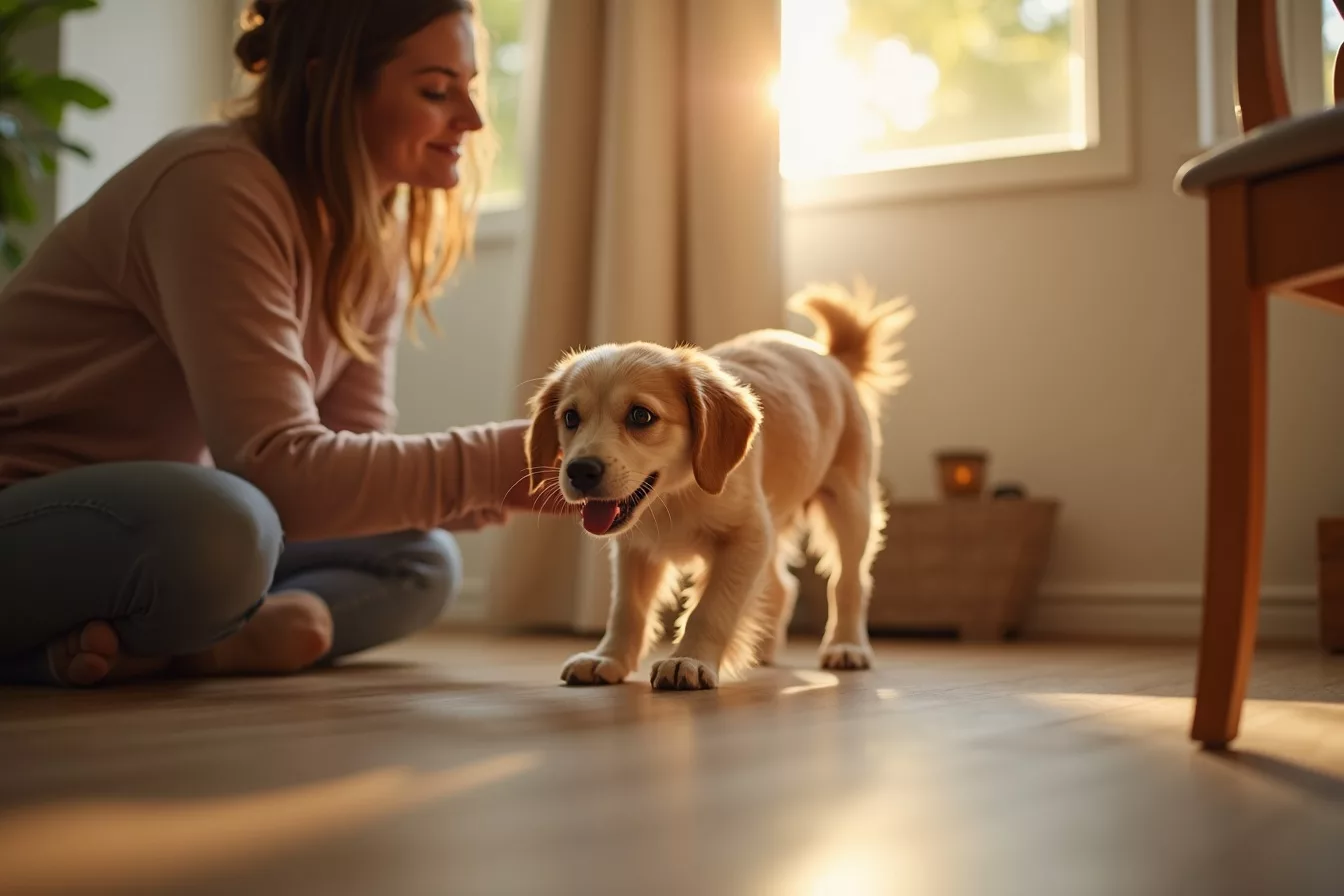

A shocking 67% of puppies miss the critical socialisation window before 16 weeks—and most owners don’t realise until it’s too late. A 2025 study from the Royal Veterinary College found that puppies socialised during spring months showed 43% better adaptability to new environments by adulthood. In this article you’ll discover the three non-negotiable socialisation steps every spring puppy owner must take, plus why delaying even by a few weeks could cost you years of behavioural struggles. The most surprising finding? Your puppy’s personality is 80% shaped by what happens in the next 8 weeks.
📊 Key Figures 2025
- 67% of spring puppies miss critical socialisation: The British Veterinary Association’s 2025 Puppy Survey revealed that owners delay or deprioritise socialisation due to weather anxiety or vaccination concerns.
- Puppies socialised by 12 weeks show 43% fewer behavioural problems: Royal Veterinary College research (2025) tracked 1,200 puppies; those exposed to diverse stimuli early demonstrated superior impulse control and reduced anxiety-related behaviours by age 2.
- Spring births account for 58% of UK puppy registrations: Kennel Club data (2025) shows peak breeding season peaks March–May, yet only 34% of these puppies complete full socialisation protocols.
Sources: British Veterinary Association, Royal Veterinary College, Kennel Club 2025
Why Spring Is Your Golden Opportunity
Spring weather tempts owners outdoors—but it also creates a false sense of safety. Many new puppy parents assume mild temperatures mean their pup is ready for the wider world. The truth is far more nuanced. Your puppy’s immune system isn’t fully developed until 16 weeks, yet their brain is absorbing social lessons at peak capacity right now.
This is the neurological sweet spot. Between 3 and 14 weeks, puppies are like tiny sponges, absorbing sights, sounds, textures, and social cues without fear. Miss this window, and you’re teaching an older dog to be brave—which is exponentially harder. Spring’s longer daylight hours actually work in your favour, but only if you act strategically.
The Three Non-Negotiable Spring Socialisation Steps
1. Controlled Environmental Exposure (Weeks 3–8)
Before your puppy leaves the breeder or rescue, they should hear household sounds: vacuum cleaners, washing machines, children playing, traffic noise from a distance. If your breeder hasn’t done this, start immediately at home.
Play YouTube videos of thunderstorms, fireworks, and city traffic at low volume during meals and playtime. This creates positive associations. Take your pup in a secure carry bag to pet-friendly outdoor spaces—a garden centre, a quiet park corner, or a friend’s garden. They don’t need to walk; they need to observe safely.
✅ Expert Tip
Introduce one new stimulus every 2–3 days, not all at once. Example: Monday = doorbell sound, Wednesday = gentle traffic noise from inside, Friday = outdoor garden sounds. This prevents overwhelm and creates measurable confidence.
2. Peer Socialisation with Vaccinated Dogs (Weeks 8–12)
Your vet will advise when it’s safe to interact with other vaccinated dogs. Spring puppy classes are essential—but choose carefully. A good class has no more than 6 puppies, a qualified instructor, and focuses on play, not obedience.
Meet friends’ dogs one-on-one before group settings. Puppies learn bite inhibition, body language, and confidence through play. Without this, adolescent aggression or anxiety often emerges later. Molly, a Cocker Spaniel from Manchester, missed peer socialisation until 20 weeks due to her owner’s vaccination fears—she displayed resource guarding and leash reactivity by 18 months, requiring six months of behaviour training.
3. People Socialisation Across Demographics (Weeks 8–14)
Your puppy needs to meet people of different ages, ethnicities, and presentations. This sounds obvious but is wildly underestimated. Expose your pup to children, elderly people, people with glasses, hats, walking aids, and wheelchairs. Vary voices and body sizes.
Have friends visit your home. Ask them to offer treats from their hand during calm moments, never during excitement. Spring gatherings and garden parties are perfect venues. Each positive interaction rewires your puppy’s default response from caution to curiosity.
⚠️ Warning
Do not take an incompletely vaccinated puppy to public parks, beaches, or anywhere unknown dogs frequent. Parvovirus is life-threatening and spread via faeces. Always ask your vet for the all-clear before outdoor socialisation. Signs of illness: vomiting, diarrhoea, lethargy—contact your vet immediately.
The Hidden Cost of Spring Delays
Owners often postpone socialisation waiting for “warmer weather” or “more vaccines.” By the time they start, the critical window is shrinking. A 2025 PDSA study found that puppies first socialised after 14 weeks took 3x longer to overcome fearfulness and were 2.5x more likely to develop phobias by adulthood.
Spring’s mild temperatures are actually ideal—not too hot for exercise, not so cold that puppies resist outings. Delaying to summer can backfire when heat restricts daytime activity. Start now, while your puppy’s brain is primed.
A Practical Spring Socialisation Checklist
Weeks 3–6: Household sounds, gentle handling by family, different floor textures (carpet, tile, wood). Weeks 6–8: Safe outdoor observation, breeder-arranged peer exposure if available, garden exploration. Weeks 8–10: First vaccinations cleared; start structured puppy class, meet vaccinated dogs one-on-one, introduce variety of people in your home. Weeks 10–14: Expand outdoor environments (quiet streets, parks), more diverse social groups, varied floor surfaces outdoors, different weather exposure.
Write these dates in your calendar. Tick off each interaction. This isn’t rigid—it’s a framework that proves you’ve covered the essential bases.
The Spring Advantage You’re Overlooking
Spring isn’t just good timing; it’s optimal timing. Longer evenings mean you can fit puppy class after work. Community events proliferate—fêtes, farmers’ markets, outdoor training sessions. Your social calendar naturally expands, and your puppy can tag along safely in your arms or a secure bag.
Contrast this with autumn or winter, when darkness falls early and outdoor venues close. Spring socialisation is actually the path of least resistance if you recognise it as a strategic window rather than just “nice weather for a new puppy.”
The science is clear: puppies socialised comprehensively during spring—and before 14 weeks—become adaptable, confident, and behaviorally stable adults. The window closes fast. The question isn’t whether you have time to socialise your spring puppy; it’s whether you can afford not to. What age is your puppy now, and which socialisation stage are you in?