
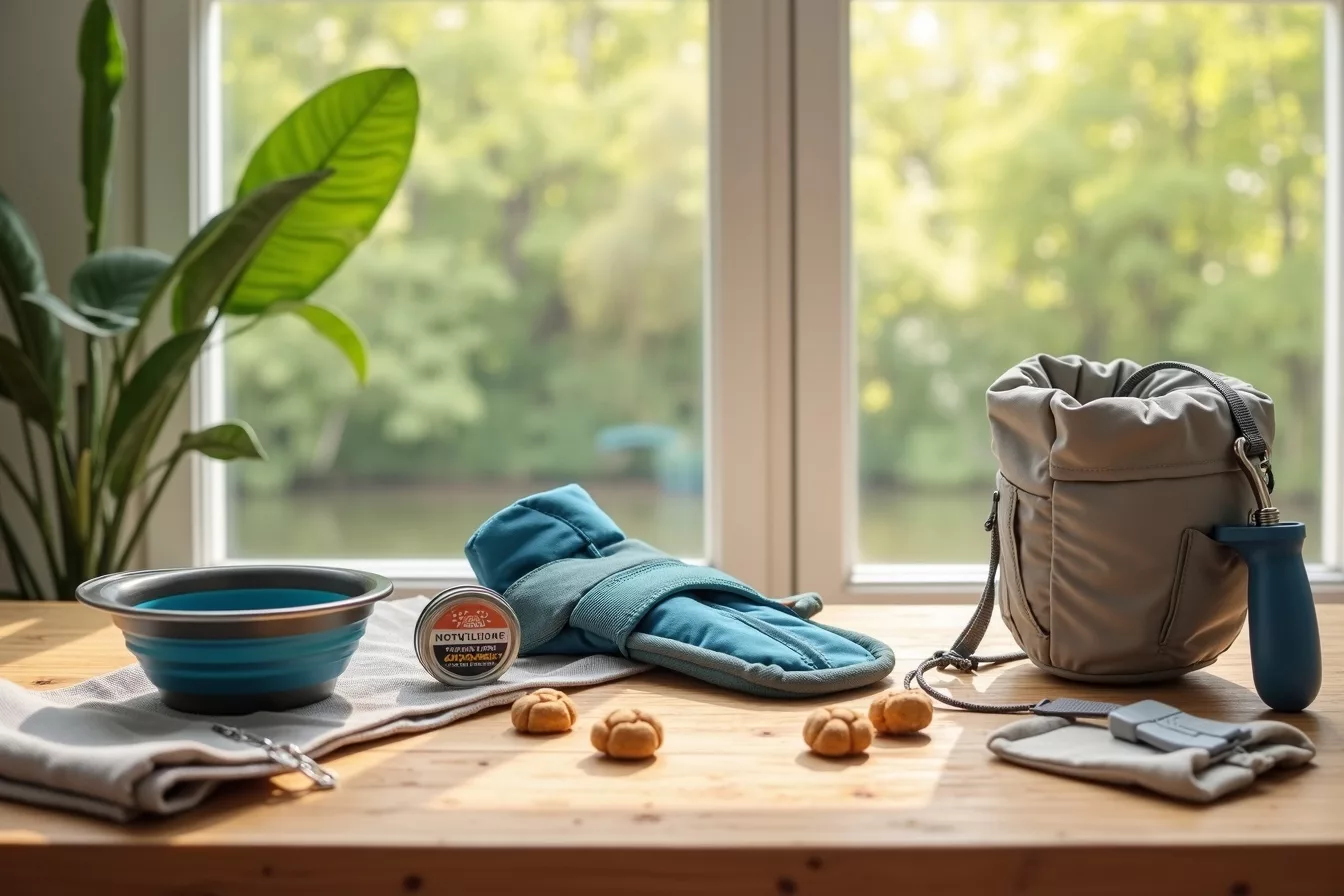

Did you know that 64% of UK dog owners admit they’re unprepared for spring walks? A recent 2025 study by the Royal Veterinary College found that joint injuries spike in March and April as dogs suddenly increase activity after winter. In this article you’ll discover exactly what vets recommend packing before you step outside—and why one often-forgotten item could prevent expensive vet bills.
📊 Key Figures 2026
- 64% of UK dog owners: Unprepared for spring weather changes during walks (Pet Industry Federation, 2025)
- Spring injuries up 37%: Veterinary surgeons report increased joint, paw, and ligament injuries in March–May (PDSA Vet Care Report, 2025)
Sources: Pet Industry Federation, PDSA, 2025–2026
1. A Proper Lead and Harness—Not Just Any One
Spring muddy paths and longer daylight hours mean longer walks. A standard collar puts pressure directly on your dog’s neck and trachea, especially if they pull. Vets overwhelmingly recommend a front-clip harness that redirects forward motion to their chest instead.
✅ Expert Tip
Choose a harness with padding around the chest and armpits. A padded 6ft lead (not retractable) gives you better control on busy spring towpaths where cyclists and other dogs appear suddenly.
2. Paw Protection: Balms, Boots, or Both
Spring brings salt residue, grit, and thorns. Many UK vets now recommend a paw balm applied before walks to create a protective barrier. Paw pads crack more easily in transitional seasons when ground temperatures fluctuate wildly.
Molly, a Golden Retriever from Bristol, developed painful splits between her pads in March until her owner started using a wax-based balm. “It made a huge difference,” her owner reported. Within two weeks, the cracks healed.
⚠️ Warning
If your dog limps, licks their paws excessively, or you spot discharge between the toes, contact your vet immediately. Spring conditions can hide infections that spread quickly.
3. Weather-Appropriate Layers
UK spring is famously unpredictable. Mornings start at 8°C; by midday it’s 15°C. Vets recommend keeping a lightweight, breathable dog coat in your walk bag. Short-haired breeds and seniors feel temperature changes acutely and tire faster when cold.
A compact, packable coat weighs almost nothing but prevents stiffness and muscle strain. Wet weather jackets are equally important—spring rain is relentless, and damp coats lead to skin irritation if not dried properly afterward.
4. First Aid Essentials (The Often-Forgotten Kit)
This is where most owners fall short. Vets recommend carrying a small zip bag containing: sterile gauze, antiseptic wipes, tweezers (for thorns), a small trauma dressing, and antihistamine tablets for allergic reactions to spring pollens.
Spring brings nettles, broken glass hidden in grass, and insect bites. A minor cut treated immediately prevents infection; left untreated, it balloons into a £200+ vet visit.
5. Fresh Water and High-Protein Treats
Longer walks demand more energy. Vets emphasise that dehydration in dogs isn’t always obvious—panting alone isn’t a reliable indicator. Pack a collapsible bowl and fresh water, especially if walking for over 45 minutes.
High-protein treats stabilise blood sugar during extended activity. A dog with unstable energy is more likely to overexert their joints and injure themselves on uneven spring terrain.
6. ID and Microchip Confidence
Spring means open gates and distracted dogs. Ensure your dog’s microchip details are current with your vet’s registered address and phone number. A collar tag with your mobile number is equally vital—many spring walks end in lost dogs when excited pups chase rabbits.
✅ Expert Tip
Keep a recent photo of your dog on your phone. If they slip their lead near a park, you can instantly share an accurate image with local vets, shelters, and dog groups on social media.
The Surprising Spring Injury Nobody Talks About
Muscle strains from sudden activity increases are the top spring injury vets see. Dogs aren’t naturally “in shape” after winter indoors. A gradual ramp-up over two weeks—starting with 15-minute walks—prevents the sprains that cost owners £150–400 in treatment.
Your spring walk kit isn’t just about comfort; it’s about preventing injuries that could sideline your dog for weeks. Have you noticed your dog limping after longer walks? That’s your signal to invest in proper support now.