
Did you know that emergency vet visits spike by 23% around St Patrick’s Day? A 2025 study by the British Veterinary Association (BVA) reveals that festive celebrations pose hidden risks to our beloved pets, particularly when traditional Irish and Celtic-themed foods make their way into their bowls. In this article you’ll discover which everyday party foods could harm your dog or cat—and the one ingredient that vets say causes the most preventable emergencies during March celebrations.
St Patrick’s Day festivities bring joy, music, and food to homes across the UK and US. But whilst humans toast with Guinness and tuck into soda bread and corned beef, our four-legged family members face genuine danger. Pet owners often don’t realise that foods celebrating Irish heritage can contain hidden toxins or trigger serious digestive upsets.
“We see a real uptick in poisoning cases around St Patrick’s Day,” explains Dr Sarah Mitchell, a veterinary toxicologist at the Royal Veterinary College (RVC). “Owners bring their dogs to parties without considering that traditional foods like chocolate stout, macadamia nut treats, and alcohol-spiked desserts are absolutely off-limits.”
📊 Key Figures 2025
- 23% increase in emergency vet visits: Recorded between March 15-18 across UK and US veterinary practices (BVA, 2025)
- 64% of pet owners: Admit they don’t check ingredients before sharing festive food with their pets (PDSA Pet Wellness Survey, 2025)
- Alcohol poisoning in pets: Requires hospitalisation in 1 in 40 cases, with St Patrick’s week showing highest incidents (ASPCA Animal Poison Control, 2025)
Sources: BVA, PDSA, ASPCA, 2025
1. Chocolate Stout and Alcohol
Chocolate stout—a pub favourite combining Guinness with chocolate liqueur—is doubly dangerous for pets. Both alcohol and theobromine (the toxic compound in chocolate) affect the nervous system and heart rate in dogs and cats.
Even small amounts of beer or spirits can cause vomiting, tremors, and disorientation. A Labrador named Bailey, from Dublin, was rushed to an emergency clinic after consuming half a pint of Guinness left unattended at a St Patrick’s gathering in 2024. He recovered after 18 hours of observation, but his owner reports the experience was terrifying and costly.
⚠️ Warning
If your pet ingests alcohol, contact an emergency vet immediately. Signs include: unsteady gait, excessive drooling, rapid heartbeat, and loss of consciousness. Alcohol metabolism is different in animals—what seems harmless to humans can be life-threatening to pets.
2. Macadamia Nuts and Raisin-Heavy Treats
Traditional Irish soda bread often contains raisins, and festive nut mixes frequently feature macadamia nuts. Both are toxic to dogs. Macadamia nuts can cause weakness, tremors, and hyperthermia; raisins trigger acute kidney injury.
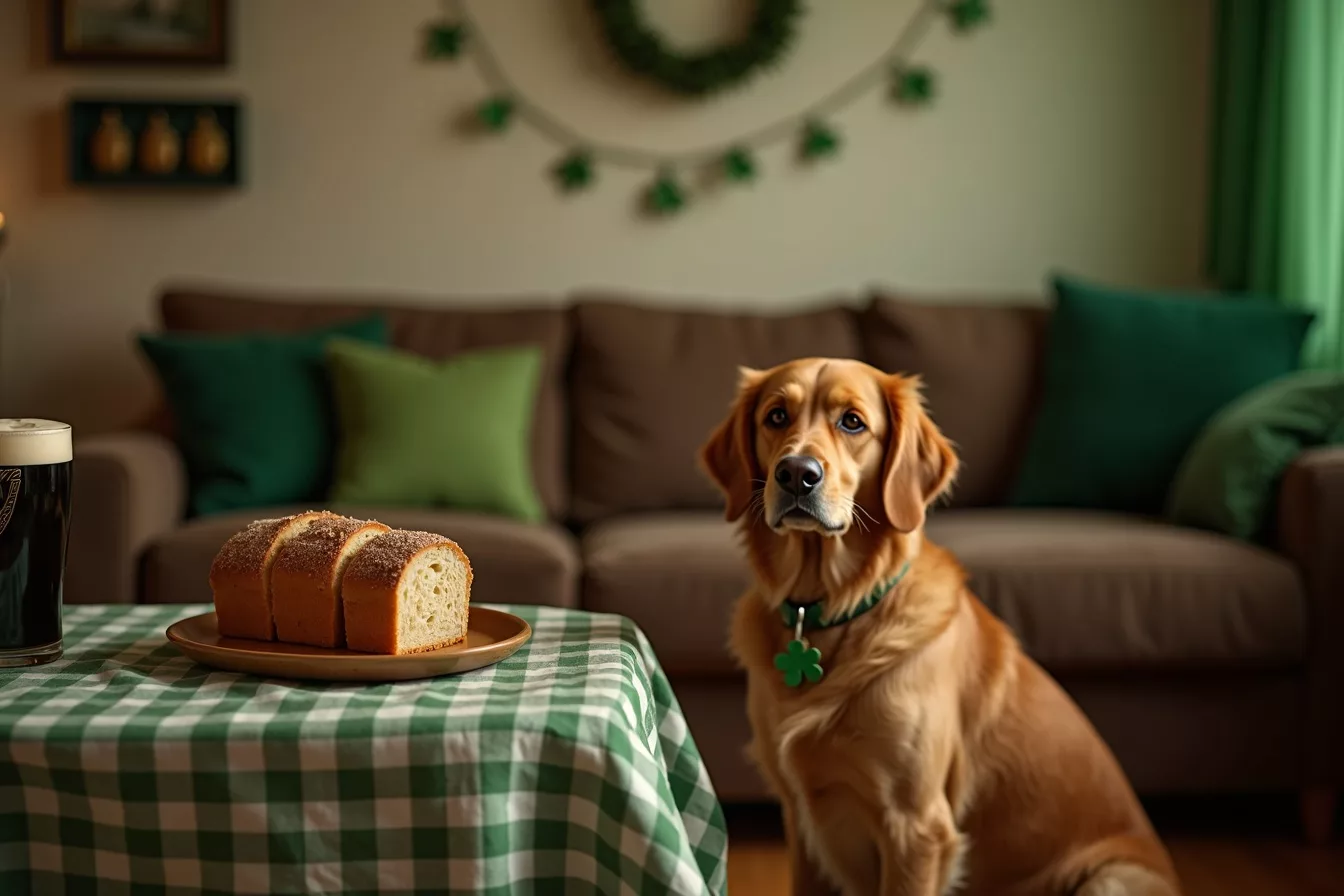
The RSPCA emphasises that even a handful of raisins can be dangerous. Soda bread, whilst beloved in Irish households, should never be shared with pets—even the “plain” variety often hides sultanas or currants.
✅ Expert Tip
Before any celebration, do a 2-minute sweep of low tables and floor areas where food might fall or be dropped. Keep a “pet-safe” treat jar visible so guests know what they can offer your dog or cat. Homemade apple or carrot bites are always welcome.
3. Onions and Garlic in Traditional Dishes
Colcannon, boxty, and Irish stew often feature garlic and onions for flavour. These allium vegetables damage red blood cells in pets, causing haemolytic anaemia. Symptoms develop over days and include lethargy, pale gums, and dark urine.
Cooked versions are slightly less toxic than raw, but both should be avoided entirely. Many owners don’t realise how widely garlic and onions feature in festive recipes.
4. Hops (in Craft Beer and Brewing)
If you’re brewing beer at home or have hops decorating your St Patrick’s party space, keep them far from pets. Hops trigger a severe, unpredictable reaction in dogs called “idiopathic hop toxicity,” causing rapid body temperature rise, muscle tremors, and organ damage.
Even small quantities are dangerous. The ASPCA recommends immediate veterinary care if exposure is suspected.
5. Green Food Colouring and Artificial Sweeteners
Green-dyed foods and treats—ice cream, cakes, cocktail snacks—often contain xylitol (an artificial sweetener) or excessive food colouring. Xylitol causes rapid insulin release and hypoglycaemia in dogs, leading to seizures within 30 minutes of ingestion.
“Read every label during festive season,” advises the PDSA. “Xylitol hides in sugar-free products, peanut butter, and ‘healthy’ snack bars.”
✅ Expert Tip
When guests arrive, give them a quick brief: “My dog/cat can’t have people food—but here’s what they love!” Provide a small bowl of pet treats and make it part of the celebration. Most guests genuinely want to help and simply don’t know the risks.
What to Do If Your Pet Eats Something Dangerous
Time is critical. If your pet ingests any toxic food, contact your vet or emergency clinic immediately—even if symptoms haven’t appeared yet. Have the product packaging or ingredient list ready.
The ASPCA Animal Poison Control Centre (US: 888-426-4435) and the UK’s Animal Poison Information Service (0844 892 0111) are available 24/7 during holidays.
Keep Your Celebration Pet-Friendly
Organise your St Patrick’s Day around your pets’ safety. Crate them in a quiet, secure space during peak party hours if needed. Ensure guests understand that well-intentioned food sharing could cause a medical emergency.
Remember: the most surprising point isn’t that festive food is risky—it’s that 64% of pet owners don’t check ingredients before sharing. A moment of prevention saves heartbreak and thousands in vet bills. Have you discussed St Patrick’s party safety with your household guests yet? Start that conversation now.