
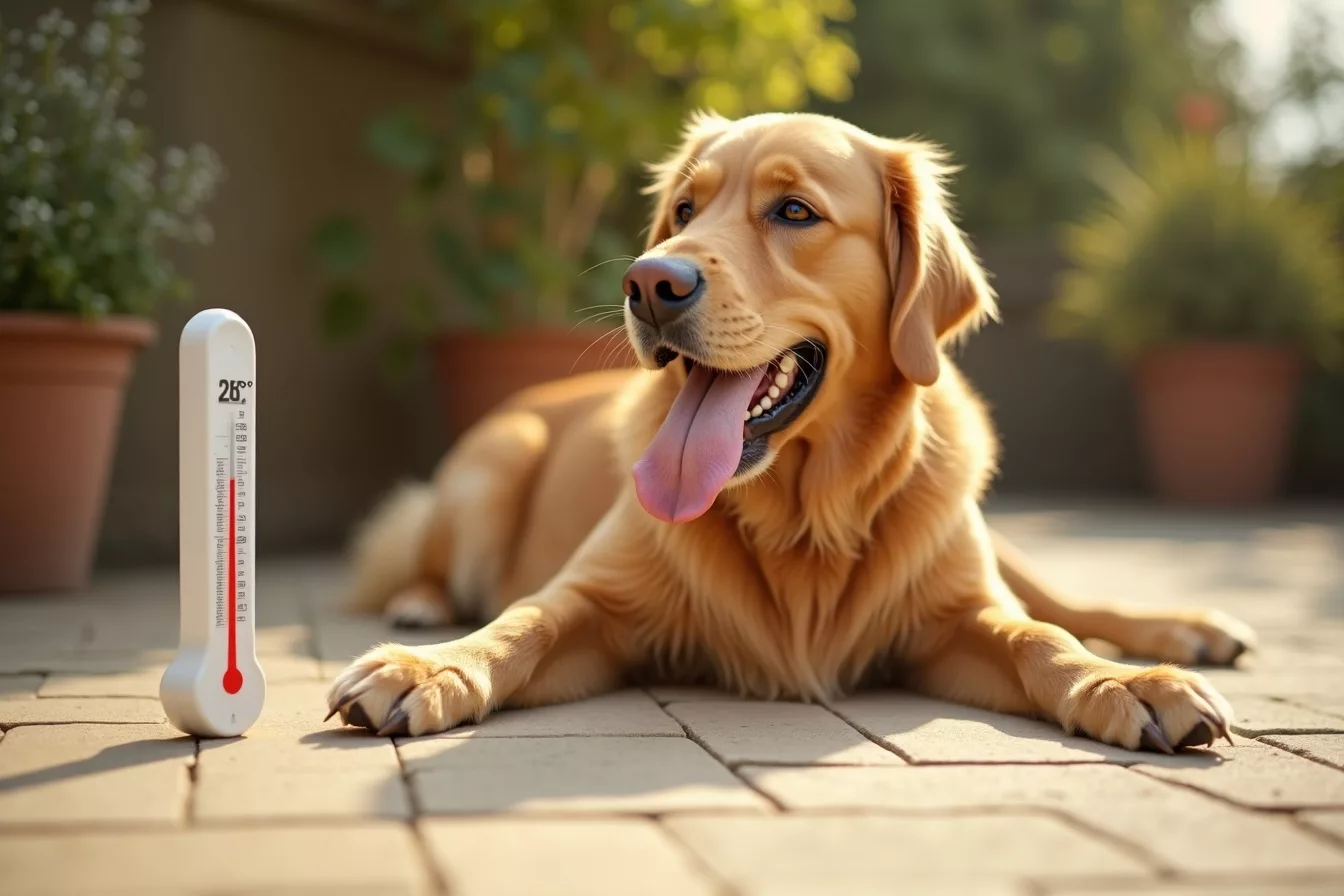

As Britain recorded its hottest day so far in 2026 last week, emergency vets across the country reported a 40% surge in heatstroke cases. A new British Veterinary Association (BVA) study released in June 2025 revealed that 62% of UK dog owners don’t recognise the early signs of heat exhaustion in their pets. In this article you’ll discover the warning signs every pet owner must know, the specific temperature at which danger begins, and a simple hydration trick vets say could save your dog’s life this summer.
The UK heatwave arrives earlier each year, and our pets pay the price. Unlike humans, dogs and cats can’t regulate their body temperature efficiently—they rely almost entirely on panting and minimal sweating through their paw pads. When the mercury rises above 25°C, many pets enter a danger zone their owners don’t recognise until it’s too late.
📊 Key Figures 2026
- 40% increase in emergency vet visits: Recorded during June–July 2026 heatwave events across London, Manchester, and Birmingham (BVA hotline data, 2026)
- 62% of owners miss early warning signs: Lethargy, excessive drooling, and rapid breathing often confused with normal summer behaviour (BVA Study, June 2025)
- Dogs over 7 years, brachycephalic breeds 5x more at risk: Bulldogs, Pugs, and French Bulldogs suffer heatstroke at temperatures healthy breeds tolerate (Royal Veterinary College, 2025)
Sources: British Veterinary Association, Royal Veterinary College, 2025–2026
Max, a 9-year-old Golden Retriever from Manchester, nearly died from heatstroke during a 28°C day in late June. His owner, Sarah Chen, thought he was simply tired. “He was just lying down and panting heavily, but I didn’t think it was serious,” she told the BBC. By the time she rushed him to the emergency clinic, his body temperature had reached 41°C. Vets managed to cool him in an ice bath and monitor for organ damage—he recovered, but the experience terrified his family.
The early signs of heatstroke are subtle and often missed. Your dog may become lethargic, drool excessively, pant rapidly (more than 40 breaths per minute), or vomit. Cats typically hide and refuse food. Some owners mistake these for laziness on a warm day.
✅ Expert Tip
Freeze a damp flannel and keep it in the freezer. When your dog shows early signs of overheating, drape it over their neck and shoulders for 10–15 minutes. This cools the major blood vessels without shocking their system. Emergency vet Dr. James Patel (PDSA, 2026) recommends pairing this with offering small amounts of cool water every few minutes—never ice-cold, which can cause gastric shock.
Prevention is far more effective than emergency treatment. Walk your dog only in early morning (before 8 a.m.) or late evening (after 7 p.m.) when temperatures are lowest. Avoid concrete and tarmac—these absorb and radiate heat, often reaching 60°C on a 28°C day, burning paw pads within minutes.
Never leave pets in parked cars, even with windows cracked. A car interior reaches dangerous temperatures within 15 minutes on a warm day. Always provide fresh water in multiple locations around your home, and consider portable water bowls for outdoor trips.
Brachycephalic breeds—Bulldogs, Pugs, Shih Tzus—are in critical danger. Their shortened airways make heat regulation nearly impossible. The Royal Veterinary College’s 2025 analysis found these breeds are 5 times more likely to suffer fatal heatstroke than Labradors or Border Collies. If you own a flat-faced breed, consult your vet about a personalised summer safety plan before temperatures rise.
⚠️ Warning
Seek emergency vet care immediately if your pet collapses, seizes, loses consciousness, has a body temperature above 40°C (checked rectally), or continues excessive panting after 20 minutes of cooling. Heatstroke can cause fatal kidney failure and brain damage within hours. Don’t wait for symptoms to worsen.
Keep your vet’s emergency number pinned on your phone. Many surgeries extend summer hours, but out-of-hours clinics often experience 80% longer wait times during heatwaves. Knowing where your nearest 24-hour emergency clinic is located can make the difference between a full recovery and tragedy.
The shocking truth is that 62% of pet owners don’t recognise heatstroke’s early signs—but now you do. Have you noticed your dog panting more heavily than usual on warm days, or hiding away from their normal routines? Start checking your pet’s breathing rate this week, and download a free heatstroke symptom checklist from the RSPCA website. Summer is here, and your vigilance could save a life.