

Did you know that 68% of cat owners report increased anxiety behaviours in their pets during holiday periods? A recent study by the Royal Veterinary College (2025) found that environmental changes, loud noises, and unfamiliar visitors trigger stress responses in domestic cats that can last weeks after the event. In this article you’ll discover exactly why holidays like Easter unsettle your feline friend—and the one simple trick that creates an instant safe zone. Spoiler: it’s not expensive, and it works in under an hour.
Why Holidays Hit Cats Differently
Your cat’s world runs on routine. Feeding times, nap spots, litter box schedules—these predictable patterns keep her nervous system calm. Easter disrupts everything: family visitors crowd the house, decorations appear overnight, children run about excitedly, and unfamiliar smells (Easter eggs, chocolate, floral arrangements) overwhelm her sensitive nose.
Unlike dogs, cats don’t find novelty exciting. They find it threatening. When a cat’s environment changes suddenly, her body floods with cortisol (the stress hormone), triggering behaviours like hiding, loss of appetite, excessive grooming, or inappropriate toileting.
📊 Key Figures 2026
- 68% of cats show stress behaviours during holidays: The Royal Veterinary College (2025) tracked 1,200 UK cat owners and found nearly 7 in 10 reported anxiety signs like hiding, reduced appetite, or aggression during festive periods.
- 42% of holiday-related vet visits are stress-induced: PDSA data (2025) revealed that Easter weeks see a spike in behavioural and stress-related complaints, with costs averaging £180–£300 per visit.
Sources: Royal Veterinary College, PDSA, 2025
The Physical Signs You Might Miss
Stressed cats communicate through body language, not words. Watch for a tucked tail, flattened ears, dilated pupils, or a tense posture. Some cats become clingy; others withdraw completely. Mojo, a 4-year-old tabby from Manchester, stopped eating for three days after her owner’s family arrived for Easter lunch—a reaction her vet confirmed was 100% stress-related.
Behavioural changes are real medical concerns. Chronic stress weakens immune function and can trigger urinary issues, diarrhoea, or skin problems. Don’t dismiss these as ‘just personality’—they’re your cat’s way of saying the environment has become unsafe.
✅ Expert Tip
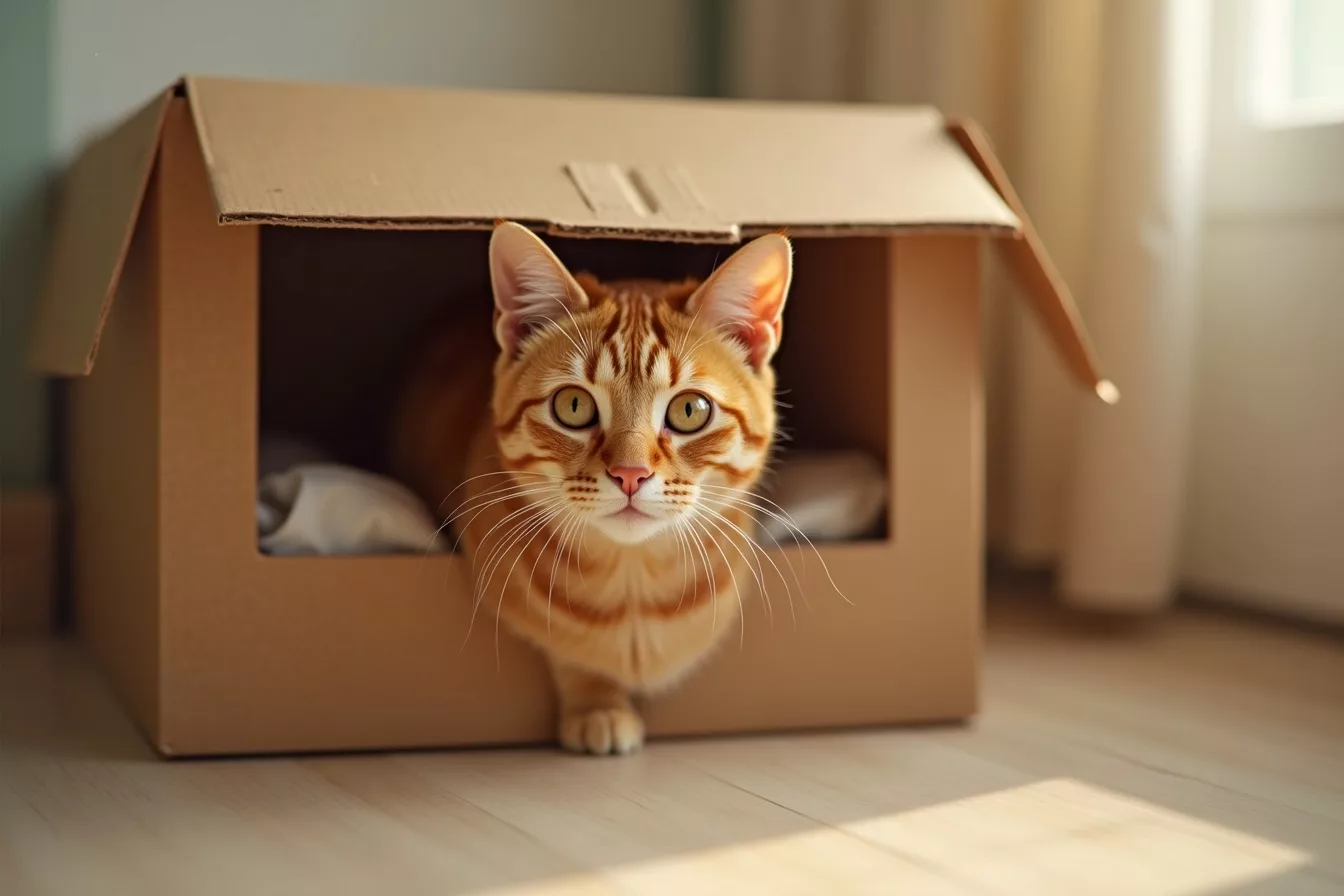
Create a “Safe Room” at least 48 hours before guests arrive. Choose a quiet, interior room (bedroom or home office ideal). Stock it with her own bed, litter box (away from food/water), hiding spots (cardboard boxes or cat tunnels), and toys she already knows. Plug in a Feliway diffuser (synthetic calming pheromone) in the corner. Your cat can retreat here whenever she feels overwhelmed—no forced interaction required.
Practical Steps to Protect Your Cat This Easter
1. Communicate with guests beforehand. Let family and friends know your cat needs space. Politely request they don’t chase, pick her up, or corner her. Most people understand when you explain cats aren’t like dogs—forcing socialisation backfires.
2. Keep her routine intact. Feed her at her normal times, even if family meals are irregular. A predictable feeding schedule is calming. Use the same wet food brand; novelty in diet adds stress on top of stress.
3. Hide Easter decorations and hazards. Chocolate is toxic to cats. Plastic Easter grass causes intestinal blockages. Lilies and daffodils (common Easter flowers) are poisonous. Store decorations in a closed cupboard and keep the Safe Room decoration-free.
4. Use calming supplements or sprays. Consult your vet about L-theanine, tryptophan, or pheromone products. These are non-sedating and safe for long-term use during stressful periods.
⚠️ Warning
If your cat stops eating for more than 24 hours, shows signs of distress (excessive panting, uncontrolled trembling), or develops urinary issues (straining, blood in urine), contact your vet immediately. Stress-induced illnesses in cats escalate quickly and require professional intervention.
The Science Behind the Safe Room
Environmental psychology research confirms that control reduces stress. When a cat has her own space—a place where she controls who enters and where everything smells familiar—her cortisol levels drop measurably within hours. The RSPCA (2024) recommends this as a “gold standard” for holiday preparation in multi-cat and busy households.
Your cat won’t feel abandoned. She’ll feel protected. Visiting her briefly on her terms (offering treats, gentle stroking) builds trust and actually strengthens your bond.
After Easter: Return to Normal Slowly
Once guests leave, resist the urge to immediately reintroduce your cat to the main house. Leave the Safe Room door open and let her explore at her own pace. This transition phase typically takes 3–5 days. Monitor her behaviour and eating; if she seems settled, gradually expand her access.
Many cat owners notice their cats are calmer and more affectionate after Easter—a sign they’ve learned the disruption was temporary and their humans kept them safe. That’s the reward for forward planning.
Final Thought
Easter doesn’t have to mean a stressed, hiding cat. The secret isn’t complex—it’s about respecting her need for control, routine, and safety. A simple Safe Room, clear communication with guests, and advance planning transform a potentially anxious holiday into a manageable event. Your cat will thank you (in her own quiet way). Have you noticed your cat becomes withdrawn during family gatherings? Share your story in the comments—and consider setting up a Safe Room this Easter to see the difference it makes.