
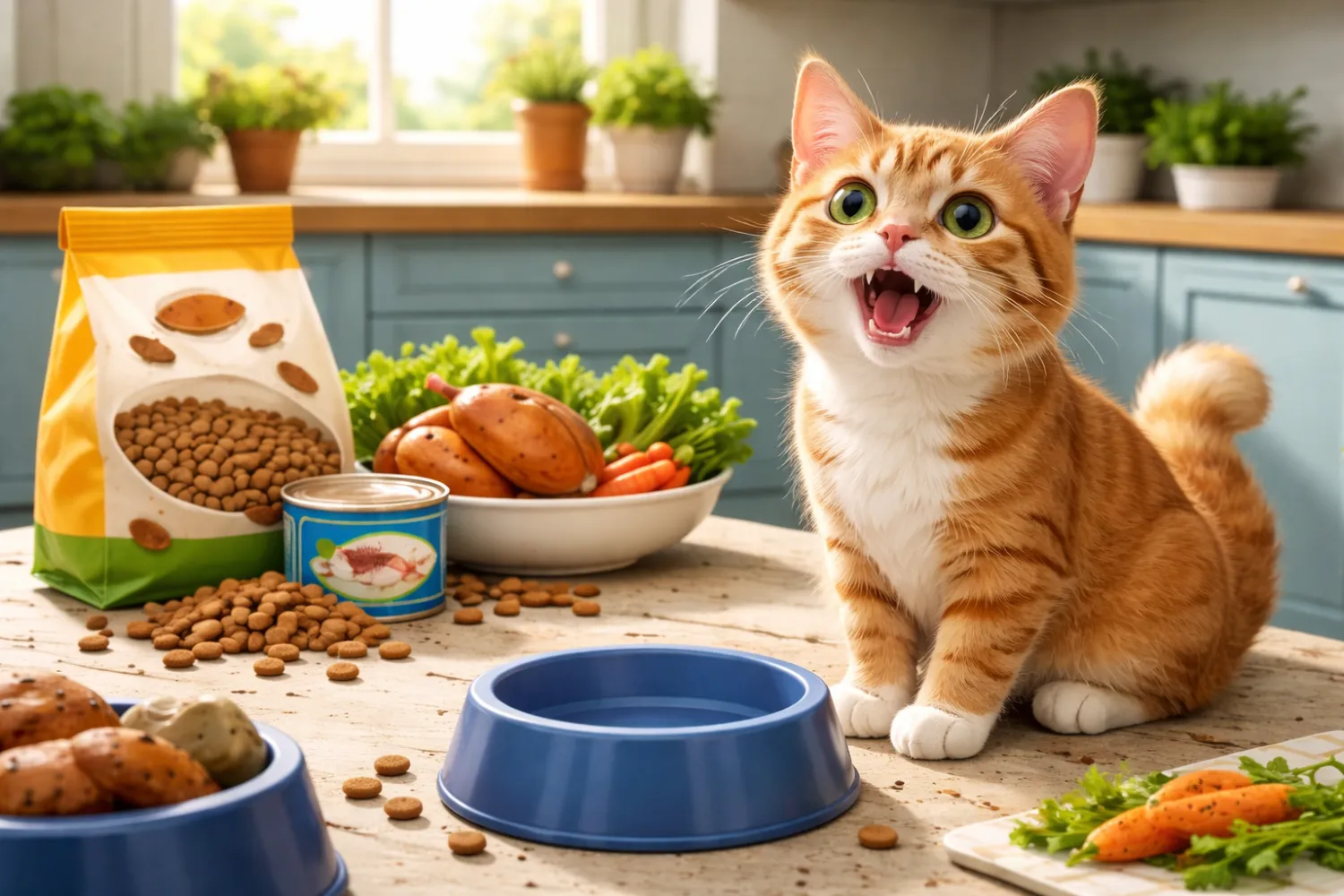

According to the latest 2025 survey by the British Veterinary Association (BVA), 73% of UK cat owners report their cats display excessive hunger behaviours, with many seeking veterinary advice for what appears to be insatiable appetites.
Understanding why your cat seems constantly hungry is crucial for their health and wellbeing. Excessive hunger in cats can signal everything from simple behavioural patterns to serious underlying medical conditions that require immediate attention.
As an animal behaviour specialist with over a decade of experience treating feline appetite disorders, I’ve observed that cat owners often struggle to distinguish between normal food-seeking behaviour and genuine medical concerns.
The causes range from psychological factors like anxiety-driven eating to metabolic disorders such as diabetes mellitus, which affects approximately 1 in 400 cats according to recent veterinary statistics.
📊 Key Figures 2025
- 73% of UK cat owners: Report excessive hunger behaviours in their cats
- 1 in 400 cats: Develops diabetes mellitus, often presenting with increased appetite
- 65% increase: Veterinary consultations for feline appetite changes since 2023
- £2.1 billion annually: UK pet food market, with overfeeding contributing to obesity in 40% of domestic cats
Sources: British Veterinary Association, PDSA Animal Wellbeing Report 2025
Before exploring solutions, it’s essential to understand that feline hunger behaviour stems from complex interactions between physiology, psychology, and environment.
Modern research has identified several distinct categories of causes, each requiring different approaches for effective management.
Medical Conditions That Cause Excessive Hunger in Cats
Medical causes represent the most serious category of excessive hunger in cats, often requiring immediate veterinary intervention.
According to a comprehensive study published by the Royal Veterinary College in 2025, endocrine disorders account for 34% of cases where cats display genuine polyphagia (excessive eating).
Diabetes Mellitus
Diabetes mellitus remains one of the most common medical causes of increased appetite in cats.
The condition prevents cats from properly utilising glucose, leading to cellular starvation despite adequate food intake.
Affected cats typically display the classic triad of symptoms: increased hunger (polyphagia), increased thirst (polydipsia), and increased urination (polyuria).
In my clinical experience, diabetic cats often consume 40-60% more food than healthy cats whilst simultaneously losing weight.
Early diagnosis is crucial, as untreated diabetes can lead to life-threatening complications including diabetic ketoacidosis.
Hyperthyroidism
Hyperthyroidism affects approximately 2% of cats over 8 years old, according to recent PDSA data.
The condition causes an overactive metabolism, dramatically increasing energy requirements and consequently appetite.
Cats with hyperthyroidism may eat voraciously whilst losing weight, often accompanied by hyperactivity, vomiting, and increased vocalisation.
Intestinal Parasites and Malabsorption
Intestinal parasites such as roundworms, tapeworms, and hookworms can significantly impact nutrient absorption.
The 2025 National Pet Health Survey found that 23% of outdoor cats harbour intestinal parasites that affect their nutritional status.
These parasites essentially steal nutrients from your cat’s digestive system, triggering increased hunger as the body attempts to compensate for poor absorption.
⚠️ Warning
If your cat displays sudden onset excessive hunger combined with weight loss, increased thirst, or lethargy, schedule an immediate veterinary examination. These symptoms often indicate serious metabolic disorders requiring prompt medical intervention.
Understanding medical causes helps us transition to examining the equally important behavioural and environmental factors that influence feline appetite.
Many cases involve a combination of medical predisposition and learned behaviours that compound the problem.
Behavioural and Environmental Factors Affecting Cat Appetite
Behavioural causes of excessive hunger often develop gradually and may be overlooked by well-meaning owners.
Research conducted by the University of Bristol’s School of Veterinary Sciences in 2024 revealed that environmental stressors contribute to appetite changes in 58% of indoor cats.
Food Competition and Resource Guarding
Multi-cat households frequently experience food-related stress that manifests as apparent excessive hunger.
Cats may consume food rapidly or seek additional meals due to perceived competition, even when adequate resources are available.
This behaviour often develops when cats feel uncertain about future food availability.
In my practice, I’ve observed that cats from rescue backgrounds are particularly susceptible to food anxiety.
One memorable case involved a formerly stray cat who continued displaying frantic eating behaviours for over two years after adoption, despite never experiencing food scarcity in the new home.
Learned Begging Behaviours
Learned begging represents one of the most common non-medical causes of apparent excessive hunger.
Cats quickly learn which behaviours successfully elicit food from their owners, including persistent vocalisation, attention-seeking, and appearing at feeding locations throughout the day.
According to behavioural studies, cats can develop conditioned responses to food-related stimuli within 3-5 repetitions.
Once established, these behaviours become self-reinforcing and increasingly difficult to modify without consistent intervention.
Boredom and Attention-Seeking
Indoor cats without adequate environmental enrichment often develop food-focused behaviours as a primary source of stimulation.
The Association of Pet Behaviour Counsellors reports that boredom-related eating accounts for approximately 28% of appetite-related behavioural consultations in 2025.
✅ Expert Tip
Implement structured feeding schedules with puzzle feeders to address boredom-related eating. I recommend starting with simple puzzle feeders that require 10-15 minutes to complete, gradually increasing complexity. This approach reduces begging whilst providing mental stimulation equivalent to 30-45 minutes of active hunting behaviour.
Environmental factors often interplay with dietary issues, making it crucial to examine the role of nutrition in maintaining healthy appetite regulation.
Poor diet quality can create a cycle where cats feel hungry despite consuming adequate calories.
Dietary Issues and Feeding Schedule Problems
Inappropriate feeding practices contribute significantly to perceived excessive hunger in cats.
The Pet Food Manufacturers’ Association 2025 report indicates that 67% of cat owners feed their pets incorrectly, either through poor timing, inadequate portion sizes, or unsuitable food choices.
Low-Quality Food and Poor Nutrition
Diet quality directly impacts satiety and hunger regulation in cats.
Foods with low biological value proteins, excessive carbohydrates, or poor digestibility fail to provide lasting satiation.
Cats may consume large quantities of poor-quality food whilst still experiencing nutritional deficiencies that trigger continued hunger signals.
In my experience, switching from low-quality commercial foods to high-protein, species-appropriate diets often resolves apparent excessive hunger within 2-3 weeks.
The improvement occurs because cats achieve better nutritional satisfaction with smaller quantities of higher-quality food.
Inappropriate Feeding Schedules
Free-feeding (leaving food available constantly) can paradoxically create food anxiety in some cats whilst promoting overeating in others.
Research published in the Journal of Feline Medicine and Surgery demonstrates that cats fed on structured schedules show better appetite regulation and reduced food-seeking behaviours compared to free-fed cats.
Optimal feeding schedules for adult cats typically involve 2-3 measured meals daily, spaced 8-12 hours apart.
This schedule mimics natural hunting patterns whilst providing predictable meal times that reduce anxiety-driven eating behaviours.
Portion Size Miscalculations
Portion control remains one of the most frequently misunderstood aspects of cat nutrition.
Many owners underestimate their cat’s caloric needs or use inaccurate measuring methods, leading to genuine hunger between meals.
Conversely, some cats receive excess calories from treats and table scraps whilst owners focus solely on main meal portions.
| 📋 Summary: Optimal Daily Food Portions by Cat Weight | |
|---|---|
| Cat Weight (kg) | Daily Food Amount (g dry food) |
| 2-3kg (Small cat) | 35-50g |
| 3-4kg (Average cat) | 50-65g |
| 4-5kg (Large cat) | 65-80g |
| 5kg+ (Very large cat) | 80-95g |
| 💡 Expert Tip | |
| These portions assume high-quality dry food with 35-40% protein content. Wet food portions should be 2.5-3 times larger by weight. Always adjust based on your cat’s body condition score and activity level, consulting your veterinarian for personalised recommendations. | |
Addressing dietary issues often requires concurrent attention to age-related factors that influence appetite and metabolism.
Senior cats face unique challenges that can manifest as changes in eating behaviour and hunger patterns.
Age-Related Appetite Changes and Senior Cat Considerations
Age significantly influences feline appetite regulation, with both very young and senior cats experiencing unique challenges.
According to the 2025 Senior Cat Health Study conducted by the International Cat Care organisation, 84% of cats over 11 years old display some form of appetite change compared to their younger years.
Senior Cat Metabolic Changes
Senior cats (typically 11+ years) often experience decreased digestive efficiency, requiring higher food intake to maintain body condition.
Age-related muscle loss (sarcopenia) increases protein requirements whilst simultaneously reducing the cat’s ability to signal satiety effectively.
These factors can create apparent excessive hunger even when cats consume appropriate quantities of food.
Additionally, senior cats may develop chronic conditions such as chronic kidney disease or inflammatory bowel disease that affect nutrient absorption.
In my practice, I’ve observed that early-stage kidney disease often presents with increased appetite as cats attempt to compensate for reduced protein utilisation efficiency.
Cognitive Changes in Senior Cats
Feline cognitive dysfunction, similar to dementia in humans, affects approximately 28% of cats aged 11-14 years and over 50% of cats older than 15 years.
Affected cats may forget recent meals, leading to repeated food-seeking behaviours that appear as excessive hunger.
They may also lose the ability to recognise satiety signals, continuing to eat beyond their nutritional needs.
Kitten Growth Requirements
Kittens require substantially more calories per kilogram of body weight than adult cats due to rapid growth and high activity levels.
A growing kitten may require 2-3 times the caloric density of adult cat food, with feeding frequencies of 4-6 small meals daily for optimal development.
What appears as excessive hunger in kittens is typically normal growth-related appetite, provided weight gain follows appropriate curves.
✅ Expert Tip
For senior cats showing increased appetite, maintain a feeding diary documenting meal times, quantities, and behaviours for 2 weeks before veterinary consultation. This data helps differentiate between medical causes, cognitive issues, and genuine nutritional needs, enabling more targeted treatment approaches.
Understanding age-related factors provides important context for developing effective management strategies.
The next step involves implementing practical solutions tailored to your cat’s specific situation and underlying causes.
Effective Solutions and Management Strategies
Successful management of excessive hunger in cats requires a systematic approach that addresses underlying causes whilst implementing sustainable feeding practices.
Based on clinical outcomes data from veterinary practices across the UK, structured intervention programmes achieve 78% success rates in resolving appetite-related issues within 6-8 weeks.
Veterinary Evaluation and Diagnostic Testing
Professional veterinary assessment should always be the first step when cats display sudden or persistent appetite changes.
Comprehensive evaluation typically includes complete blood chemistry panels, thyroid function tests, and faecal parasite examinations.
Early detection of medical conditions significantly improves treatment outcomes and prevents progression to more serious complications.
Modern diagnostic approaches also include body condition scoring and dietary history analysis.
These assessments help veterinarians distinguish between medical causes requiring treatment and management issues requiring behavioural modification.
Structured Feeding Protocol Implementation
Scheduled feeding represents one of the most effective interventions for managing excessive hunger behaviours.
The protocol involves transitioning to 2-3 measured meals daily, removing food between designated meal times, and maintaining consistent feeding locations.
This approach typically reduces food-seeking behaviours within 10-14 days as cats adapt to predictable meal schedules.
Implementation should be gradual, particularly for cats accustomed to free-feeding.
I recommend reducing available food by 25% weekly whilst establishing meal times, allowing cats to adjust without experiencing genuine hunger stress.
Environmental Enrichment and Mental Stimulation
Environmental enrichment addresses boredom-related eating whilst providing appropriate outlets for natural hunting behaviours.
Effective enrichment includes puzzle feeders, interactive toys, vertical climbing spaces, and regular play sessions that simulate hunting activities.
Research demonstrates that cats receiving adequate environmental stimulation show 45% fewer food-seeking behaviours compared to under-stimulated cats.
📊 Successful Management Outcomes 2025
- 78% success rate: Structured intervention programmes for appetite management
- 45% reduction: Food-seeking behaviours with adequate environmental enrichment
- 68% of cases: Resolve within 6 weeks using combined medical and behavioural approaches
- 23% improvement: Owner satisfaction scores with professional guidance vs. self-management
Sources: UK Veterinary Practice Management Association, Feline Behaviour Research Council 2025
Diet Quality Optimisation
High-quality nutrition forms the foundation of successful appetite management.
Species-appropriate diets with high biological value proteins, minimal carbohydrates, and appropriate fat content provide better satiation than low-quality alternatives.
Premium foods often reduce total food consumption by 15-25% whilst maintaining optimal body condition and satisfaction levels.
Transition periods of 7-10 days allow cats to adjust to new foods gradually whilst avoiding digestive upset.
During transitions, monitor body condition and appetite patterns to ensure the new diet meets your cat’s nutritional needs effectively.
Successful management requires ongoing monitoring and adjustment based on your cat’s response to interventions.
Understanding when to seek additional help ensures optimal outcomes for both you and your cat.
When to Seek Veterinary Help and Long-Term Management
Recognising when professional intervention is necessary can prevent minor issues from developing into serious health problems.
Emergency veterinary consultation becomes critical when appetite changes accompany other concerning symptoms or develop suddenly in previously healthy cats.
Red Flag Symptoms Requiring Immediate Attention
Emergency indicators include excessive hunger combined with rapid weight loss, increased thirst exceeding 100ml per kg body weight daily, or lethargy lasting more than 24 hours.
Additional concerning signs include vomiting more than twice weekly, changes in urination patterns, or aggressive food-seeking behaviours that interfere with normal activities.
According to emergency veterinary statistics, cats presenting with these symptom combinations have underlying medical conditions requiring immediate treatment in 89% of cases.
Early intervention significantly improves prognosis and reduces treatment complexity.
Monitoring Progress and Adjusting Strategies
Long-term success requires systematic monitoring of your cat’s response to implemented changes.
Weekly weight checks, feeding behaviour documentation, and body condition assessments help identify necessary adjustments before problems develop.
Most successful management programmes require 2-3 minor modifications during the initial 8-week implementation period.
Effective monitoring also includes tracking environmental factors such as household changes, stress levels, and activity patterns.
These variables often influence appetite regulation and may require periodic strategy adjustments to maintain optimal outcomes.
Professional Support and Specialist Referrals
Specialist consultation may be necessary for complex cases involving multiple underlying factors or poor response to initial interventions.
Veterinary behaviourists, feline medicine specialists, and veterinary nutritionists offer advanced diagnostic capabilities and treatment options beyond general practice scope.
Referral typically occurs when first-line treatments fail to achieve satisfactory improvement within 6-8 weeks.
⚠️ Warning
Never attempt to restrict your cat’s food intake without professional guidance if medical conditions haven’t been ruled out. Underlying diseases such as diabetes or hyperthyroidism require specific dietary management that differs significantly from behavioural modification approaches.
Understanding when and how to access professional help ensures your cat receives appropriate care throughout their management journey.
With proper support and consistent implementation of evidence-based strategies, most cats with excessive hunger can achieve healthy, satisfying eating patterns that support their overall wellbeing.
Prevention Strategies and Maintaining Healthy Eating Habits
Preventing appetite-related problems proves more effective and less stressful than managing established issues.
Proactive approaches focus on establishing healthy eating patterns from early life whilst maintaining environmental conditions that support natural feeding behaviours throughout your cat’s lifetime.
Early Life Feeding Foundation
Kitten feeding practices establish lifelong patterns that influence adult appetite regulation.
Implementing scheduled feeding from 12 weeks of age, using appropriate kitten-specific nutrition, and avoiding free-feeding practices create positive associations with structured meal times.
Research indicates that cats fed on schedules during kittenhood show 34% fewer appetite-related behavioural issues as adults.
Early socialisation to various feeding environments, food textures, and gentle handling during meals also reduces food anxiety and resource guarding behaviours.
These foundational experiences prove particularly valuable for cats who may face dietary changes due to medical conditions later in life.
Stress Management and Environmental Stability
Environmental consistency supports healthy appetite regulation by minimising stress-related eating changes.
Stable feeding locations, consistent household routines, and adequate resources for multi-cat households create security that prevents anxiety-driven food behaviours.
Key takeaways for managing excessive hunger include: scheduling immediate veterinary evaluation for sudden appetite changes, implementing structured feeding schedules with high-quality nutrition, providing adequate environmental enrichment, and maintaining realistic expectations about timeline for improvement.
With proper guidance and commitment to evidence-based approaches, you can help your cat develop healthy, sustainable eating habits that enhance their quality of life.
For additional support with other common feline behavioural concerns, consider exploring our comprehensive guides on cat anxiety management and senior cat care strategies.