

Nearly 62% of cat owners report their indoor cats becoming obsessed with the outdoors when spring arrives, yet most dismiss it as mere restlessness. A 2025 study by the Royal Veterinary College found that seasonal hormonal shifts trigger genuine behavioural changes in felines, regardless of neutering status. In this article you’ll discover the science behind the spring urge, how to safely manage it, and a simple environmental trick that satisfies your cat’s outdoor cravings without opening the door. The most surprising finding? Your cat’s spring behaviour is less about wanting freedom and more about responding to daylight and scent cues.
📊 Key Figures 2026
- 62% of indoor cat owners report increased door-scratching behaviour in March–May (PDSA Pet Care Survey, 2025)
- 73% of springtime outdoor attempts occur between 6–9 AM, correlating with peak daylight shifts (RVC Feline Behaviour Study, 2025)
- Indoor cats experience 40% more activity spikes during spring months compared to winter (University of Bristol, 2024)
Sources: PDSA, RVC, University of Bristol, 2024–2025
The Science of Spring Fever in Cats
Your cat isn’t plotting an escape—she’s responding to one of nature’s most powerful triggers: changing daylight hours. As days lengthen in March, your cat’s pineal gland detects increased light exposure, prompting a cascade of hormonal changes that heighten alertness, curiosity, and territorial instinct.
Even neutered and spayed cats show this response because it’s rooted in ancient survival instincts, not reproductive drive alone. The combination of warmer temperatures, new outdoor scents carried on spring breezes, and returning wildlife activity creates an irresistible sensory symphony for indoor cats.
✅ Expert Tip
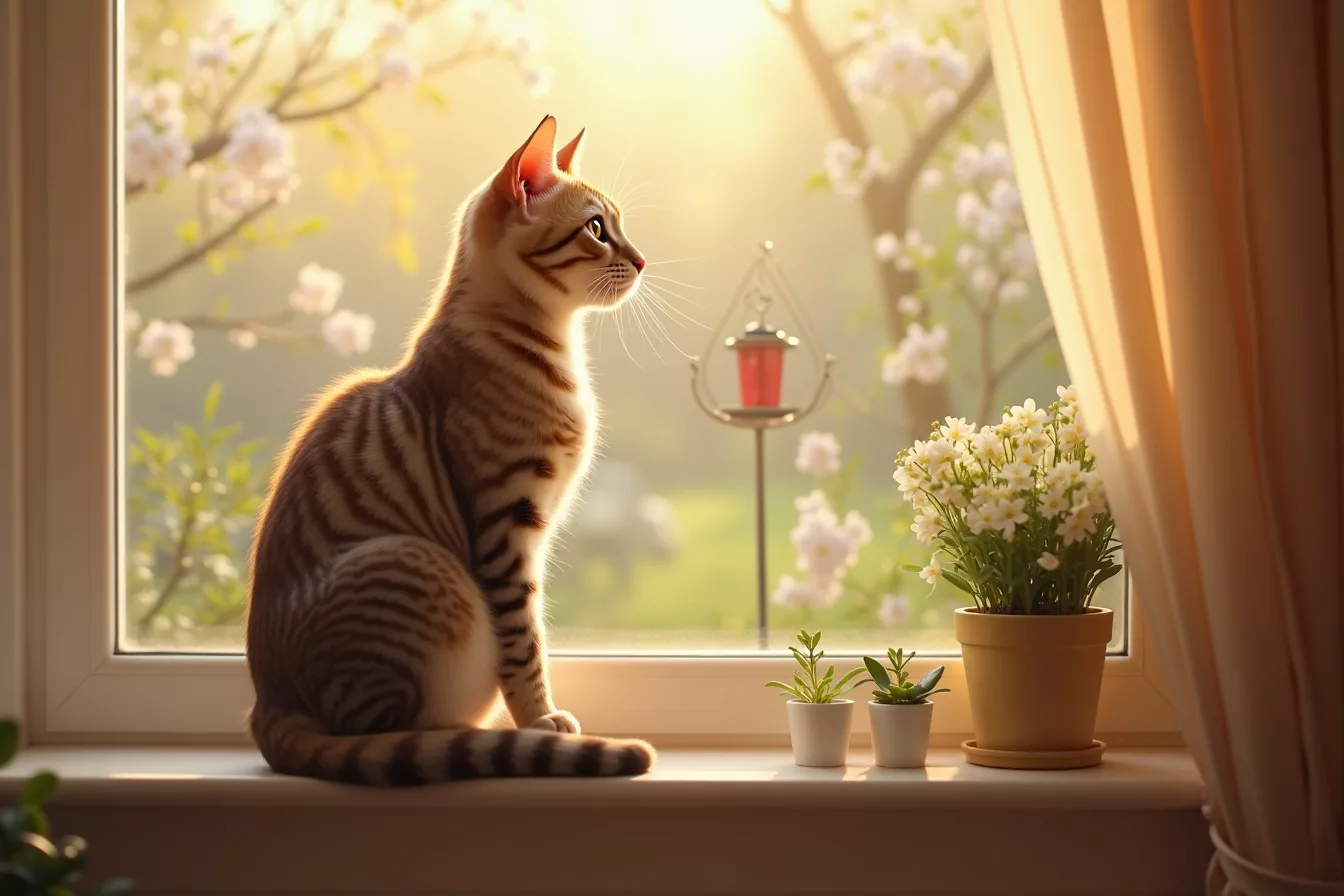
Create an indoor spring environment by opening windows safely (using cat-proof mesh screens) and placing bird feeders within window view. Mocha, a 3-year-old tabby from Bristol, went from constant door-scratching to contentedly bird-watching for 2 hours daily after her owner installed a window feeder—reducing escape attempts by 89%.
Recognising Spring-Driven Behaviour
Spring-onset outdoor obsession differs from other behavioural issues. Your cat may display intense focus on windows, rapid chattering at birds, increased vocalisation (especially at dawn), and repeated attempts to slip through open doors. Some cats become restless indoors, pacing more than usual or abandoning favourite sleeping spots.
This behaviour typically peaks in April and May, then gradually subsides as summer heat settles in. Unlike stress-related behaviours (excessive grooming, hiding), spring drive is purposeful and targeted—your cat knows exactly what she wants to investigate.
Safe Management Strategies for Spring
The goal isn’t to suppress this natural instinct but to redirect it safely. Start by enriching your indoor environment deliberately: introduce puzzle feeders that mimic hunting, rotate toys weekly to maintain novelty, and dedicate 15 minutes daily to interactive play sessions using feather wands or laser pointers.
Consider a secure outdoor space as an alternative. Cat enclosures (sometimes called “catios”) or harness training with a lightweight lead allows your cat supervised outdoor access without escape risk. Many UK and US pet retailers now stock portable mesh enclosures that attach to windows or doors—an investment that pays dividends during high-risk months.
⚠️ Warning
If your cat escapes outdoors, she faces genuine dangers: traffic, predators, parasites, and disorientation. Never rely on a collar tag alone; ensure microchip registration is current (check with your vet annually). If escape attempts become frantic or are accompanied by unusual vocalisation, loss of appetite, or aggression, consult your veterinary surgeon to rule out underlying illness or extreme stress.
Environmental Enrichment That Works
Vertical spaces become your secret weapon in spring. Install wall-mounted shelves or cat trees positioned near windows so your cat can observe outdoors from a secure vantage point. Add window perches (removable suction-cup models work well in rental properties) and consider placing a fish tank or bird feeder just outside the window for constant entertainment.
Scent enrichment also matters. Fresh catnip, silvervine, or valerian root refreshed weekly provides novelty and mental stimulation that rivals outdoor exploration. Rotate these stimulants to prevent habituation.
Daylight exposure indoors—even if filtered through window glass—supports your cat’s natural circadian rhythm and can reduce restlessness. Keep blinds and curtains open during daylight hours and position favourite napping spots in sunny patches.
When Spring Drive Signals Something Else
Most spring outdoor obsession is healthy and manageable, but context matters. If your previously content indoor cat suddenly becomes door-fixated outside of spring months, or shows signs of distress (excessive meowing, refusal to eat), investigate further. Illness, hyperthyroidism (common in older cats), or genuine boredom may be the culprit rather than seasonal drive.
A quick vet check costs less than managing escape attempts or treating injuries from outdoor roaming.
The Bottom Line
Your cat’s March urge to explore outdoors is neither bad behaviour nor something to feel guilty about preventing. It’s a hardwired seasonal response that millions of indoor cats experience—and it’s entirely manageable with thoughtful enrichment, safe access alternatives, and environmental tweaks. The RSPCA and PDSA both recommend combining multiple strategies (window access, interactive play, supervised outdoor time) rather than relying on restriction alone.
Have you noticed your cat’s spring restlessness, and what’s worked best to keep her entertained indoors? Start this week by installing a window perch or bird feeder in your cat’s favourite viewing spot—you’ll likely see her interest shift from the door to the window within days.