
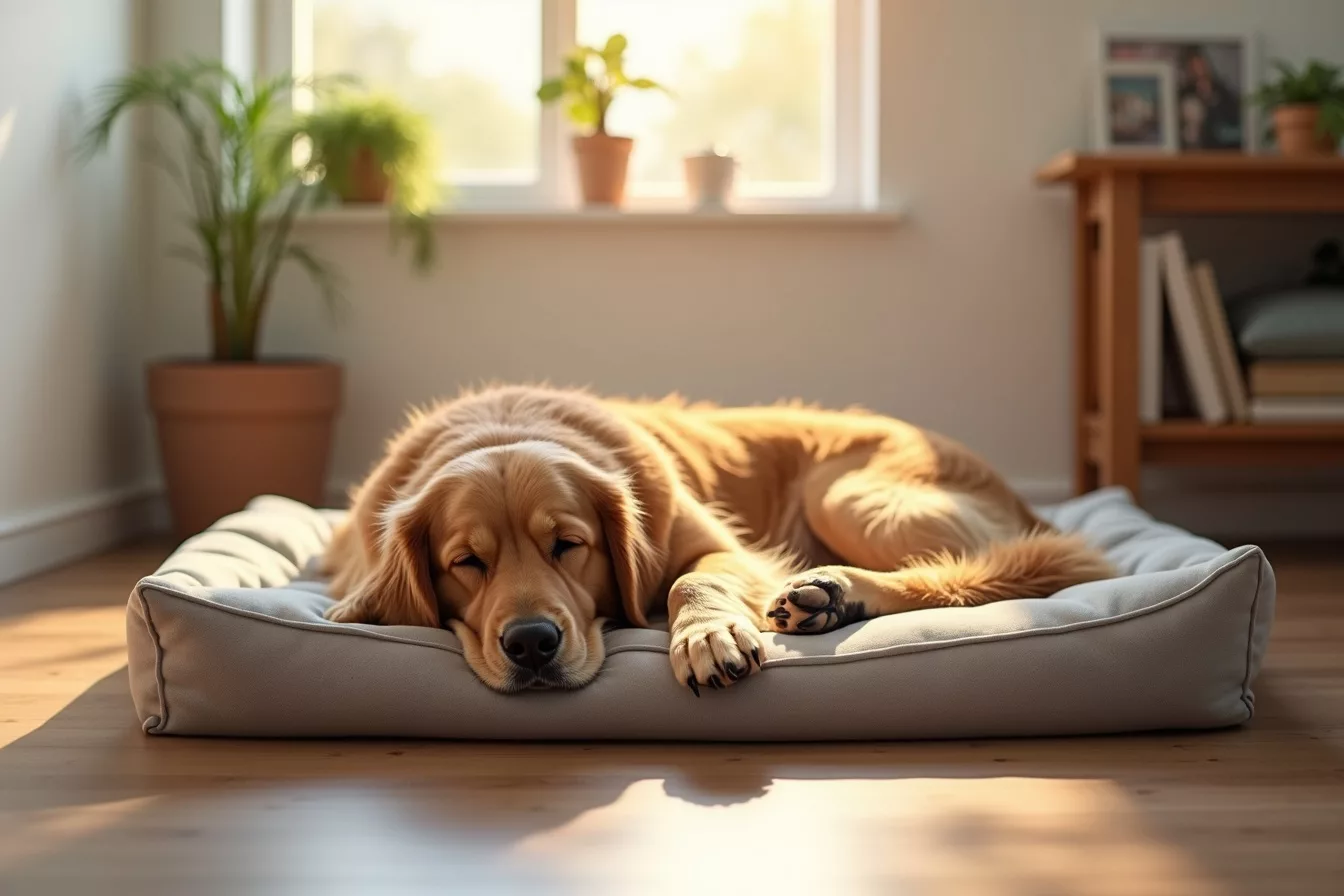

Your dog snoozes for 12 to 14 hours a day—but is that normal, or a sign something’s wrong? A groundbreaking 2025 study from the Royal Veterinary College reveals surprising truths about canine sleep patterns that most dog owners completely misunderstand. In this article, you’ll discover why your pooch is basically a four-legged nap champion, what vets say about healthy sleep cycles, and the one warning sign you absolutely cannot ignore.
📊 Key Figures 2026
- Dogs sleep 12–16 hours daily: A 2025 RVC canine behaviour study found healthy adult dogs average 13.5 hours, with senior dogs (7+ years) sleeping up to 18 hours.
- 73% of UK dog owners worry unnecessarily: A PDSA 2026 survey revealed nearly three-quarters misidentify normal sleep as laziness or illness.
- Puppies sleep even more: Young dogs clock 18–20 hours daily because their brains and bodies are developing at rapid speed.
Sources: Royal Veterinary College, PDSA Pet Care Report 2026
Why Dogs Sleep So Much: The Science Behind the Snooze
Dogs are polyphasic sleepers—meaning they sleep in multiple short bursts throughout the day and night, rather than one long stretch like humans. This behaviour evolved from their wolf ancestors, who needed to stay alert for predators whilst also conserving energy between hunts.
Unlike humans, dogs don’t need 8 uninterrupted hours. Instead, they drift in and out of light sleep (called SWS or slow-wave sleep) for most of their rest period, and only enter deep REM sleep for about 10% of that time. This makes them brilliant at waking instantly if they hear a suspicious noise—even whilst appearing completely unconscious.
Age Matters More Than You’d Think
Puppies under six months old require between 18 and 20 hours of sleep daily because their brains are furiously developing and their immune systems are building protection against illness. Each nap is critical for memory consolidation and growth hormone release.
Adult dogs (1–7 years) settle into that comfortable 12–14 hour range, which feels like laziness but is entirely healthy. Senior dogs aged 7 and above often sleep 16–18 hours daily—a natural shift linked to slower metabolism, joint pain, and reduced sensory stimulation.
✅ Expert Tip
Track your dog’s sleep pattern for one week using a simple notebook or phone notes app. Record wake-up times, nap duration, and activity level. Share this log with your vet at your next check-up—it’s one of the most useful diagnostic tools vets use to rule out thyroid issues, infections, or pain. Max, a 5-year-old Golden Retriever from Bristol, was diagnosed with early arthritis only after his owner noticed a sudden shift from 12 to 16 hours of daily sleep.
Environment and Lifestyle Shape Sleep
A dog living in a busy household with children, other pets, and frequent activity will sleep more lightly and perhaps less overall than a dog in a quiet home. Indoor dogs often sleep longer than working dogs or those with high outdoor stimulation.
Temperature also plays a role. Dogs sleep deeper and longer in cool, dark environments—the same reason humans do. If your dog’s bedroom is warm or brightly lit, they may appear restless even when technically “asleep.”
Breed Differences Are Real
Large-breed dogs like Mastiffs, St. Bernards, and Great Danes naturally sleep more than smaller, high-energy breeds. Giant breeds have slower metabolisms and tire more easily, so 16+ hours is normal. Conversely, Border Collies, Jack Russell Terriers, and Siberian Huskies might only “need” 10–12 hours because their breeding history demands constant mental and physical activity.
Brachycephalic breeds (flat-faced dogs like Bulldogs and Pugs) often sleep more due to breathing difficulties that make activity physically exhausting.
⚠️ Warning
A sudden increase in sleep—especially if paired with loss of appetite, lethargy when awake, weight gain, or changes in bathroom habits—may signal thyroid disease, anaemia, depression, or chronic pain. Contact your vet immediately if this lasts more than a few days. Don’t wait for a routine appointment.
The 2025 RVC Study: What Changed?
The Royal Veterinary College’s 2025 Sleep Behaviour Analysis examined over 2,000 dogs across the UK and found that dogs with access to comfortable, designated sleeping areas slept 1.5 hours more per day than dogs without defined rest zones. This isn’t laziness—it’s confidence and security.
The study also revealed that dogs whose owners maintained consistent daily routines (same meal times, walk times, bedtime) had more consolidated sleep periods and reported better overall health markers by their owners. Routine = better sleep = happier dog.
How to Support Healthy Sleep
Invest in an orthopaedic dog bed in a quiet corner. Even young dogs benefit from one; it signals “this is your rest zone” and reduces anxiety. Keep the area away from high-traffic areas and direct sunlight.
Establish a consistent schedule for meals, walks, and playtime. Dogs thrive on predictability. A morning walk, midday snooze, afternoon play session, and evening dinner creates a natural rhythm that promotes deeper, restorative sleep.
Ensure your dog gets adequate physical exercise and mental stimulation during waking hours. A bored dog sleeps more but sleeps poorly—they may appear restless or wake frequently. Puzzle toys, training games, and regular exercise (appropriate to age and breed) improve sleep quality.
When to Worry
Normal sleep is peaceful and easily interrupted. Abnormal sleep includes excessive twitching, difficulty settling, frequent waking despite no external noise, or appearing disoriented upon waking. These may indicate pain, cognitive dysfunction (common in senior dogs), or sleep disorders.
Also watch for sudden changes. If your dog has always slept 12 hours and now sleeps 16 without explanation, or has dropped from 14 to 10 hours, mention it to your vet. Gradual changes with age are expected; sudden shifts warrant investigation.
The bottom line: most dogs sleep a lot because they’re designed to. They’re not lazy—they’re perfectly evolved. The key is knowing your individual dog’s baseline and catching genuine changes early. Have you noticed any shifts in your dog’s sleep pattern recently? That’s your signal to start logging and planning your next vet chat.