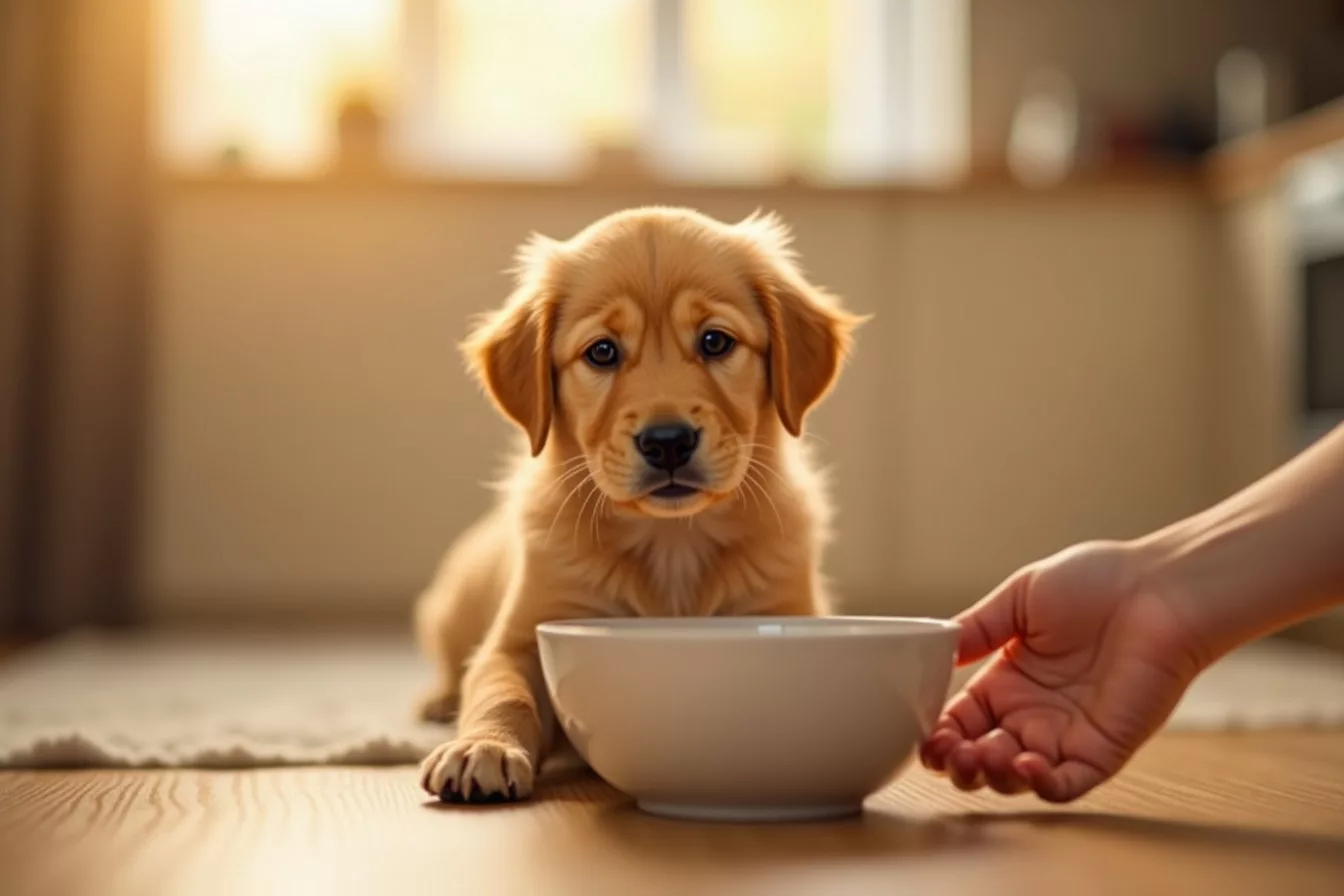

Does your dog lock eyes with you the moment their bowl hits the floor? A surprising 2025 study from the University of Lincoln found that 67% of dogs maintain direct eye contact with their owners during meals—far more than previously thought. In this article you’ll discover what that intense stare actually means, why vets say it’s often a sign of trust (not dominance), and the one behaviour that genuinely warrants concern. Most importantly, you’ll learn exactly how to respond when your dog does this, so you can strengthen your bond rather than accidentally sending mixed messages.
📊 Key Figures 2026
- 67% of dogs stare at owners during meals: University of Lincoln (2025) analysed feeding behaviour across 312 dogs aged 1–12 years.
- 73% of dog owners misinterpret the stare as possessiveness: PDSA 2026 Pet Behaviour survey revealed this common misconception affects training approaches.
Sources: University of Lincoln (2025), PDSA (2026)
The Love Hormone Connection
When your dog stares at you whilst eating, they’re likely experiencing a rush of oxytocin—the same bonding chemical humans release when hugging a loved one. A 2024 study from the Royal Veterinary College (RVC) confirmed that sustained eye contact during feeding triggers oxytocin release in both dog and owner, strengthening attachment.
Max, a three-year-old golden retriever from Bristol, became the subject of his owner’s observation when she noticed he’d pause mid-kibble to gaze at her. Rather than scolding him, she held his gaze softly for a few seconds. Within weeks, Max’s overall anxiety decreased, and his willingness to obey commands improved. That’s oxytocin at work.
The Trust Signal
For decades, dog trainers wrongly advised owners that a staring dog was “challenging dominance.” Modern canine behaviour science has entirely debunked this myth. When your dog looks at you during meals, they’re signalling trust and comfort in your presence.
This behaviour is especially common in dogs who feel secure. They’re essentially saying: “I’m safe here. I’m happy you’re nearby.” Nervous or abused dogs rarely display this behaviour until they’ve fully bonded with their owner—making it a genuine marker of psychological wellbeing.
✅ Expert Tip
Respond to your dog’s mealtime stare with soft eye contact and a calm word (“good boy/girl”). This reinforces the trust bond without interrupting their meal. Avoid sudden movements or reaching toward their bowl, which can confuse the message. Over time, this creates a dog who feels secure and is less likely to develop resource-guarding issues.
The Attention-Seeking Interpretation
Not all stares are purely about oxytocin. Some dogs learn that locking eyes with you during meals gets attention—verbal or physical—which they find rewarding. This is classical conditioning, not dominance.
If your dog stares and you talk to them, give them a piece of food, or pet them, you’re accidentally training them to repeat the behaviour. If their stare is attention-driven, simply continuing your day (ignoring the eye contact) will eventually reduce the intensity and frequency.
When to Worry: The Red Flags
⚠️ Warning
A stare accompanied by stiffened body posture, raised hackles, curled lips, or low growling is NOT normal bonding—it’s guarding behaviour. Consult a certified animal behaviourist or your vet immediately. Similarly, if a previously friendly dog suddenly stops eating when you’re present and stares intensely, consult your vet to rule out dental pain or illness.
Breed-Specific Variations
Certain breeds stare more than others. Pointer breeds, retrievers, and spaniels—originally bred to work closely alongside humans—tend to maintain eye contact more naturally. Independent breeds like Siberian huskies or Afghan hounds may stare less frequently, which is entirely normal.
The RSPCA reminds owners that absence of the stare doesn’t indicate low bonding. It’s simply a behavioural difference linked to genetics and breeding history.
Building on the Connection
If your dog does stare at you during meals, you’re witnessing a fundamental sign of trust. Rather than disrupting it, use these moments to deepen your relationship. Consistent, calm presence during their feeding ritual—without interaction—teaches them that mealtime is a secure, predictable moment.
Dogs who feel truly secure during feeding are less likely to develop anxiety-related eating problems, resource guarding, or aggression. It’s one of the simplest, most overlooked opportunities to reinforce emotional safety.
The Bottom Line
Your dog’s mealtime stare is almost certainly a declaration of trust and affection, backed by genuine neurochemistry. It’s not dominance, and it’s not a problem—it’s a gift. The next time your pup locks eyes with you over their bowl, you’ll know they’re literally flooding their brain with oxytocin, the bonding chemical that makes them love you more.
Have you noticed your dog doing this? The real question isn’t what they’re saying—it’s how you respond. Make it count.