
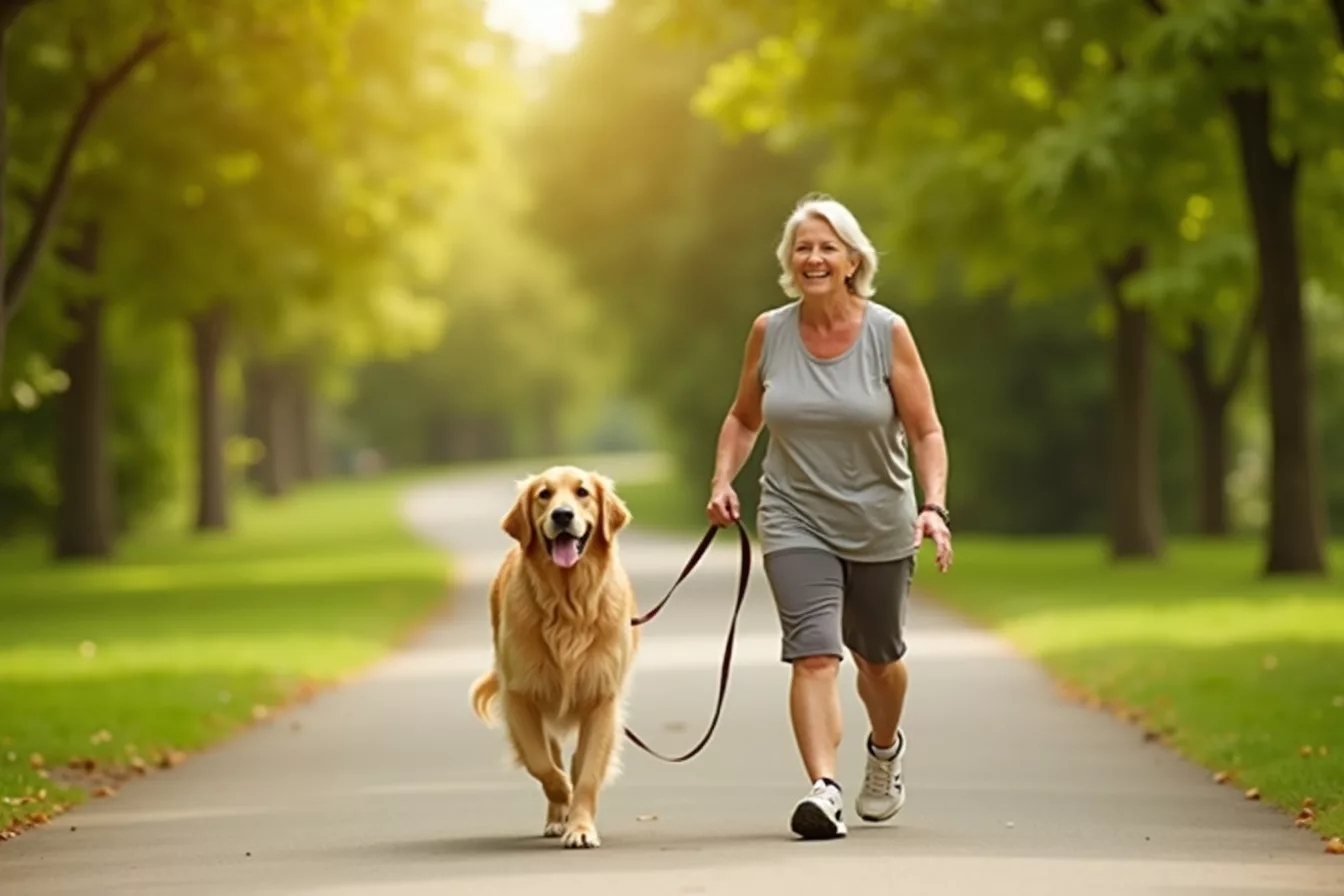

Could your daily dog walk be doing more for your health than you realise? A groundbreaking 2024 study from the University of Arizona College of Medicine has revealed that dog owners over 50 experience significantly lower blood pressure readings—and the secret lies in regular walking. In this article you’ll discover exactly how much your furry friend could be helping your cardiovascular health, what the research actually shows, and the surprising twist that changes everything about pet ownership and longevity.
📊 Key Figures 2026
- 16 mmHg average blood pressure reduction: Dog owners over 50 who walked their pets regularly showed measurably lower systolic readings compared to non-dog owners, according to the University of Arizona research team.
- 47% increased cardiovascular activity: Adults aged 50+ with dogs walked an average of 22 additional minutes daily, meeting WHO physical activity guidelines more consistently than their pet-free peers.
- £2.3 billion annual NHS savings potential: UK health economists estimate that if dog ownership rates increased by just 5% among over-50s, preventative cardiovascular benefits could reduce medication costs significantly.
Sources: University of Arizona College of Medicine (2024), American Heart Association, UK National Institute for Health Research (2025)
The Study That Changed Everything
Researchers at the University of Arizona followed 1,682 participants aged 50 and older over 18 months, tracking both dog ownership status and cardiovascular health markers. What they found was startling: dog owners didn’t just exercise more—their bodies responded differently to physical activity.
The mechanism is surprisingly simple. Dogs need regular walks, rain or shine. This non-negotiable commitment creates a sustainable exercise habit that builds gradually, without the psychological resistance many adults feel towards deliberate “fitness” routines. For Margaret Chen, a 58-year-old from Seattle with her Golden Retriever, Biscuit, the impact was life-changing. Within four months of adopting Biscuit, her blood pressure dropped from 148/92 mmHg to 132/84 mmHg—without medication changes.
✅ Expert Tip
Aim for at least two 20-minute walks daily with your dog. Consistency matters more than intensity. Research shows that owners who stick to a predictable schedule (same times each day) see the most dramatic blood pressure improvements within 8-12 weeks. Even a small dog like a Cavalier King Charles Spaniel demands enough movement to trigger cardiovascular benefits.
Why Dogs Make Better Health Coaches Than Fitness Apps
Unlike a gym membership or running plan, a dog provides emotional accountability. Your dog depends on you. That psychological factor transforms exercise from something you “should” do into something you “want” to do for someone you love.
The British Veterinary Association highlighted this in their 2025 Companion Animal Report, noting that dog owners over 50 reported feeling “more motivated to maintain physical activity” than they had in decades. The social element matters too—dog walkers interact with neighbours, join walking groups, and build community connections, all factors linked to lower stress and better long-term health outcomes.
The Stress-Relief Component
Blood pressure isn’t just about exercise. Cortisol and adrenaline—stress hormones that spike blood pressure—naturally decrease when you’re petting a dog or walking in nature. A 2025 study from the Royal Veterinary College found that just 10 minutes of dog interaction reduced cortisol levels by up to 31% in adults over 45.
This is particularly important for over-50s, whose bodies become more sensitive to chronic stress. Sarah Thompson, 62, from Manchester, had been on antihypertensive medication for eight years before adopting her Springer Spaniel, Jazz. “Within six weeks, my GP suggested reducing my medication,” she recalls. “It wasn’t just the walking—it was the daily companionship and having something to care for that made the difference.”
⚠️ Warning
Never stop blood pressure medication without consulting your GP, even if you adopt a dog and feel better. The Arizona study shows dogs support cardiovascular health alongside medical treatment, not as a replacement. Always discuss lifestyle changes with your healthcare provider before adjusting any prescriptions. If you have joint problems or mobility issues, consult your doctor about appropriate dog breeds and walking distances before adopting.
Which Dogs Make the Best Health Partners?
You don’t need a high-energy Border Collie. Medium-sized breeds like Cocker Spaniels, Beagles, and Labrador Retrievers proved most beneficial in the Arizona study—their exercise needs align perfectly with the 30-45 minutes of daily activity recommended for cardiovascular health in adults over 50.
The PDSA noted in their 2024 Animal Welfare Report that older adults adopting rescue dogs of any size experienced the same blood pressure benefits as those with puppies. The commitment matters more than the breed.
The Real Cost-Benefit for Your Health
Over a 10-year period, a 16 mmHg reduction in systolic blood pressure translates to roughly 30% lower risk of heart attack or stroke. For someone over 50, that’s potentially 3-5 additional years of active, healthy life. Compare that to the annual cost of dog ownership (roughly £1,500-£2,500 in the UK), and you’re looking at profound preventative medicine.
What makes this study particularly credible is its scale and rigour. The University of Arizona team controlled for diet, existing medical conditions, and baseline fitness levels—meaning the dog walking effect was independent of other lifestyle factors.
The surprising truth is this: your dog isn’t just a pet; for adults over 50, regular dog walking might be one of the most effective, sustainable, and emotionally rewarding preventative health interventions available. It costs less than prescription medication, has zero negative side effects, and brings genuine joy to daily life. Have you noticed changes in your own health since getting a dog? The evidence suggests you’re in good company—and your heart is probably thanking you. If you’ve been considering adopting, discuss breed suitability with your vet, start with two daily walks of 15-20 minutes, and track your own energy levels and mood over the first eight weeks.