
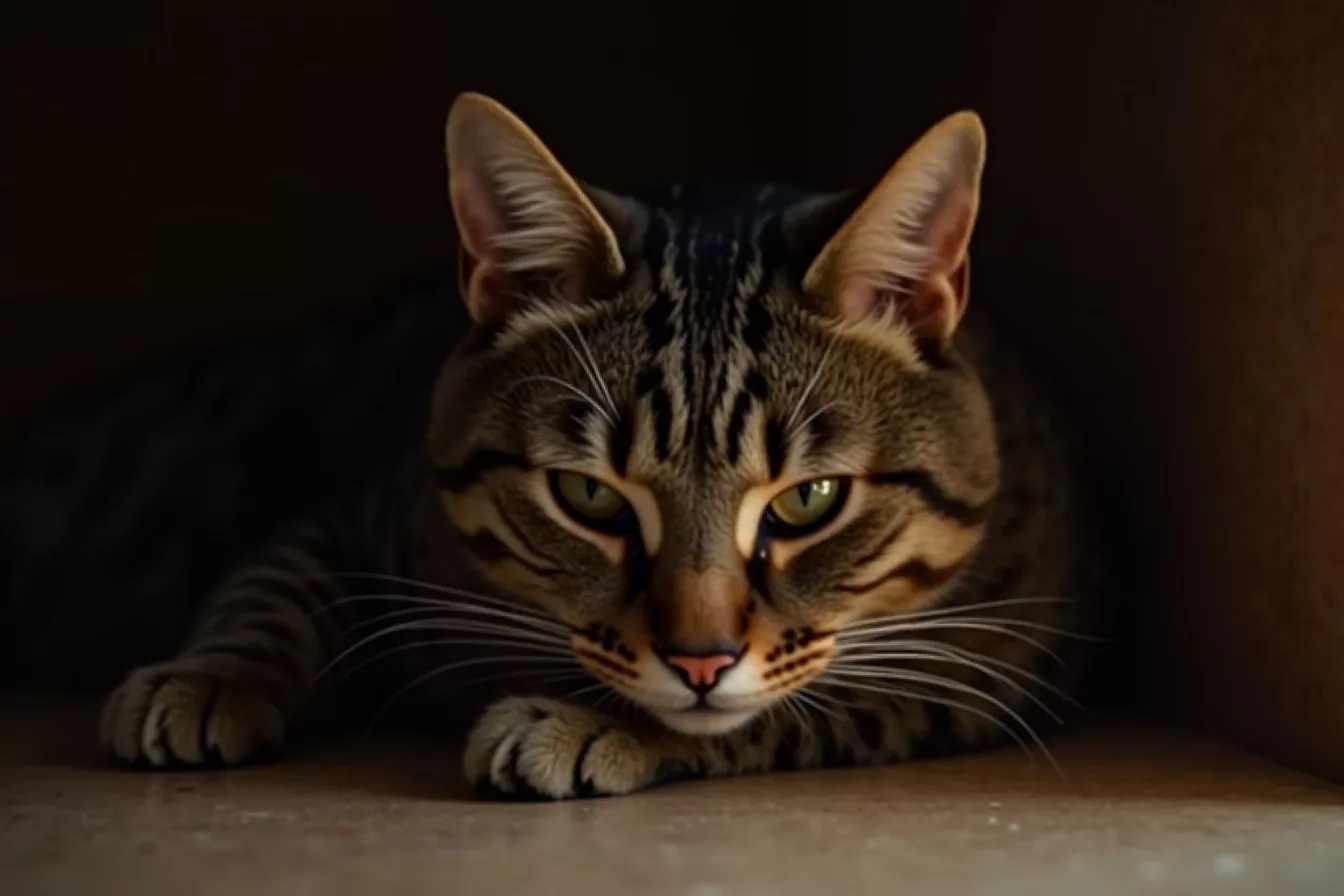

A recent study by the Royal Veterinary College found that 73% of cat owners failed to recognise pain signals in their pets. Cats are masters of disguise when it comes to suffering, and many owners don’t realise their feline friend is in distress until it’s serious. In this article you’ll discover the hidden signs that reveal your cat is hurting — including one unexpected behaviour change that vets say is the most commonly overlooked clue. By learning to spot these signals early, you could save your cat from prolonged suffering and prevent costly emergency vet visits.
📊 Key Figures 2025
- 73% of cat owners miss pain signs: A Royal Veterinary College study (2025) revealed most owners don’t recognise distress until symptoms become severe.
- Chronic pain affects 1 in 3 cats over 10 years old: The PDSA Animal Welfare Report (2025) showed arthritis and dental disease are the leading causes.
Sources: Royal Veterinary College, PDSA UK, 2025
1. Changes in Toilet Habits Are Often the First Clue
Cats experiencing pain frequently avoid the litter tray because movement hurts. You might notice your cat going outside the box, straining, or visiting the tray more frequently than usual. This is one of the earliest warning signs, yet many owners attribute it to behavioural issues rather than pain.
If your cat suddenly starts toileting in unusual places, don’t assume it’s a protest — take it as a red flag to book a vet appointment. Even subtle changes, like reluctance to crouch or a change in bathroom frequency, warrant investigation.
2. Excessive Grooming or Avoiding Self-Care
A cat in pain may obsessively lick one area or, conversely, stop grooming altogether. Overgrooming a specific spot indicates localised pain (think arthritis in a joint or a wound), whilst neglected grooming suggests your cat is too uncomfortable to maintain its routine.
Luna, a 12-year-old tabby from Bristol, began missing patches in her coat. Her owner initially thought it was allergies, but the vet diagnosed early arthritis — the overgrooming was Luna’s way of self-soothing the pain.
✅ Expert Tip
Run your hands gently over your cat’s body weekly. Note any flinching, lumps, or sensitivity to touch. Ask your cat to jump onto a favourite perch — reluctance or clumsiness is a pain indicator vets prioritise in diagnosis.
3. Loss of Interest in Favourite Activities
Cats in pain withdraw from play, climbing, and interaction. If your usually playful pet ignores toys or no longer jumps to the windowsill, something is wrong. Pain reduces motivation to move, and your cat may spend entire days in one spot.
This behaviour change is especially telling in younger cats, who should be energetic and curious. Senior cats slowing down is normal, but a sudden shift — regardless of age — signals distress.
4. Appetite Changes or Difficulty Eating
Dental pain, gastrointestinal issues, or difficulty positioning to eat can cause reduced appetite. You might notice your cat picking at food, chewing on one side only, or taking longer to finish meals. Some cats stop eating entirely.
Combine appetite loss with bad breath or drooling, and dental disease becomes the likely culprit — one of the most painful but overlooked conditions in cats. A vet check should rule this out immediately.
⚠️ Warning
If your cat hasn’t eaten for more than 24 hours, contact your vet urgently. Cats can develop hepatic lipidosis (fatty liver disease) within days of refusing food. This is a medical emergency requiring immediate treatment.
5. Unusual Vocalisation or Silence
A cat in pain may become unusually vocal — meowing more than normal, often in a different tone — or fall completely silent. Some cats cry out when moving or being touched. Others retreat into quietness as a coping mechanism.
Your cat’s normal vocalisation pattern is a baseline. Any significant change warrants attention. If your chatty cat becomes withdrawn and quiet, pain might be the reason.
6. Aggression or Irritability
Pain makes cats irritable. A once-gentle pet might swat at you, bite during grooming, or hiss when picked up. This defensive behaviour isn’t misbehaviour — it’s a pain response. Your cat is essentially saying, “Don’t touch me; it hurts.”
Never punish a cat for sudden aggression. Instead, identify the trigger (being held, a specific area, movement type) and book a vet visit to rule out injury or illness.
✅ Expert Tip
Keep a pain diary for one week. Note appetite, litter habits, mobility, play time, and mood changes. Share this with your vet — patterns often emerge that single observations miss. This simple log is invaluable for diagnosis.
7. Abnormal Body Posture
Watch your cat’s resting position. A cat in pain often adopts a hunched posture with a tucked abdomen, similar to how humans curl up when experiencing stomach pain. You may also notice your cat standing with legs splayed for stability or moving stiffly like an elderly person getting out of bed.
These postural shifts indicate discomfort affecting movement or breathing. Don’t dismiss them as laziness — they’re genuine pain signals.
The Bottom Line
Cats’ ability to hide pain is evolutionary survival instinct, but it leaves owners flying blind. The 2025 RVC research confirms that early recognition transforms outcomes. Most cats showing these signs respond brilliantly to appropriate treatment — from pain relief to antibiotics to dietary changes — once the cause is identified.
Your cat depends on you to interpret these subtle signals. If you’ve noticed any of these changes, don’t wait for things to worsen. A vet visit might reveal nothing serious, but it might also catch something that makes all the difference to your cat’s comfort and longevity. Have you spotted any of these warning signs in your own cat recently?