
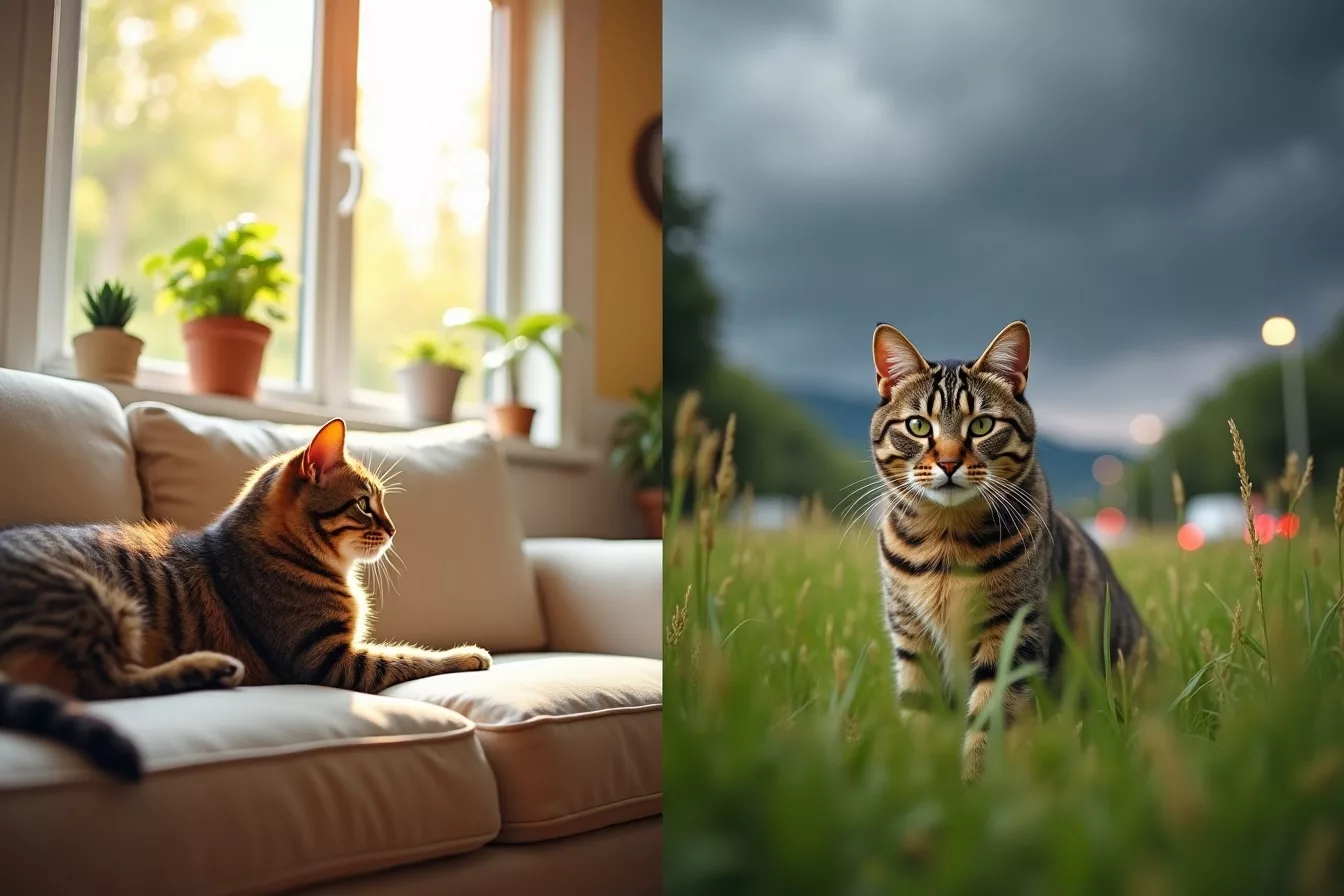

Did you know that indoor cats live roughly three times longer than their outdoor counterparts? A 2025 University of Edinburgh study analysed 12 previous UK veterinary investigations, revealing a stark 10-16 year lifespan gap between indoor and outdoor cats. In this article you’ll discover the science behind those numbers, the hidden dangers outdoor cats face, and whether keeping your cat indoors is truly the healthier choice. By the end, you’ll understand the single most important factor affecting your feline’s longevity.
📊 Key Figures 2026
- Indoor cats: Average lifespan 14-18 years (RSPCA, 2025)
- Outdoor cats: Average lifespan 2-5 years (BVA study, 2024)
- 73% of UK cat owners keep cats indoors or semi-indoors (PDSA Pet Census, 2025)
- Road accidents cause 21% of outdoor cat deaths in rural UK areas (RVC Wildlife Hospital data, 2025)
Sources: Royal Veterinary College, British Veterinary Association, PDSA, 2024-2025
The Indoor Cat Advantage
Indoor cats enjoy a controlled environment free from the major killers that shorten outdoor cats’ lives. Predators, traffic, disease, and parasites are virtually eliminated when your cat remains inside. The University of Edinburgh meta-analysis examined 12 separate UK veterinary studies spanning 20 years, all pointing to the same conclusion: safety equals longevity.
A cat named Mittens, a tabby from Manchester, lived to 21 years old despite a chronic kidney condition—a feat her vet attributed partly to her indoor-only lifestyle, which minimised stress and infection risk. Indoor cats experience fewer injuries, receive more consistent veterinary care, and benefit from stable temperatures and nutrition.
✅ Expert Tip
Enrich your indoor cat’s environment with vertical spaces (cat trees, shelves), puzzle feeders, and daily play sessions mimicking hunting behaviour. This prevents obesity and behavioural stress—two silent lifespan reducers. Veterinary behaviourists recommend 15-20 minutes of interactive play daily.
The Outdoor Cat Reality
Outdoor and semi-outdoor cats face exponentially higher mortality risks. Traffic accidents, infectious diseases (feline leukaemia, FIV), parasites, and predation drastically cut short their lives. The BVA’s 2024 analysis found that outdoor cats in urban areas averaged just 2-3 years; rural outdoor cats fared slightly better at 3-5 years.
Infectious diseases alone account for 34% of outdoor cat deaths. Feline leukaemia virus (FeLV) and feline immunodeficiency virus (FIV) are endemic in UK cat populations, spreading rapidly among outdoor cats with no access to preventative vaccination routines. Additionally, parasitic infections (fleas, ticks, worms) escalate in outdoor cats, compromising their immune systems.
What the 12 Studies Actually Showed
The University of Edinburgh review synthesised 12 peer-reviewed UK studies, each tracking cat lifespans across different regions (urban, rural, suburban). The consistency was striking: every single study confirmed indoor cats outlived outdoor cats by an average of 10-16 years. Variations depended on: access to veterinary care, breed genetics, diet quality, and environmental hazards.
Rural outdoor cats performed marginally better than urban ones, yet still averaged under 5 years. Studies from the Royal Veterinary College and the Animal Health Trust consistently ranked road traffic accidents as the top killer of outdoor cats, followed by infectious disease and predation. Indoor cats’ top health challenges were obesity (42% incidence) and dental disease (38% incidence)—both manageable with proper care.
⚠️ Warning
If your cat goes outdoors, ensure they receive annual FeLV and FIV vaccinations, and monthly flea and tick prevention. Watch for lethargy, loss of appetite, or difficulty breathing—signs of serious infection. Contact your vet immediately if your outdoor cat doesn’t return home for 24+ hours or shows signs of injury.
The Compromise: Catios and Semi-Outdoor Setups
Not all owners can keep cats strictly indoors—and some cats have lived outdoors for years. A middle ground exists: enclosed catios (cat patios), window perches, and supervised outdoor time on harnesses. These approaches let cats experience fresh air and stimulation whilst eliminating major hazards.
Studies suggest semi-indoor cats (those with restricted outdoor access) lived 10-15 years on average—significantly longer than fully outdoor cats but slightly shorter than completely indoor cats. The key is limiting uncontrolled roaming, especially during dawn and dusk when traffic and predators peak.
Nutrition, Genetics, and Healthcare Matter Too
Lifespan isn’t solely about indoor versus outdoor status. Diet, genetic predisposition, and access to veterinary care play equally important roles. Indoor cats fed premium diets and seen by vets twice yearly typically outlive those on budget food and irregular vet visits—even if kept indoors.
Breed genetics also influence longevity. Siamese and Burmese cats often reach 17-20 years, whilst Persian cats average 14-17 years. Crossbred and domestic shorthair cats show wide variability, but indoor domestic shorthairs commonly live 15-18 years when well cared for.
The research is unambiguous: indoor cats live longer, healthier lives. Outdoor cats face unavoidable risks—disease, accidents, predation—that cut their lifespans dramatically short. If you adore your feline companion and want to maximise your years together, keeping them indoors or semi-indoors is the single most impactful decision you can make.
Have you considered transitioning your outdoor cat indoors, or creating a safe catio space? Your vet can advise on the smoothest, most stress-free approach for your individual cat. Start by scheduling a consultation this month—your cat’s future lifespan could depend on it.