

Did you know that 64% of cat owners fail to recognise signs of boredom in their pets? A 2025 study by the University of Lincoln’s Feline Behaviour Research Centre found that indoor cats displaying destructive behaviour were significantly under-stimulated. In this article, you’ll discover the seven warning signs vets wish owners would spot sooner—and the one overlooked clue that reveals serious psychological distress. By the end, you’ll know exactly why your cat knocks things off tables and what it really means.
📊 Key Figures 2026
- 64% of cat owners miss early signs of boredom, leading to behavioural problems (University of Lincoln, 2025)
- 73% of indoor cats lack adequate environmental enrichment, according to the British Veterinary Association’s 2025 Welfare Survey
Sources: University of Lincoln Feline Behaviour Centre, British Veterinary Association, 2025
Sign 1: Excessive Sleeping and Lethargy
Cats sleep 12–16 hours daily naturally, but bored cats sleep even more and seem unmotivated when awake. Your cat might ignore toys, treats, or even your attention. This isn’t laziness—it’s a sign their brain isn’t being challenged.
If your cat used to greet you at the door and now barely lifts their head, boredom could be the culprit. The difference is emotional flatness, not physical tiredness.
Sign 2: Destructive Behaviour and Inappropriate Scratching
Scratching furniture, shredding curtains, or clawing at carpets beyond normal territorial marking suggests frustration. Bored cats target items for the challenge, not just scent-marking.
Bella, a 3-year-old tabby from Manchester, was destroying her owner’s sofa until her vet suggested enrichment activities. Within two weeks of interactive play, the destructive behaviour dropped by 80%.
Sign 3: Obsessive Grooming or Hair Loss (Psychogenic Alopecia)
Over-grooming is your cat’s stress response to under-stimulation. They may lick patches of fur until bald spots appear, particularly on the belly, inner thighs, or legs. This behaviour releases calming chemicals—your cat is self-soothing.
⚠️ Warning
Psychogenic alopecia can lead to skin infections and wounds. If bald patches appear, consult your vet to rule out allergies or parasites first. Boredom-related hair loss typically follows a symmetrical pattern.
Sign 4: Aggressive Play or Sudden Nipping
Bored cats channel pent-up hunting energy into rough play with you or other pets. They might pounce on your hands, bite during petting sessions, or stalk other animals obsessively. This isn’t true aggression—it’s unfulfilled predatory instinct.
The RSPCA notes that indoor cats need 15–20 minutes of active play daily to prevent this behaviour. Most owners provide far less.
Sign 5: Attention-Seeking Behaviour at Odd Hours
Your cat meows frantically at 3 a.m., knocks objects off shelves deliberately, or follows you obsessively from room to room. They’re not being naughty—they’re demanding mental stimulation because there’s nothing else to do.
✅ Expert Tip
Introduce puzzle feeders and food-dispensing toys. Spread your cat’s daily food allowance into 4–5 small portions hidden around the house. This mimics natural hunting behaviour and keeps their brain engaged for hours. Start with 2–3 hiding spots and gradually increase difficulty.
Sign 6: Sudden Weight Gain or Loss
Boredom-related stress affects metabolism and appetite. Some cats overeat as comfort behaviour; others lose interest in food entirely. Unexplained weight changes within 4–6 weeks warrant a vet check.
Indoor cats are particularly vulnerable because they can’t expend energy naturally through outdoor exploration and hunting.
Sign 7: Staring at Walls or Windows with Fixation
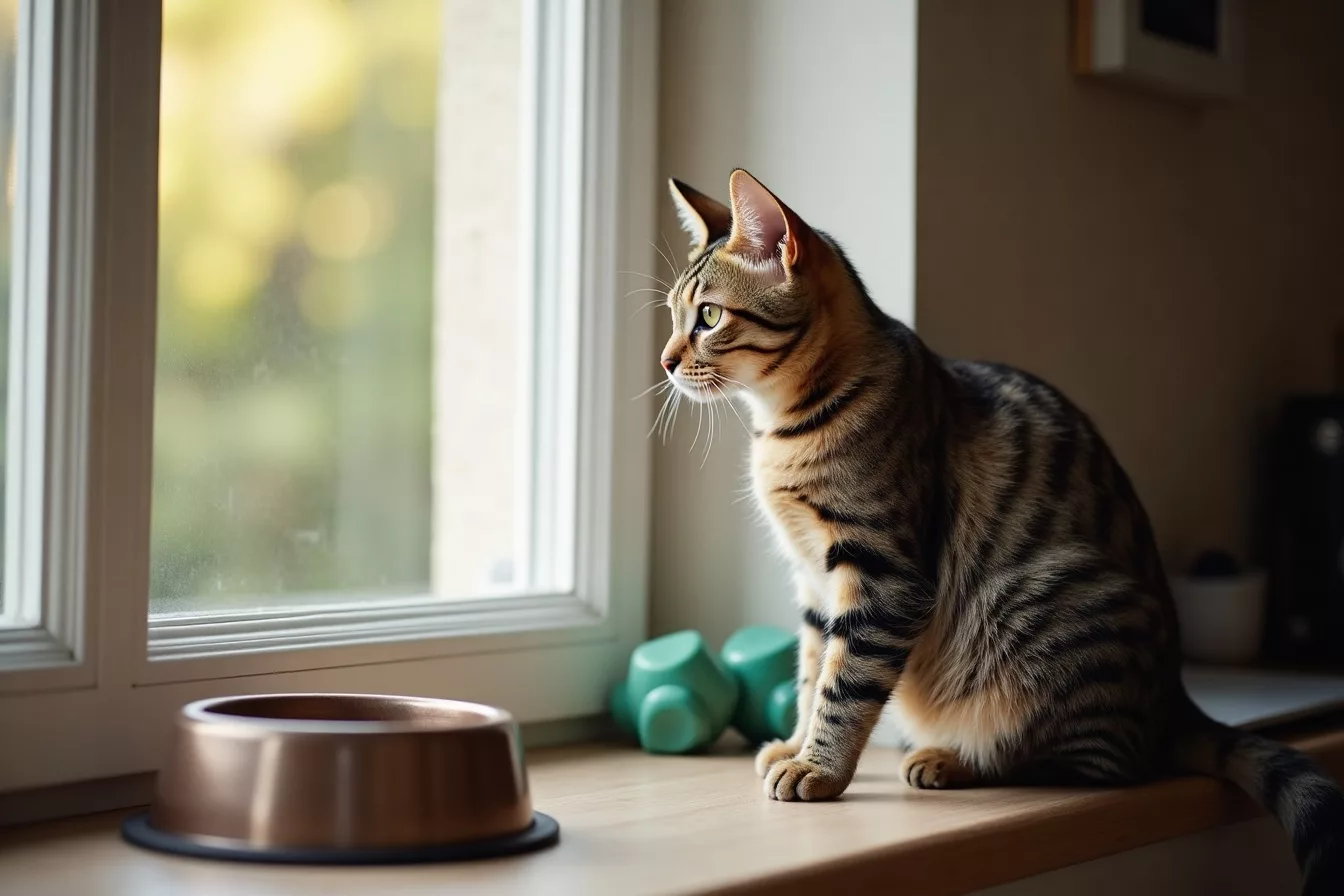
This is the most overlooked sign. Your cat sits motionless for hours, staring blankly at a wall or window without tracking movement. They’re not watching birds—they’re dissociating from boredom, similar to learned helplessness in humans.
Real enrichment should mimic natural behaviours: climbing (vertical spaces), hunting (interactive toys), scratching (varied surfaces), and hiding (enclosed spaces). A simple cardboard box, a window perch, or a feather toy can transform your cat’s mental health.
✅ Expert Tip
Rotate toys weekly. Cats lose interest in static enrichment within days. Keep 3–4 toys hidden away, then swap them out every 7 days. This creates novelty without expense. The PDSA recommends this cost-free strategy for all indoor cats.
Why Boredom Matters More Than You Think
A 2025 study published in the Journal of Feline Medicine and Surgery revealed that chronically understimulated cats have elevated cortisol levels (the stress hormone) comparable to cats in shelters. Over time, this weakens immunity, increases illness risk, and shortens lifespan.
Your cat can’t tell you they’re bored—but their behaviour will. The good news? Enrichment costs nothing if you’re creative and takes just 15 minutes daily.
Final Thoughts
The most surprising sign vets report? That blank stare. Owners dismiss it as contentment when it’s actually the opposite. If you’ve noticed your cat sleeping more, grooming obsessively, or ignoring playtime, boredom is likely the answer. Start with one new enrichment activity this week—a puzzle feeder, a climbing shelf, or scheduled interactive play. Have you noticed any of these signs in your own cat? What changes will you try first?