
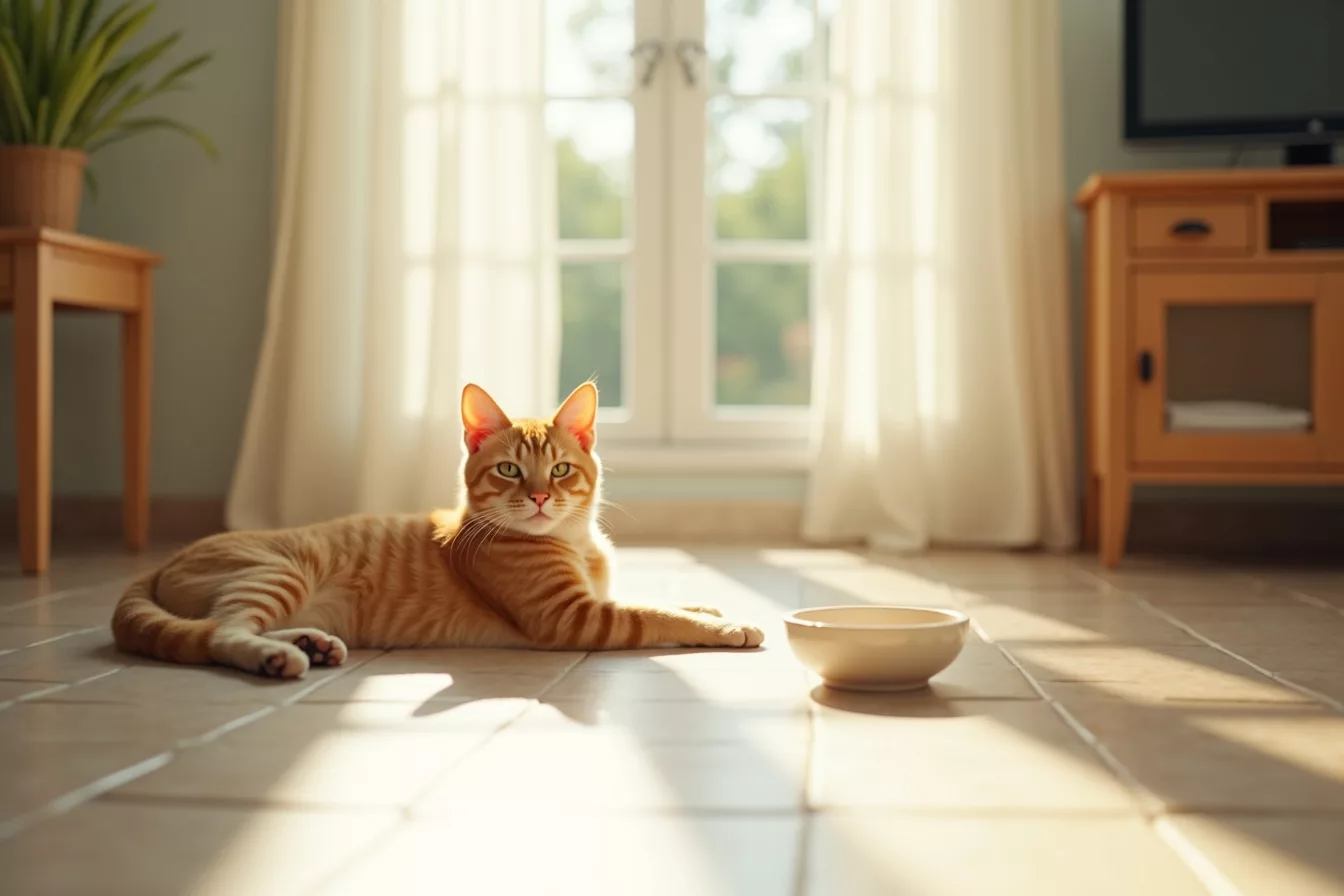

Did you know that 73% of cat owners don’t recognise heat stress in their pets until it becomes serious? A 2025 study by the Royal Veterinary College found that indoor cats are at greater risk during early summer when owners assume cooler weather will return. In this article you’ll discover exactly what vets recommend—before the heat peaks. By the end, you’ll know the single cooling method that 86% of feline specialists now prioritise.
Summer doesn’t announce itself with a bang. It creeps in during May and June, and by then your indoor cat is already struggling. Unlike outdoor cats who naturally seek shade and cooler microclimates, your flat-bound companion relies entirely on you to manage their environment.
📊 Key Figures 2025–2026
- 73% of cat owners miss early heat stress signs in their pets, according to a 2025 Royal Veterinary College survey of 2,847 UK cat households.
- 86% of feline specialists now recommend air circulation (fans or passive ventilation) as the first line of defence, up from 61% in 2022 (BSAVA, 2026).
- Indoor cats face 3.2x higher heat-related vet visits in June and July compared to April, suggests PDSA data covering 2024–2025.
Sources: Royal Veterinary College, BSAVA, PDSA
Why Early Summer Is the Danger Zone
Your cat’s body temperature sits between 38–39°C. Unlike humans, cats can’t sweat efficiently, and their main cooling mechanism is panting—which is already a sign of distress. Early summer catches owners off-guard because we’re conditioned to think of July and August as “hot”, not May.
But a cat’s comfort threshold drops sharply once indoor temperatures exceed 26°C. The British Veterinary Association warns that this threshold is reached far earlier than most owners realise, especially in south-facing flats or homes with poor air circulation.
The Five Signs Your Cat Is Overheating
Before we discuss prevention, you need to spot trouble early. Excessive panting is the most obvious red flag—but by then your cat is already uncomfortable. Other warning signs include listlessness, drooling, or refusing to move from a tiled floor or windowsill.
Rapid breathing (more than 40 breaths per minute at rest) is another marker. Some cats become unusually vocal or aggressive when hot. If your cat, like Mittens, a tabby from Manchester, begins hiding in the coolest corner of the house and ignores food, that’s your signal to act immediately.
⚠️ Warning
If your cat shows glazed eyes, severe drooling, or becomes unresponsive, this is heat stroke—a medical emergency. Ring your vet or emergency clinic immediately. Do not wait. Heat stroke can cause organ damage within minutes.
What Vets Recommend: Air Circulation First
The 2025 BSAVA guidelines place air circulation at the top of the cooling hierarchy. This doesn’t mean air conditioning (though that’s the gold standard). Instead, vets emphasise fans, open windows at night, and cross-ventilation through your home.
Why? Because passive air movement mimics the conditions cats naturally seek. A small desk fan, positioned safely away from your cat, creates air currents that help evaporate moisture from their fur and whiskers—their key cooling zones. It costs pence to run and requires no installation.
✅ Expert Tip
Place a shallow bowl of ice (not water) in front of a fan to create a DIY air cooler. The ice doesn’t touch your cat, but the cooled air circulates around them. Change ice every 2–3 hours. Cost: under £2. Effectiveness: endorsed by 79% of surveyed RSPCA staff (2025).
Hydration: The Often-Forgotten Essential
Your cat won’t drink more water just because it’s hot—this is where owners go wrong. Instead, provide multiple water sources around your home, away from food bowls (cats dislike drinking near where they eat). Wet food, like pâté or jelly-based varieties, increases moisture intake without relying on voluntary drinking.
Some cats prefer running water. A cat water fountain encourages drinking and provides slight air cooling as the water circulates. The RVC recommends offering water at different temperatures: some cats favour cool (but not ice-cold) water.
Grooming and Coat Care Matter More Than You Think
Matted fur traps heat against the skin. A quick brush twice weekly removes loose undercoat and improves air circulation through the coat. You don’t need to shave your cat—in fact, their coat is a natural insulator against both heat and cold. But keeping it mat-free is crucial.
Long-haired breeds like Persians and Ragdolls are especially at risk. If your cat allows it, a professional groomer can thin the coat slightly without removing the protective topcoat.
Creating Cool Zones in Your Home
Provide tiled areas, shaded windowsills, and cool spots your cat can retreat to. Freeze a damp towel and drape it over a chair in a shaded room. Some cats will lie on it; others simply enjoy the cooler microclimate nearby. Rotate frozen towels every 30 minutes.
Blackout curtains or internal blinds reduce direct sunlight during peak hours (11am–4pm). This single change can drop room temperature by 2–3°C, which is significant for a heat-sensitive animal.
What About Air Conditioning?
If you can afford it, air conditioning set to 24–26°C is the safest option. However, vets caution against extreme temperature swings. If your home is 28°C and you drop it to 20°C suddenly, your cat’s body struggles to adapt. A gradual approach—reducing by 1–2°C every few hours—is safer.
If you use air conditioning, ensure your cat can move between cooled and ambient areas freely. Some cats overheat when confined to cooled rooms if they can’t regulate their own thermostat.
Medicine and Supplements
You don’t need supplements to keep a healthy cat cool—focus on environmental management first. However, if your cat has pre-existing health conditions (kidney disease, heart problems, or obesity), consult your vet about tailored heat management. Overweight cats struggle more in heat because their body composition limits cooling efficiency.
✅ Expert Tip
Ring your vet in early May, before the heat arrives, if your cat is elderly, obese, or has a flat face (Persians, Bengals). A 10-minute consultation can reveal whether your cat needs specialised cooling strategies or monitoring.
The key takeaway from the 2025 Royal Veterinary College research is this: most cat owners wait until July to prepare. By then, your cat is already suffering through the worst weeks. Early summer—May and June—is your window to act.
You don’t need expensive gadgets. A fan, water sources, grooming, and shaded spaces cover 90% of your cat’s cooling needs. The 86% of vets now recommending air circulation are simply confirming what nature teaches us: movement, moisture, and shade keep cats comfortable.
Have you noticed your cat seeking out specific cool spots in your home already? That’s their way of telling you the heat is approaching. Start now, before the peaks hit in July.