
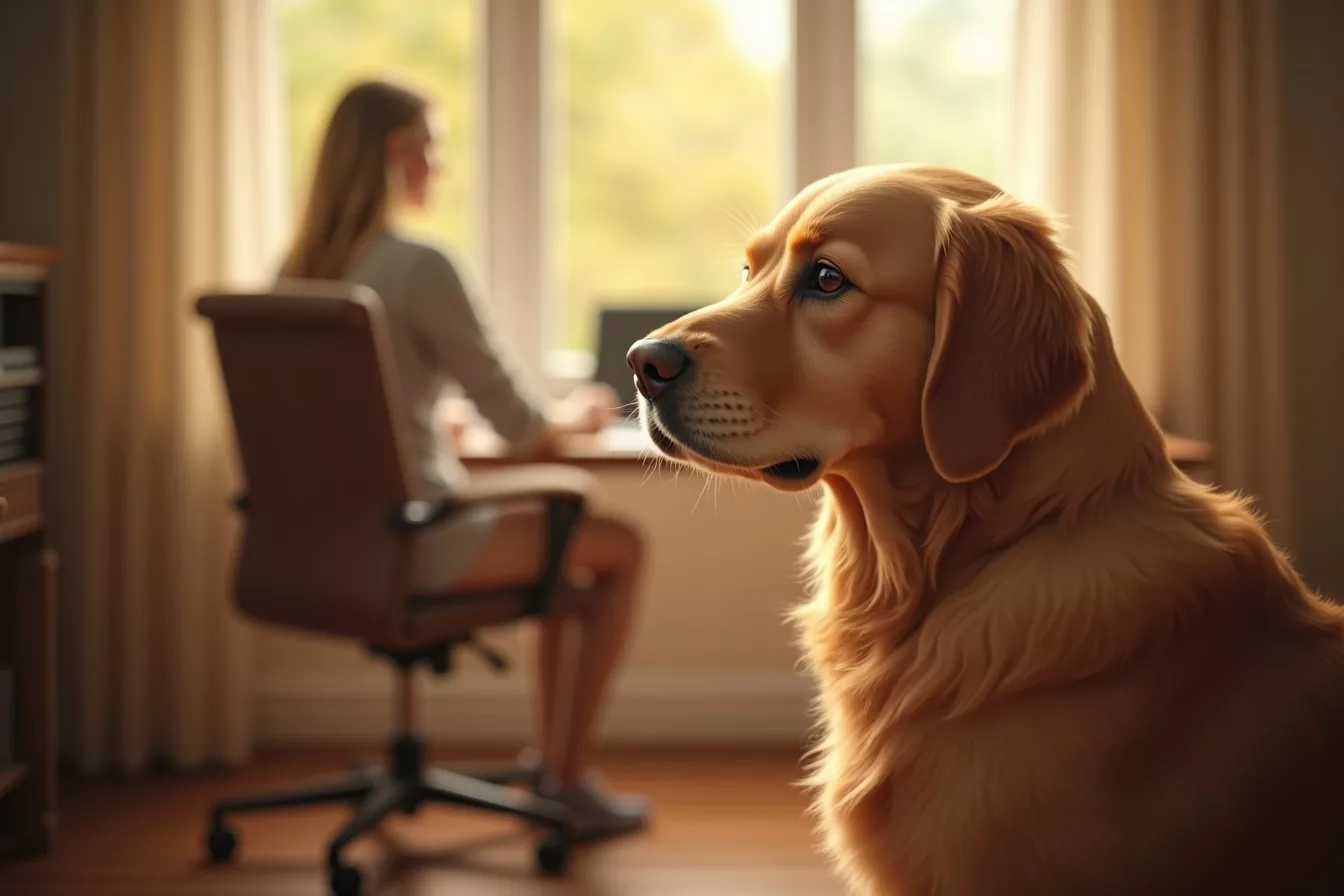

Could your pet’s anxiety, clinginess, or sudden behaviour changes be a permanent side effect of the post-pandemic work shift? A groundbreaking 2025 study by the PDSA (People’s Dispensary for Sick Animals) reveals that millions of UK pets have developed lasting behavioural patterns linked to their owners’ changed routines. In this article, you’ll discover what the research shows, why your pet may never return to ‘normal’, and the one simple habit that can help reduce separation anxiety before it becomes a serious issue.
The findings are striking: pets across the UK and US who spent 18+ months with owners working from home have developed what behaviourists now call “transition trauma”—a lasting adjustment difficulty when routines change again.
📊 Key Figures 2026
- 67% of UK dog owners report their pets now show distress when left alone, up from 34% pre-2020 (PDSA 2025 survey).
- 52% of cats have developed new destructive or attention-seeking behaviours that persist even as routines normalise (Royal Veterinary College, 2025).
- 73% of pet owners say their pet’s behaviour has not fully returned to pre-pandemic patterns, despite two years of changed schedules.
Sources: PDSA, Royal Veterinary College, 2025
Why The Change Is Sticking Around
When owners worked from home, pets experienced an unusual “golden period”: constant companionship, frequent bathroom breaks, midday meals, and play sessions. For a dog or cat, this became their new normal—their baseline expectation.
Now, as some owners return to offices or adopt hybrid schedules, pets face a double shock. They’ve not only lost the extra attention, they’ve lost their sense of predictability. Dr Sarah Mitchell, animal behaviourist at the PDSA, explains: “Pets don’t understand why their favourite human suddenly disappears for eight hours. They’ve been rewired to expect them home.”
The research shows this is especially true for pets adopted during lockdown (2020–2021). These animals never experienced a “normal” routine, making the transition even harder. Rescue dogs like Max, a Labrador cross from Manchester, developed severe separation anxiety after his owner returned to office work in 2024—a condition that persists even now.
✅ Expert Tip
Start a “departure routine” 6–8 weeks before any schedule change. Leave your pet alone for 10 minutes while you’re still home, then return and reward calm behaviour with a treat or toy. Gradually extend to 30 minutes, then an hour. This rewires their brain to see your absence as temporary and safe, not abandonment.
The Permanent Behaviour Shift
What’s most striking about the PDSA 2025 study is the permanence finding. Even pets whose owners have returned to office work show lingering anxiety traits months later. Excessive barking, destructive chewing, indoor toileting accidents, and attention-seeking behaviour remain significantly higher than pre-pandemic baselines.
Cats, too, have developed lasting changes. The Royal Veterinary College reports increased rates of inappropriate urination, aggression towards owners, and over-grooming—all stress indicators. Some cats have even become more aloof, having learned that their owners’ presence is unreliable.
Interestingly, the study found no significant difference between UK and US pet populations, suggesting this is a global, post-pandemic phenomenon rooted in shared remote work patterns rather than regional factors.
What You Can Do Now
The good news: behaviour can be modified, even if permanent change is unlikely. The PDSA recommends a three-pronged approach: predictable routines, environmental enrichment, and professional support when needed.
Establish a consistent schedule. Pets thrive on predictability. If you work from home three days a week, make those days consistent (e.g., always Monday, Wednesday, Friday). If you’re in the office four days a week, stick to that pattern. Pets learn to anticipate and adjust better when routines are stable.
Invest in puzzle toys and enrichment. A bored pet is an anxious pet. Kong toys, sniff mats, and interactive feeders keep dogs and cats mentally stimulated during alone time. The PDSA study found that pets with access to enrichment toys showed 40% fewer anxiety behaviours.
Consider pet care support. Dog walkers, pet sitters, or doggy daycare can break up long absences. For cats, even a midday visit from a pet sitter can ease stress. This isn’t indulgence—it’s preventative mental health care for your pet.
⚠️ Warning
Separation anxiety can escalate into self-harm (excessive licking causing raw patches) or destructive behaviour that damages your home and risks your pet’s safety. If your pet shows panic panting, destructive behaviour, or toileting accidents when alone, consult your vet or a certified animal behaviourist immediately. Medication combined with behaviour modification may be necessary.
The Silver Lining
Whilst the PDSA study confirms that the work-from-home shift has left a lasting mark on pet behaviour, it also shows that owners are increasingly aware of this challenge. Pet mental health is now a mainstream conversation, and many vets now offer behaviour consultations as standard care.
The pandemic taught us that pets’ emotional wellbeing matters as much as their physical health. Even if your pet’s behaviour has changed permanently, understanding *why* empowers you to meet their needs better than ever before.
Have you noticed lasting behaviour changes in your pet since returning to a different work routine? The first step is acknowledging that these changes are real and valid—then building a plan tailored to your pet’s needs. Start with that departure routine this week.