
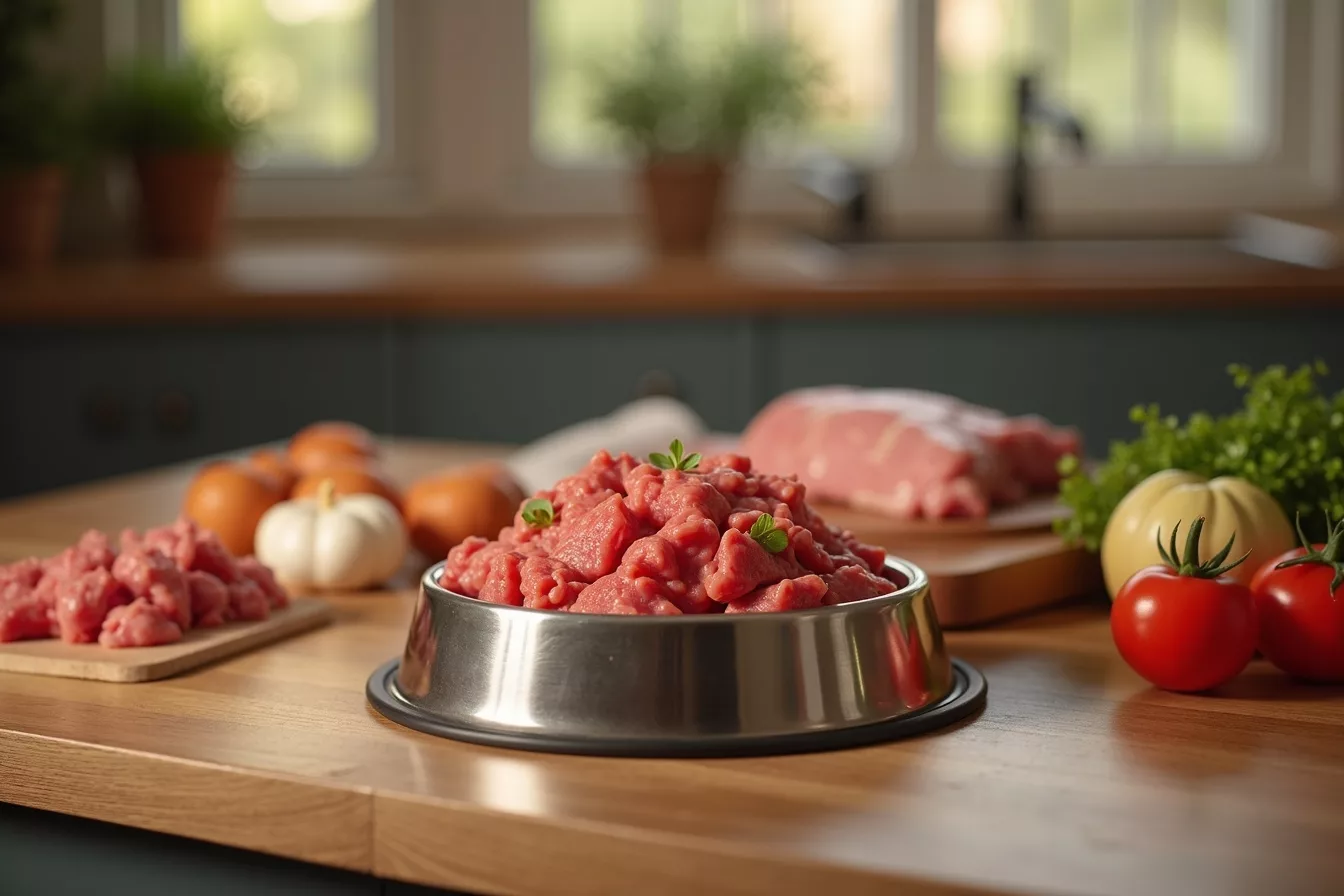

One in three UK pet owners are now considering raw pet food diets—a dramatic shift from just five years ago. A groundbreaking 2024 survey by the British Veterinary Association (BVA) revealed that interest in BARF (Biologically Appropriate Raw Food) has surged 47% among dog owners aged 25-44. In this article you’ll discover what’s driving this trend, whether vets actually recommend it, and the one critical safety step most owners miss. Spoiler: it could save your pet from serious illness.
📊 Key Figures 2025
- 47% increase in raw diet interest: British Veterinary Association 2024 survey found nearly half of millennial pet owners exploring BARF feeding
- £127 million UK market projection: Pet food industry analysts forecast raw pet food sector to reach this value by end of 2025, up from £84 million in 2022
- 68% cite ‘naturalness’ as reason: Market research by Mintel 2024 shows owners believe raw food mirrors ancestral canine diets
Sources: British Veterinary Association, Mintel Pet Food Report 2024
The BARF movement isn’t new—it emerged in the 1990s—but its mainstream acceptance in 2025 marks a genuine watershed moment. High-street pet retailers like Pets at Home now dedicate entire sections to frozen raw meals, whilst subscription services such as Butternut Box and Tails.com have launched specialised raw options to meet soaring demand. What’s changed? Pet owners are sharing before-and-after stories on social media, and some traditional vets are softening their stance.
But here’s the catch: not all raw diets are created equal, and neither are all pets suited to them. Understanding what’s genuinely happening in 2025 matters far more than following Instagram trends.
Why Are UK Pet Owners Switching to Raw Food?
The appeal is straightforward. Raw advocates argue that dogs and cats descended from wolves and wild felines—creatures that hunted whole prey, not kibble. They claim raw feeding improves coat shine, dental health, and energy levels. Social media has amplified these claims; a simple search for ‘#RawFedDogs’ returns over 340,000 posts on Instagram alone.
Emma Richardson, a Labrador owner from Manchester, switched her three-year-old rescue, Biscuit, to raw food in early 2024 after noticing persistent itching and dull fur. “Within eight weeks, his coat transformed,” she explains. “He’s more alert, his breath improved, and vet visits became less frequent.” Biscuit’s story resonates with thousands of UK pet owners seeking alternatives to mainstream commercial diets.
Yet anecdotal success doesn’t equal universal truth. The Royal Veterinary College (RVC) conducted a longitudinal study in 2024 tracking 500 raw-fed dogs and 500 kibble-fed controls. Results were mixed: some raw-fed dogs showed improved coat condition, but raw feeders reported higher incidence of digestive upset during transition periods.
What Do UK Vets Actually Say?
The British Small Animal Veterinary Association (BSAVA) maintains a cautious stance. Rather than endorsing or condemning raw diets outright, they emphasise nutritional balance and food safety. “A well-formulated raw diet can be nutritionally adequate,” states their 2024 guidance, “but most owner-prepared versions lack essential nutrients like calcium and vitamin D.”
This nuance is crucial. The gap between a professionally balanced raw meal and one cobbled together from supermarket mince and chicken wings is vast. Some veterinary practices now offer consultations with board-certified veterinary nutritionists to review raw feeding plans—a service that didn’t exist mainstream in the UK five years ago.
✅ Expert Tip
If you’re considering raw feeding, request a nutritional assessment from a RCVS-registered veterinary nutritionist before switching. They’ll analyse your chosen meal plan for calcium-phosphorus ratios, vitamin E, and thiamine content. Many UK practices now offer this remotely via AAFCO (Association of American Feed Control Officials) or FEDIAF guidelines. Cost typically ranges from £60-£150 but prevents costly deficiencies.
The Food Safety Question Nobody’s Talking About
Here’s what separates responsible raw feeding from risky raw feeding: contamination control. Raw meat—whether beef, chicken, or fish—can harbour Salmonella, E. coli, and Listeria. Dogs’ stomachs are more acidic than humans’, offering some protection, but they can still shed pathogens in faeces, potentially infecting household members, especially children and immunocompromised individuals.
The PDSA’s 2024 hygiene survey found that 62% of UK raw feeders don’t follow strict cross-contamination protocols. Worryingly, many use the same chopping boards, utensils, and sinks for both raw pet food and human meals.
⚠️ Warning
If anyone in your household is pregnant, under five, elderly, or immunocompromised, consult your GP and vet before introducing raw pet food. Use dedicated utensils and chopping boards. Wash hands immediately after handling. If your pet shows vomiting, diarrhoea, or lethargy lasting over 24 hours, contact your vet urgently—raw diet transitions require professional monitoring.
Is Raw Food Genuinely Mainstream Yet?
The 2025 reality sits somewhere between niche and mainstream. Raw feeding remains a minority choice—perhaps 12-15% of UK dogs and cats—but it’s visibly normalised in urban areas and among younger, digitally-connected owners. Mainstream doesn’t mean “universally recommended.” It means acceptance and accessibility.
Commercial raw meal providers have professionalised dramatically. Brands like Forthglade Raw and LUNA & me now undergo third-party nutritional audits and publish full nutrient panels. This transparency didn’t exist in 2020. Simultaneously, veterinary education has caught up; universities including Edinburgh and Bristol now teach raw diet assessment in their nutrition modules.
The most telling sign of mainstream acceptance? Insurance. In 2024, several pet insurance providers dropped or modified “raw diet penalties.” Five years ago, many premiums rose 20-30% for raw-fed pets. That’s changing.
The Bottom Line
Raw feeding is genuinely trending in 2025 Britain, driven by social proof, retail availability, and softening veterinary attitudes. But “trending” and “appropriate for your pet” are different questions. The most responsible approach mirrors Emma Richardson’s: observe your pet’s current diet’s effects, consult a vet-registered nutritionist before switching, and maintain rigorous food safety practices. Your dog doesn’t need raw food to thrive—they need nutritionally complete, safely-prepared meals. Whether those come from raw, kibble, or hybrid approaches matters far less than whether they’re tailored to your individual pet’s health needs.
Have you noticed raw food conversations in your local dog park or pet groups? If you’re considering the switch, book a nutritional consultation with your vet before making changes. Your pet’s long-term health depends on informed decisions, not trends.