

Did you know that 62% of UK pet owners have never assembled a proper first aid kit for their animals? A recent 2024 study by the British Veterinary Association revealed that pets suffering minor injuries at home could recover faster with immediate, basic care—yet most owners scramble to find supplies when crisis strikes. In this article you’ll discover exactly which items belong in your pet first aid kit, how to organise them safely, and the one surprising item vets wish every owner kept on hand. By the end, you’ll be prepared for everything from minor cuts to choking emergencies.
📊 Key Figures 2025
- 62% of UK pet owners lack a dedicated pet first aid kit at home (BVA, 2024)
- Emergency vet callouts spike 34% during summer months when owners are unprepared for heat-related injuries (PDSA, 2025)
- Dogs over 7 years old are 3x more likely to suffer from wounds that need immediate home care before vet arrival
Sources: British Veterinary Association, PDSA Animal Welfare Report 2025
Essential Items: The Non-Negotiables
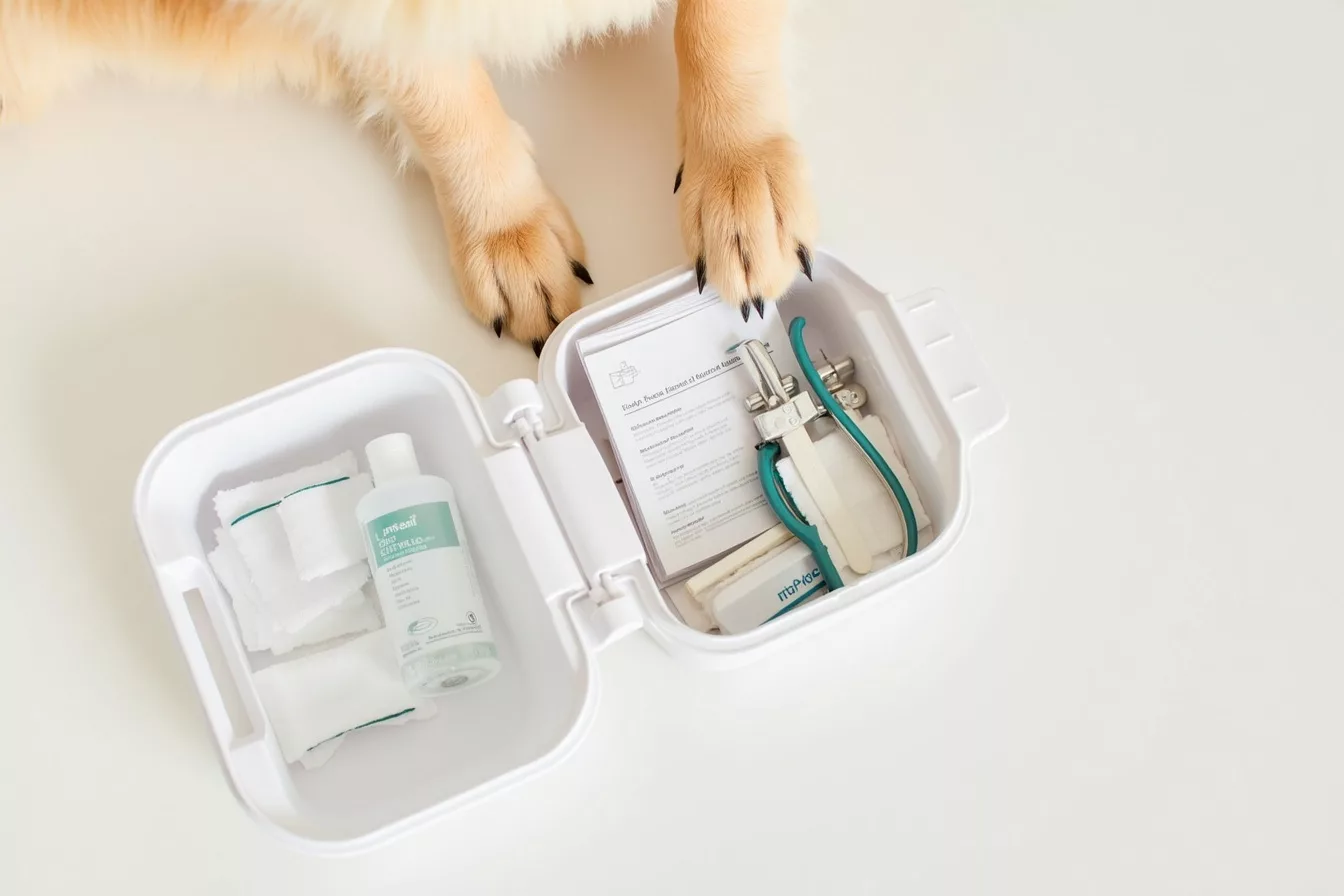
Your pet first aid kit should live in a clearly labelled, waterproof container kept in an easy-to-reach spot—ideally near your front door. This matters because every second counts in a genuine emergency.
Sterile gauze pads and non-stick wound dressings are your foundation. Use these for bleeding wounds or minor cuts. Keep at least two sizes: small (5cm x 5cm) and large (10cm x 10cm). Pair these with a roll of flexible bandage tape and veterinary wrap (the colourful self-adhesive kind that doesn’t require tying).
Antiseptic solution such as chlorhexidine or saline is crucial for cleaning wounds before dressing. Never use human antiseptics like Savlon or Dettol on pets—they can be toxic if ingested during grooming. Instead, keep a small bottle of pet-safe antiseptic or simply use lukewarm boiled water.
Tweezers or a tick removal tool belong in every UK pet owner’s kit. Ticks are increasingly common, especially in spring and autumn. A proper tick tool (like the O’Tom Tick Twister, widely available on Amazon UK) removes ticks without squashing them, which reduces disease transmission.
✅ Expert Tip
Include a copy of your pet’s medical records and your vet’s contact details in a waterproof pocket inside your first aid kit. When Bella, a Cocker Spaniel from Surrey, had a seizure at her owner’s parents’ house, having her medication list immediately available meant the emergency vet could treat her within minutes.
The Hidden Heroes: Items Vets Always Mention
Cotton wool balls and lint-free wipes are often overlooked, but they’re essential for cleaning around wounds and eyes. Cotton wool is gentler than tissues and won’t leave fibres behind.
A digital thermometer (rectal, ideally one made for pets) helps you monitor for fever. Normal pet temperature ranges from 38–39°C. If your pet’s temperature exceeds 39.5°C, contact your vet immediately.
Elastic bandages (like an ACE bandage) support sprains and strains. Keep at least two widths: 5cm and 7.5cm. Wrap snugly but never so tight that you can’t slide a finger underneath—restricting blood flow causes tissue damage.
Tweezers, scissors, and a small torch round out the basics. Use blunt-ended scissors specifically to avoid accidental cuts, especially around sensitive areas like eyes or ears.
Medications & Topicals Worth Having
Antihistamine tablets or liquid (like cetirizine) help with allergic reactions. Always ask your vet for the correct dose for your pet’s weight before an emergency happens. This is non-negotiable—never guess dosage.
Hydrogen peroxide solution (3% strength) is occasionally recommended by vets to induce vomiting if your pet swallows something toxic. However, only use this under direct vet instruction—never assume it’s safe for your specific situation.
⚠️ Warning
Never apply human creams (like Sudocrem) or essential oils to pet wounds. Many are toxic if ingested. If your pet has a wound larger than 1cm, won’t stop bleeding after 10 minutes of pressure, or shows signs of infection (swelling, pus, heat), contact your vet immediately.
Organising Your Kit for Real Emergencies
Label everything clearly with expiry dates. Check your kit twice yearly—water-based products degrade, batteries die, and medications expire. Spring and autumn are ideal reminder points.
Store your kit away from extreme heat and direct sunlight. A cool, dry cupboard works far better than a garage or shed where temperature fluctuations can damage medications.
Consider keeping a small travel kit in your car. Road accidents and unexpected injuries happen when you’re away from home—a £15 travel pack could mean the difference between your pet receiving immediate care and deteriorating during a long drive to the nearest emergency clinic.
The One Thing Every Vet Wishes You’d Add
A first aid manual specifically for pets. The Red Cross produces a free online guide, and the RSPCA’s website includes step-by-step instructions for CPR, choking, and other life-threatening situations. Knowing the theory before panic strikes changes outcomes dramatically.
Your pet first aid kit is an investment in peace of mind. Most owners will never need it in a genuine crisis—but those 62% without one often regret that choice when minutes matter. Have you checked your kit recently, or are you still reaching for kitchen roll and plasters from your own bathroom?
Next step: Spend 20 minutes this week assembling your kit using the checklist above, and book a quick chat with your vet to confirm appropriate medication doses for your pet’s age and weight.