

Did you know that 42% of UK pet owners have never assembled a first aid kit for their animals? A recent 2025 study by the British Veterinary Association found that pet emergencies occur in 1 in 3 households annually—yet most owners lack basic supplies to respond. In this article you’ll discover exactly what belongs in a vet-approved first aid kit, where to source it, and the one item that could save your pet’s life before the vet arrives.
📊 Key Figures 2025
- Pet emergencies occur in 1 in 3 UK households annually: The British Veterinary Association’s 2025 survey of 2,400 pet owners revealed 34% experienced a pet health crisis requiring urgent care (BVA, 2025).
- 73% of owners felt unprepared to handle pet injuries: PDSA research showed most lacked essential first aid supplies within reach (PDSA Pet Care Survey, 2025).
Sources: British Veterinary Association, PDSA, 2025
Why Every UK Pet Needs a Home First Aid Kit
A pet emergency doesn’t wait for an appointment. Whether your dog cuts their paw on broken glass, your cat swallows something suspicious, or a rabbit develops a respiratory issue, those first 10 minutes are critical. Having the right supplies to hand can prevent infection, reduce pain, and buy precious time before reaching your vet.
The RSPCA and the Royal Veterinary College recommend that all pet owners keep a designated, clearly labelled first aid kit in an accessible cupboard—not buried in the garage.
Essential Items for Your Pet First Aid Kit
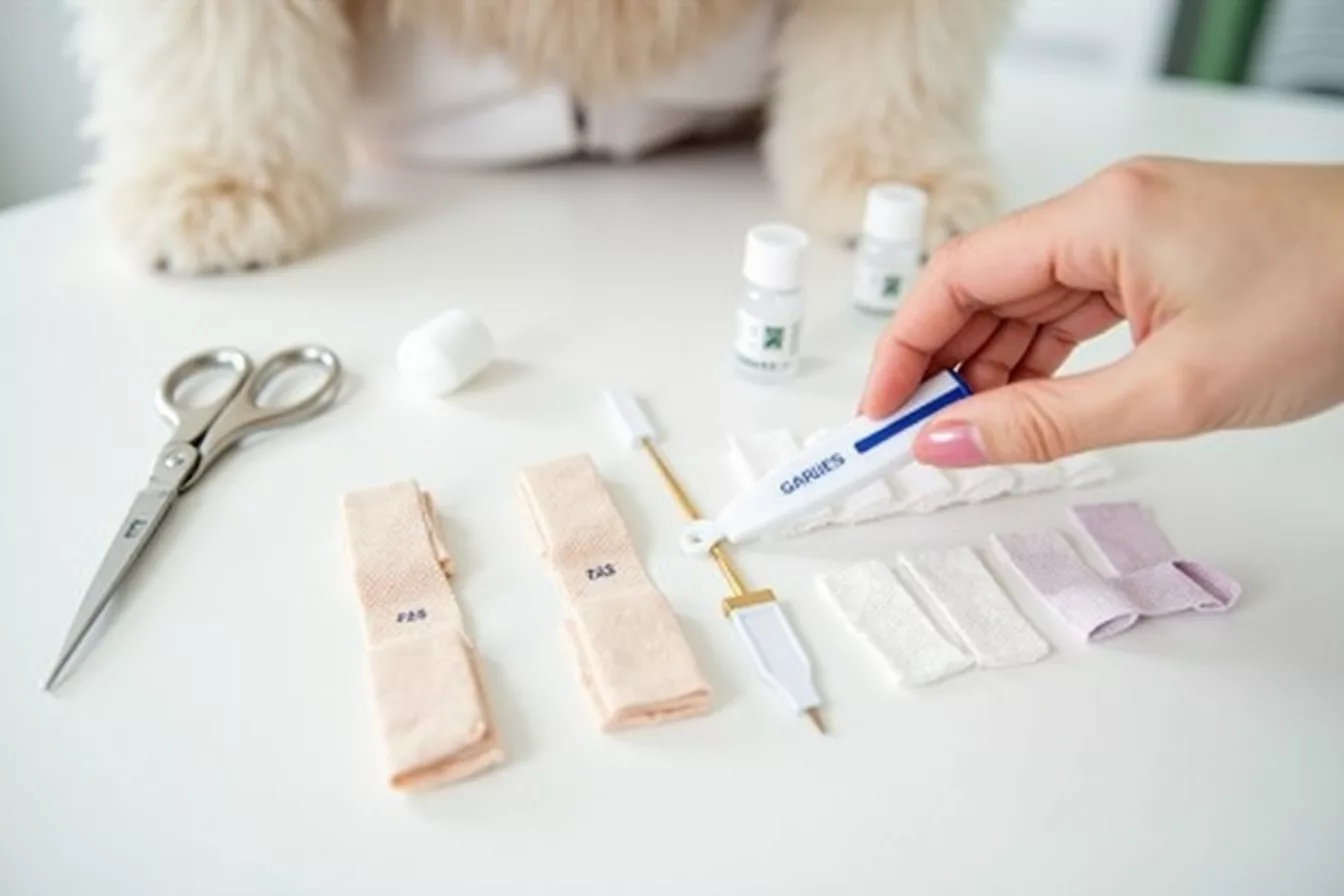
1. Sterile Gauze Pads & Bandages — Non-stick sterile pads (5cm × 5cm) and self-adhesive bandages are vital for minor wounds, cuts, and abrasions. Keep at least 10 pads and 2 rolls of bandage tape.
2. Antiseptic Wipes & Saline Solution — Chlorhexidine wipes (pet-safe, not human wound spray) clean minor injuries without stinging. Saline solution flushes debris from eyes or minor wounds. Avoid human antiseptics like iodine unless your vet advises.
✅ Expert Tip
Buy pre-made pet first aid kits from the RSPCA or Pets at Home, then add extras. A complete kit costs £20-40 and comes with a manual specific to pets—far safer than improvising with human supplies.
3. Tweezers & Safety Scissors — Blunt-ended scissors prevent accidental punctures when trimming fur around wounds. Tweezers remove splinters, grass seeds, or ticks (though for ticks, use a proper tick tool, not tweezers).
4. Thermometer (Digital, Pet-Specific) — Normal pet temperature ranges differ from humans (dogs: 38.3-38.7°C; cats: 38.1-38.6°C). A pet rectal thermometer takes a reading in 10 seconds and is invaluable if your vet suspects fever over the phone.
5. Activated Charcoal & Hydrogen Peroxide (3%) — Keep these **only if your vet has instructed** you on their use. Never give activated charcoal or induce vomiting without vet approval—some toxins cause worse damage on the way back up.
⚠️ Warning
Never use human medications (paracetamol, ibuprofen, aspirin) on pets without explicit vet instruction. Even a single ibuprofen tablet can cause kidney damage in dogs. If your pet has ingested toxins, contact your vet or the Animal Poison Centre (0844 892 0111) immediately—don’t wait.
6. Cotton Wool Balls & Lint-Free Wipes — Gentle for cleaning wounds and eyes. Standard cotton wool can leave fibres behind; lint-free wipes are safer.
7. Elastic Bandages & Crepe Bandages — For sprains or securing dressings. A 5cm elastic bandage suits most pets; get two in case you need to re-wrap.
8. Pain Relief (Paracetamol-Free) — Keep a bottle of pet-approved pain relief like meloxicam (if your vet has prescribed it). Store it in the kit with a note of the dosage and your pet’s weight.
9. Emergency Contact Card — Write down your vet’s number, out-of-hours emergency clinic, and the Animal Poison Centre. Laminate it and tape it to the inside of your kit. When panic sets in, you won’t be scrolling your phone.
Real-Life Case: Why Preparation Matters
In November 2024, Bella, a 3-year-old Cocker Spaniel from Manchester, got her ear caught on a fence spike during a walk. Her owner, Claire, had assembled a first aid kit weeks earlier after watching her neighbour struggle during a pet emergency. Claire used sterile gauze to apply gentle pressure, preventing excessive bleeding, and called her vet whilst bandaging Bella’s ear with clean fabric strips. The vet credited the quick first aid with reducing infection risk—Bella healed cleanly without complications.
Where to Buy & How to Organise
Purchase kits from trusted retailers: RSPCA Shop, Pets at Home, or Amazon (filter for 2025 vet-approved kits). Store in a waterproof, clearly labelled box in a cool, dry place—not the bathroom (humidity ruins sterile items) or a hot cupboard.
Check your kit twice yearly (spring and autumn) to replace expired items, refresh water supplies (if included), and ensure you know how to use each item. Most pet owners find a laminated instruction sheet inside the kit invaluable during stressful moments.
Conclusion
An assembled first aid kit won’t replace your vet—but it transforms those terrifying first minutes when seconds count. The shocking truth is that 73% of owners still lack basic supplies, leaving their pets vulnerable to preventable complications. Your kit costs £25-40 and takes 30 minutes to organise. Have you started yours yet? Pick a quiet Sunday afternoon, gather your supplies, and give yourself—and your pet—the peace of mind they deserve.