
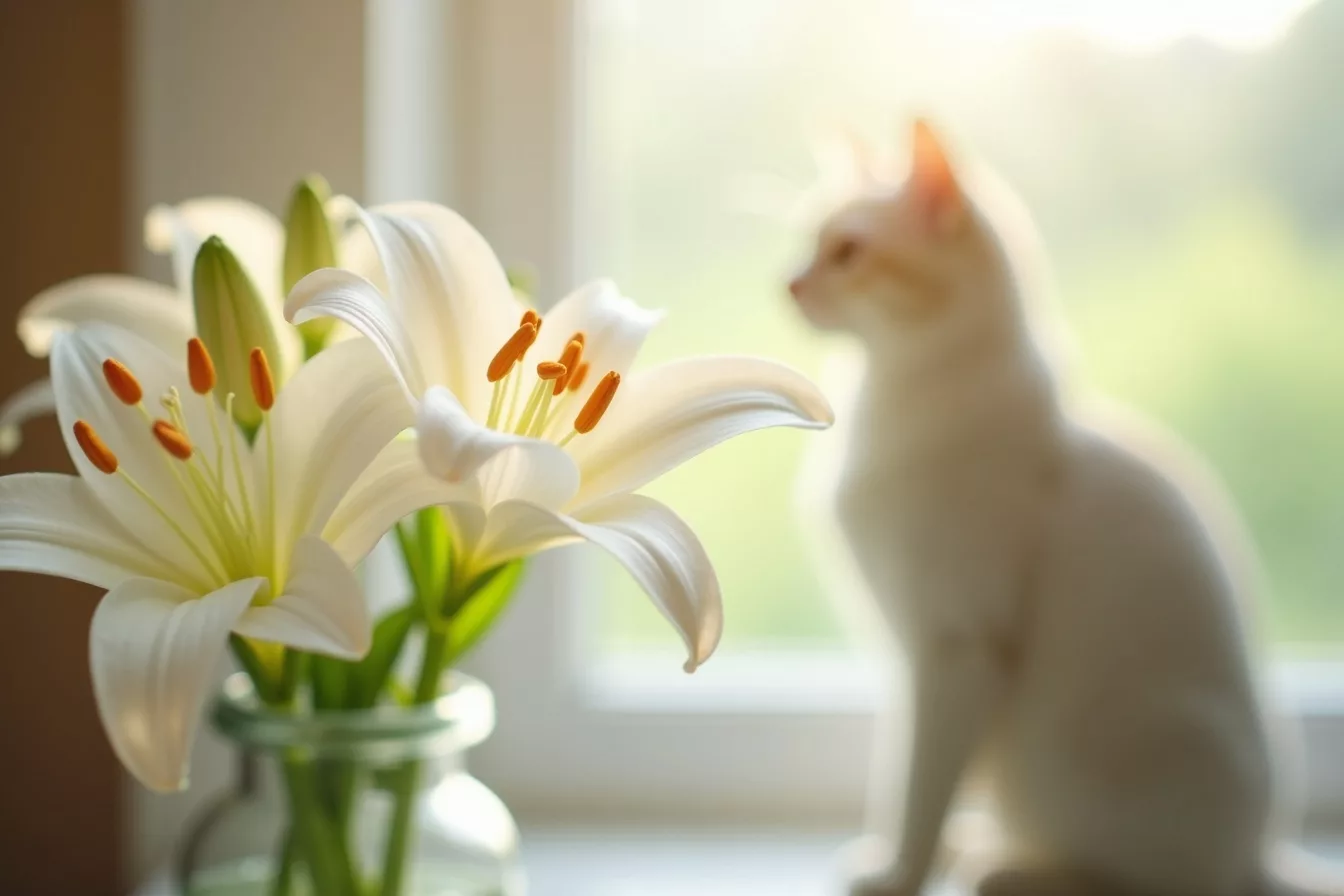

A shocking new warning from British veterinarians has cat owners across the UK and US on high alert. The British Veterinary Association (BVA) released updated toxicity data in early 2025 revealing that lilies—specifically Easter lilies and Stargazer varieties—remain the leading cause of acute kidney injury in cats, with poisoning cases up 34% since 2023. In this article you’ll discover which everyday plant poses the greatest risk to your feline friend, the warning signs you absolutely cannot ignore, and the one critical step that could save your cat’s life. Read on to learn the surprising reason why even a tiny amount of lily pollen is so dangerous.
The findings have sparked urgent public health messaging from the Royal Veterinary College (RVC) and PDSA, both confirming that lilies—often given as gifts or kept as decorative houseplants—are far more toxic to cats than to dogs or humans. Every part of the lily plant is poisonous: petals, stamens, leaves, stems, and even the water in the vase.
📊 Key Figures 2025
- 34% increase in lily-related feline poisoning cases reported to the BVA between 2023–2025
- 72 hours is the critical window: cats can develop kidney failure within 72 hours of exposure to lily pollen or plant material
- 90% of cats show no visible symptoms in the first 24 hours, making early intervention difficult (RVC study, 2025)
- £2,400–£4,800 average emergency vet treatment cost for lily toxicity cases in the UK
Sources: British Veterinary Association, Royal Veterinary College, 2025
One particularly alarming case involved Mittens, a three-year-old tabby from Manchester, whose owner brought home a bouquet of Stargazer lilies for Mother’s Day in March 2025. Within 48 hours, Mittens showed lethargy and loss of appetite—symptoms that seemed minor at first. By day three, she’d stopped eating entirely and was vomiting. Emergency bloodwork revealed acute kidney damage. After five days of intensive IV fluid therapy at an emergency clinic, Mittens survived, but her owner, Sarah, now describes it as “the scariest experience of my life.”
✅ Expert Tip
Never keep lilies in a home where cats live. If you receive lilies as a gift, remove all stamens immediately with tweezers before the plant enters your house, or give the bouquet to a friend with no feline pets. Even dried lily petals are toxic, so vacuum thoroughly if any fall.
The challenge is that many cat owners don’t realise the danger. Lilies are popular Mother’s Day, Easter, and summer gifts in both the UK and US, and they’re commonly found in grocery store bouquets and florist arrangements. Some varieties marketed as “safe” or “non-toxic” lilies—such as peace lilies or calla lilies—are indeed less dangerous than true lilies, but they still contain calcium oxalate crystals that can cause mouth and throat irritation in cats.
⚠️ Warning
If your cat has eaten any part of a true lily or ingested lily pollen, contact your vet or emergency animal clinic immediately—do not wait for symptoms to appear. Bring the plant or a photo of it with you. Time is critical; treatment within 18 hours of exposure significantly improves outcomes. Activated charcoal and aggressive IV fluid therapy are standard emergency protocols.
The PDSA and BVA are now running a public awareness campaign titled “Lilies Kill Cats” across UK social media and veterinary surgeries. Dr Emma Milne, a veterinary behavioural specialist, emphasised in a recent interview that education is the only effective prevention: “We can’t treat what we don’t know has happened. Many owners don’t realise their cat nibbled a petal hours earlier.”
Beyond lilies, the RSPCA also warns of other toxic houseplants including sago palm, dieffenbachia, and certain varieties of ivy, but lilies remain the most acutely dangerous. A single exposure can trigger irreversible kidney damage in as little as 6–12 hours in some cases.
The emotional toll on families who’ve lost cats to lily toxicity has prompted stricter labelling requirements in some UK garden centres and florists. Several supermarket chains have begun including poison warning stickers on lily arrangements sold near the checkout, a small but significant step towards prevention.
Have you noticed lilies in your home or received them as a gift recently? The single best action you can take today is to remove any true lilies from your house immediately and ask friends and family to do the same before gifting you flowers. Your cat’s life may depend on it.