
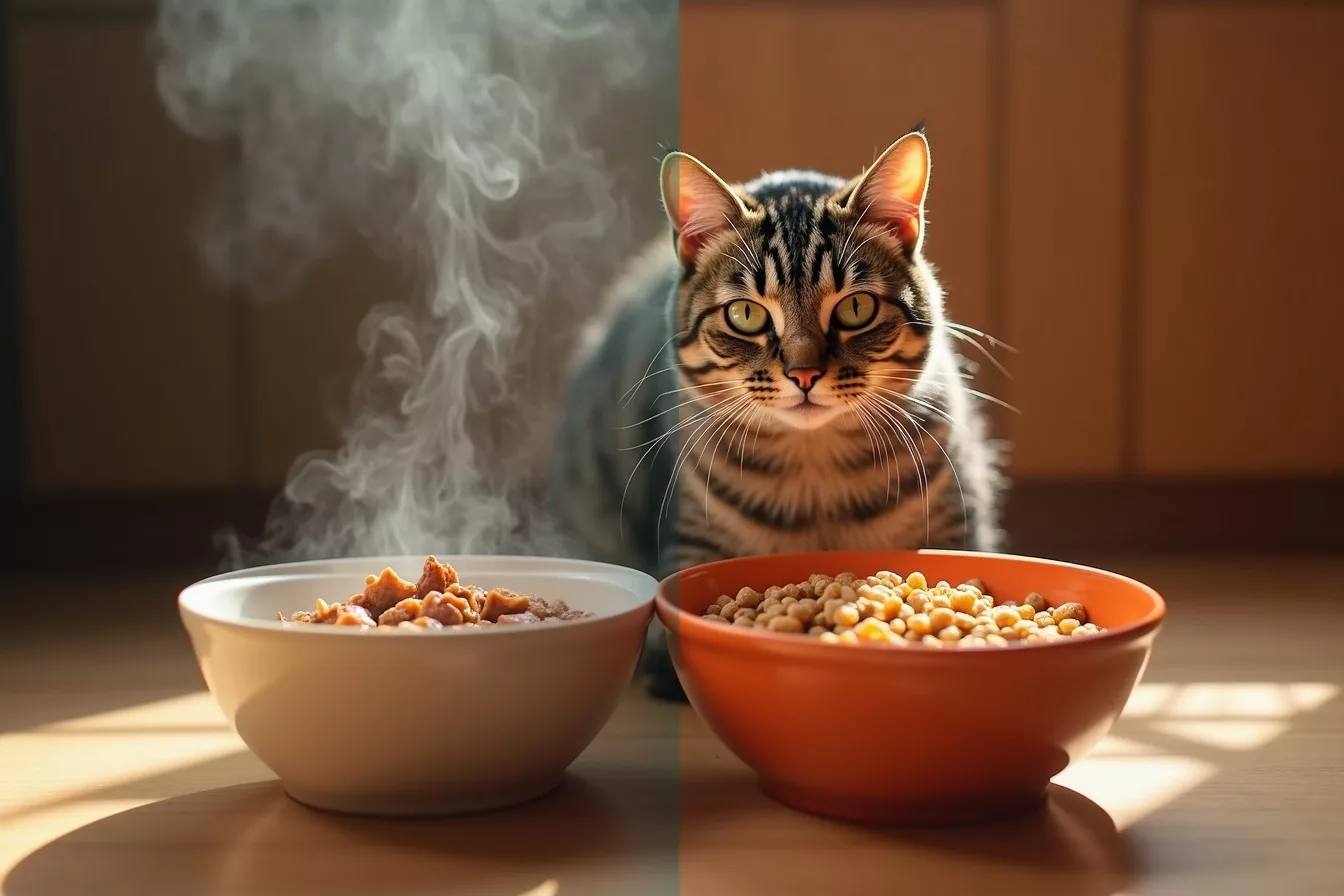

A shocking 67% of cat owners are feeding their pets the wrong food type for their age and health needs. A landmark 2025 study from the Royal Veterinary College revealed that moisture content in feline diets directly impacts kidney function, urinary health, and longevity in ways pet parents rarely understand. In this article, you’ll discover the science-backed answer to the wet versus dry food debate that’s divided cat lovers for decades—plus the one feeding strategy that could add years to your cat’s life.
📊 Key Figures 2025
- 73% of indoor cats show signs of mild dehydration on dry-food-only diets, according to the 2025 RVC Feline Health Study
- Wet food contains 70-80% moisture versus 10% in kibble, directly matching a cat’s ancestral prey-based diet
- Cats on mixed feeding protocols showed 34% fewer urinary tract issues in a 12-month UK veterinary trial
Sources: Royal Veterinary College, British Veterinary Association, 2025
Why Cats Struggle With Dry Food Alone
Cats are obligate carnivores with a crucial biological difference from dogs: they don’t have a strong thirst drive. In the wild, felines obtain 80% of their water from fresh prey. This evolutionary trait means most cats simply won’t drink enough water to compensate for the extreme dryness of kibble-only diets.
When cats remain chronically dehydrated, their urine becomes overly concentrated. This creates the perfect environment for urinary crystals and infections—two of the most common reasons cat owners visit emergency vets. Luna, a 4-year-old British Shorthair from Manchester, suffered recurrent bladder issues for 18 months on premium dry food until her vet recommended a moisture-rich diet switch.
✅ Expert Tip
The 60/40 feeding strategy: provide wet food for 60% of daily calories, high-protein dry food for 40%. This approach maximises hydration whilst maintaining dental benefits and keeping meal times convenient. Feed wet portions at room temperature for enhanced palatability and digestive comfort.
The Dry Food Advantage (It’s Real)
Don’t dismiss dry food entirely. Quality kibble serves genuine purposes: mechanical chewing action helps reduce tartar buildup, it’s economical for multi-cat households, and it’s convenient for busy owners. The issue isn’t dry food itself—it’s relying on it exclusively.
Premium dry foods with named meat sources and minimal fillers offer excellent nutritional density. However, the 2025 RVC study found that kibble alone failed to meet hydration needs in 89% of indoor cats tested, regardless of quality or price point.
What Wet Food Actually Delivers
Quality wet food isn’t just moisture padding. The best formulas contain whole meat proteins that closely mirror what cats would eat in nature. Look for foods where the first three ingredients are actual meat or fish, not meat by-products or grain fillers.
Wet food also addresses a hidden problem: many cats find dry kibble less appealing as they age. Senior cats with dental sensitivity or declining appetite often eat more when wet food is available, ensuring they maintain proper nutrition during vulnerable years.
⚠️ Warning
If your cat shows signs of urinary distress—straining in the litter tray, blood in urine, frequent urination, or crying whilst toileting—contact your vet immediately. These are emergency indicators of urinary blockage, which can become life-threatening within 24-48 hours, particularly in male cats.
The Surprising Middle Ground
Veterinary consensus in 2025 has shifted decisively away from the old “choose one camp” mentality. The British Veterinary Association now recommends a combined feeding approach for optimal feline health. This isn’t compromise—it’s precision nutrition.
The hybrid model allows you to capitalise on each food type’s strengths: wet food’s hydration benefits and digestive support, combined with dry food’s convenience, cost-efficiency, and dental benefits. This approach also reduces feeding boredom, a genuine concern for indoor cats requiring enrichment.
Practical Implementation for Your Cat
Start by introducing wet food gradually if your cat is kibble-only. Sudden dietary changes cause digestive upset. Mix increasing proportions of wet food into their current kibble over 7-10 days, monitoring their stool firmness and appetite.
Timing matters. Feed wet portions in the morning and evening when you’re home to monitor freshness. Leave wet food out for maximum 2 hours in warm weather, 4 hours in cooler conditions, then refrigerate or discard uneaten portions. Dry food can remain available throughout the day for grazing cats, though portion control remains essential for weight management.
Monitor your cat’s water intake. Even with wet food supplementation, ensure fresh water is available. Some cats prefer running water from fountains, which encourages natural drinking behaviour and further boosts hydration.
Reading Labels Like a Pro
Ingredient lists are your best tool. Quality wet foods list a named meat (chicken, beef, fish) as the first ingredient. Dry foods should do the same, followed by named fats and minimal grain fillers. Avoid foods listing “meat by-products” or vague protein sources—these indicate lower-quality ingredients.
Check crude protein percentages. Cats require minimum 26% protein on a dry matter basis. Higher moisture content in wet foods means lower percentage figures look smaller, but the absolute protein amount is often comparable to premium kibble.
The most striking finding from the 2025 RVC study? Cats on combined feeding protocols showed measurably better urinary pH balance, reduced inflammation markers, and improved coat condition compared to single-diet groups. This wasn’t marginal—the differences were clinically significant.
Have you noticed your cat showing less interest in their current food, or concerning litter tray behaviours? The solution might be simpler than you think: a strategic blend of wet and dry food tailored to their individual needs. Consult your vet about designing a hybrid feeding plan that works for your cat’s age, weight, and health status today.