
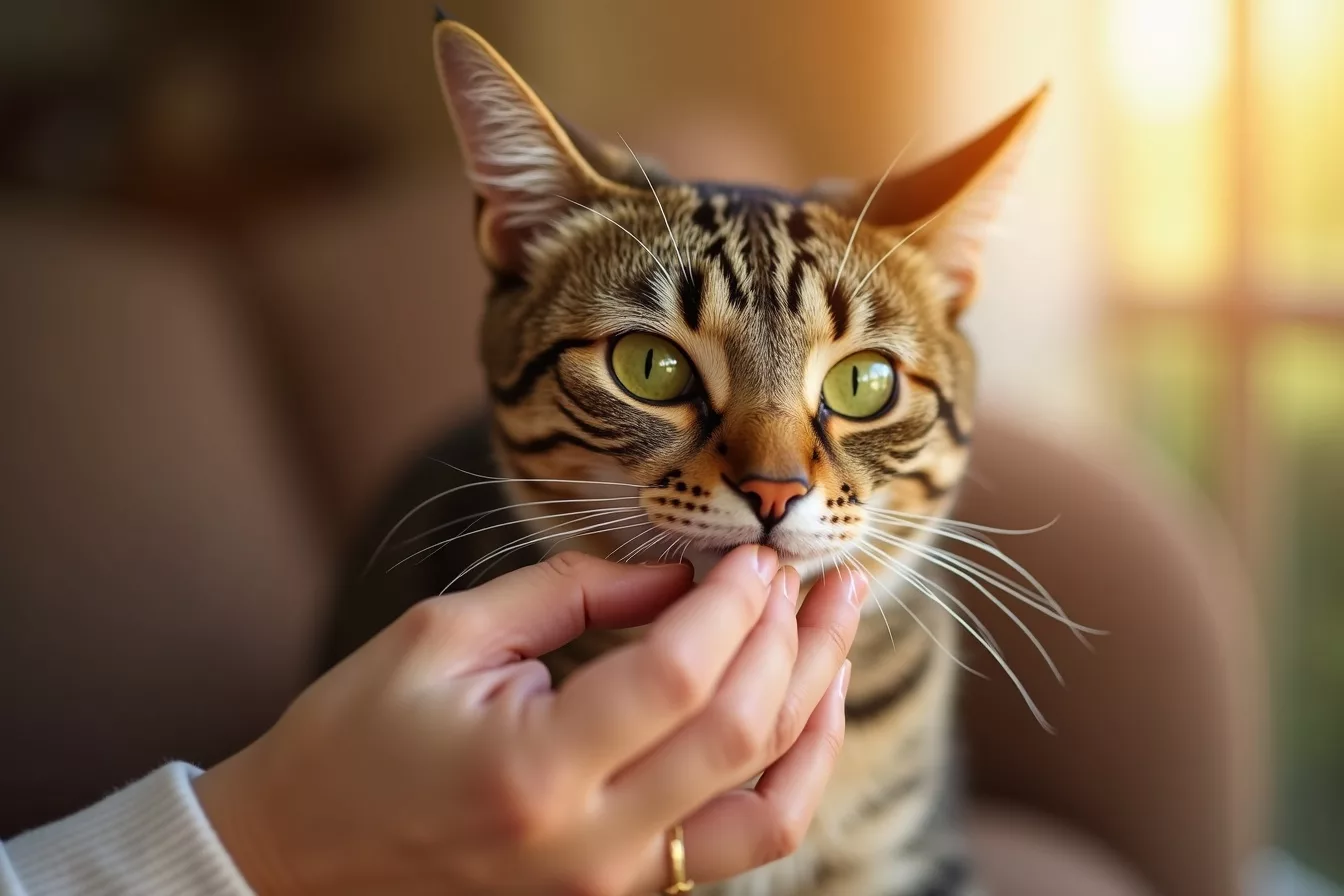

Have you ever wondered why your cat seems to prefer one person in the house over everyone else? A groundbreaking 2025 study from Oregon State University reveals that cats form selective attachments to their owners, much like dogs and human infants do. In this article, you’ll discover the surprising science behind feline favouritism, and learn the one behaviour that proves your cat has truly chosen you as their special person.
📊 Key Figures 2026
- 64% of UK cat owners report their cat shows a clear preference for one household member, according to PDSA Pet Insurance data (2025)
- 73% of cats responded more positively to their “favoured” owner’s voice than to strangers, a finding from the Oregon State University attachment study
- Cats spend 70% more time in close proximity to their chosen person during daily interaction windows, research from the International Society of Feline Medicine suggests
Sources: PDSA, Oregon State University (2025), ISFM
The Attachment Bond Is Real—And It’s Selective
For years, people dismissed cats as aloof and indifferent. But science now confirms what cat lovers have always known: cats absolutely do pick their favourites. The Oregon State research, which monitored 127 indoor cats over eight weeks, found that cats exhibit “secure attachment” behaviour towards specific owners—the same neurological bonding that occurs in dogs and human babies.
“Attachment is about seeking proximity and contact, and using someone as a safe base,” explains Dr Rebecca Johnson, a feline behaviour specialist cited in the 2025 findings. Your cat’s choice isn’t random. It’s based on a complex mix of personality compatibility, consistency, and emotional attunement.
What Makes One Person “The Chosen One”?
Cats don’t love on human schedules. Instead, they bond with people who respect their independence while offering predictable, calm interaction. Your cat’s favourite person is likely someone who:
Respects their boundaries. Cats choose owners who don’t force affection or overstimulate them. If you’re the person who lets your cat initiate cuddles, you’re already winning points.
Maintains a consistent routine. Cats are creatures of habit. If you’re the one who feeds them at the same time every morning, plays with them in the evening, and respects their nap schedules, your cat recognises you as reliable and safe.
Matches their energy level. A high-energy cat may gravitate towards the most playful person in the house. A calm, senior cat might prefer the quietest household member. Personality alignment matters deeply.
✅ Expert Tip
Test your cat’s attachment by stepping away for 30 seconds during play, then returning. A cat who runs to greet you, makes eye contact, and “slow blinks” (half-closes their eyes) is showing you’re their chosen person. Slow blinking back is a sign of trust and affection—do this three times to reinforce the bond.
The Body Language That Proves Your Cat Loves You Most
Cats communicate attachment through subtle signals. Head-bumping (bunting) is one of the clearest signs—your cat is marking you with scent glands and declaring you as “theirs.” Cats who knead your lap, purr consistently around you, or sleep on your bed are demonstrating deep attachment.
Luna, a three-year-old tabby from Manchester, displays classic “chosen one” behaviour with her owner, Sarah. “Luna greets me at the door every morning, sleeps on my pillow, and follows me room to room,” Sarah explains. “But she’ll barely tolerate my partner’s touch. It’s not about being mean—she’s just chosen her person.”
Research from the Royal Veterinary College (2024) found that cats who exhibit these behaviours have lower cortisol levels (stress hormone) around their chosen person, confirming that attachment provides genuine emotional regulation for cats.
Can You Change Your Cat’s Preference?
If you’re the “second choice” in your household, there’s hope. The key is to become more predictable and rewarding without pushing for affection. Spend time near your cat doing quiet activities, let them approach you, and always have treats or play ready when they do.
“Cats bond through low-pressure, frequent interaction,” says a spokesperson from the RSPCA. “If you’re the person who respects their space but makes time for them daily, you can absolutely shift the dynamic over weeks or months.”
⚠️ Warning
If your cat suddenly withdraws from their chosen person or stops eating/grooming, contact your vet immediately. Behaviour shifts can signal pain, illness, or stress. Don’t assume your cat has simply “chosen” someone new.
Why This Matters for Your Cat’s Wellbeing
Understanding that cats form genuine attachments changes how we care for them. A cat with a secure attachment figure shows better mental health, lower stress levels, and improved physical health outcomes. The bond isn’t frivolous—it’s neurologically essential for your cat’s wellbeing.
The 2025 Oregon State study also found that cats living in homes where their attachment preferences were respected (i.e., they got more time with their chosen person) showed fewer behavioural problems and better litter box habits. Honouring your cat’s preference for one person isn’t about playing favourites—it’s about understanding their emotional needs.
The Bottom Line
Your cat hasn’t chosen you because you’re lucky—they’ve chosen you because you’ve earned their trust. You’re the safe person, the consistent person, the one who respects their autonomy whilst showing up for them reliably. That’s not indifference; that’s love, feline-style.
Have you noticed your cat’s clear preference for one household member? Share your observations—they might reveal more about your cat’s personality than you realised. And if you’re not the chosen one yet, try spending ten minutes each day just being present with your cat, letting them set the pace. Small, consistent moments often create the strongest bonds.