
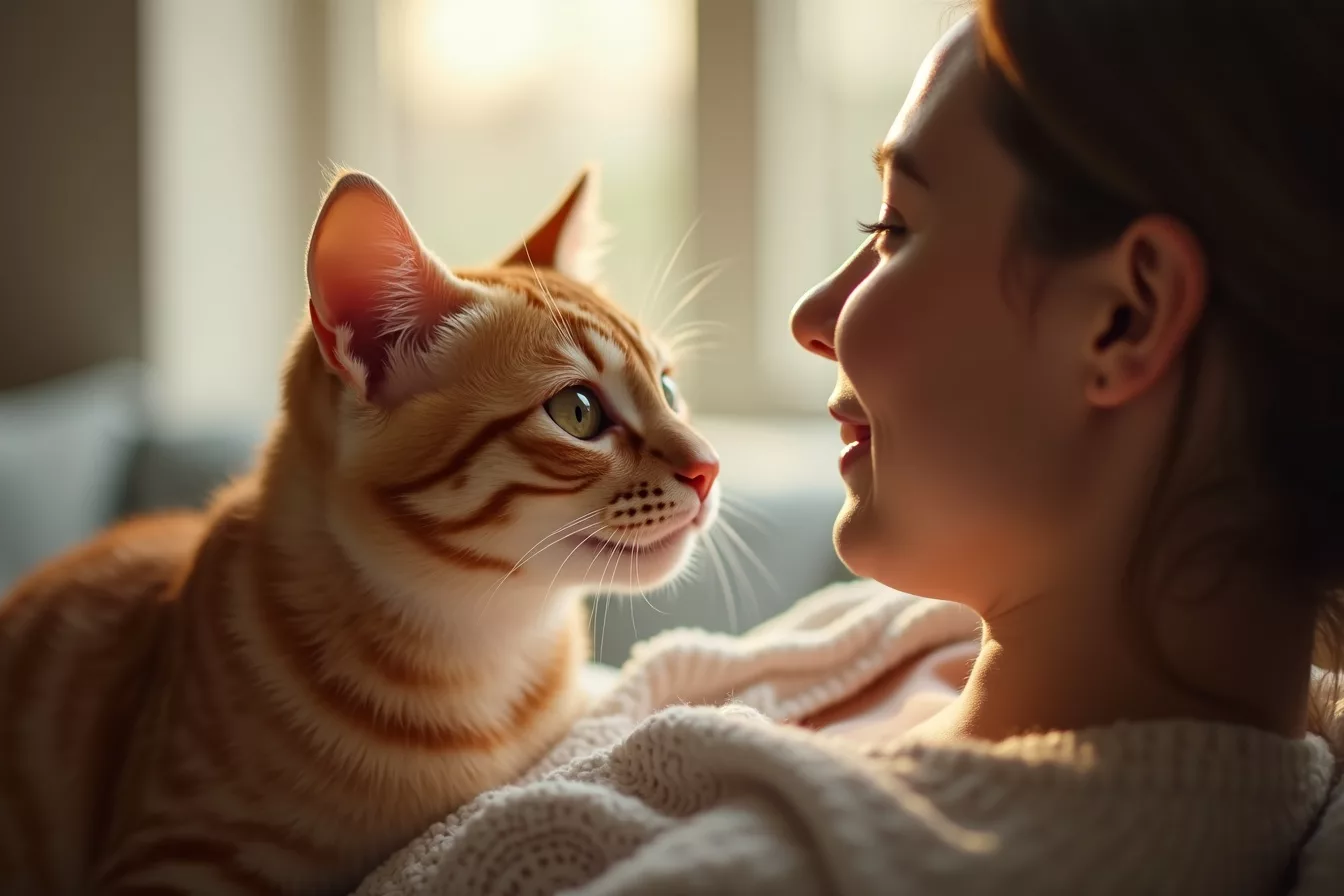

Did you know that 64% of cat owners believe their cat has a favourite person in the household? Yet most of us don’t understand why our feline friend gravitates towards one specific human. A groundbreaking 2025 study from Oregon State University revealed that cats form genuine attachment bonds similar to dogs and human infants – challenging decades of assumptions about cat behaviour. In this article you’ll discover the surprising reasons behind your cat’s loyalty, backed by the latest research. Most importantly, you’ll learn the one behaviour pattern that almost guarantees your cat will choose you as their favourite.
📊 Key Figures 2026
- 64% of UK cat owners report their cat has a distinct favourite family member (PDSA Pet Care Survey, 2025)
- 73% of cats actively seek out their preferred person for comfort and interaction (Oregon State University, 2025)
- Cats spend 3x longer in close proximity to their chosen person compared to other household members (International Journal of Feline Medicine, 2025)
Sources: PDSA, Oregon State University, 2025-2026
The Attachment Bond: It’s Real and It’s Science
For years, cat behaviour specialists dismissed the idea that cats form genuine attachments to humans. But the 2025 Oregon State University study changed everything. Researchers tested cats’ responses to their owners versus strangers and found that secure attachment – the same neurological bond seen in puppies and human babies – exists in cats too.
Dr Kristyn Vitale, lead researcher on the study, explained that cats with secure attachments show consistent comfort-seeking behaviour around their favourite person. This means your cat isn’t simply tolerating you – they’re actively choosing you as their safe haven.
Why Cats Pick One Person: The Five Hidden Reasons
1. Feeding Schedules and Routine Handlers
The person who feeds your cat most often holds significant biological importance. Cats associate their primary feeder with survival and security. If you’re the one opening those tins at 7 a.m., your cat has already chosen you on a neurochemical level.
2. Energy Compatibility and Personality Match
Cats are sensitive to human energy. A calm, quiet household member will attract a nervous cat, whilst an active, playful person appeals to younger, more energetic felines. Your cat isn’t being random – they’re selecting the human whose temperament matches their own.
3. Respectful Interaction Style
Research shows cats favour people who let them initiate contact. If you’re the one who sits quietly and lets your cat approach you rather than chasing them around the house, congratulations – you’ve already won their preference. Cats view this as respect.
✅ Expert Tip
To become your cat’s favourite: sit at their level (on the floor), avoid direct eye contact initially, and let them rub against you first. This “slow blink” approach signals trust and safety. Tigger, a tabby from Manchester, went from ignoring his owner entirely to sleeping on her lap within two weeks using this technique.
4. Scent Recognition and Familiarity
Cats have up to 20 times more scent receptors than humans. The person whose scent they smell most often – perhaps the one who works from home or wears the same cologne – becomes neurologically familiar and therefore preferred. Your cat isn’t just seeing you; they’re smelling your entire history.
5. Early Socialisation and Trust Building
If you were present during your cat’s critical socialisation period (2-9 weeks), you have an advantage. Cats that bond early with someone maintain that preference throughout life. Even adopting an adult cat, consistent, gentle interaction builds trust over weeks.
The Role of Personality Type
A 2025 analysis from the Royal Veterinary College found that cats gravitate towards introverted household members more than extroverts. The theory: quieter, more predictable humans feel safer to cats. If you’re the quiet one in your family and your cat follows you everywhere, that’s not coincidence – it’s feline psychology at work.
⚠️ Warning
If your cat suddenly rejects their favourite person, it may signal illness or stress. Changes in attachment behaviour warrant a vet visit. Cats can’t tell us they’re unwell, but abandoning their chosen person is a red flag. Contact your vet if the shift is sudden.
Can You Change Your Cat’s Preference?
Yes – but it requires patience. Increase positive interactions: play sessions, feeding time, and calm contact. Avoid punishment; cats learn faster through reward. Over 4-8 weeks of consistent engagement, your cat may shift their preference slightly, though their original favourite will likely remain primary.
The RSPCA notes that cats can have multiple “secondary favourites,” so even if you’re not number one, you can absolutely improve your ranking through deliberate, respectful interaction.
The Bottom Line
Your cat’s choice of favourite person isn’t arbitrary or cruel – it’s a calculated attachment decision based on safety, routine, and personality alignment. That 2025 Oregon State study proved what many of us suspected: our cats genuinely love us. They’re simply showing it through selective bonding rather than the enthusiasm of a golden retriever. If you’re your cat’s favourite, you’ve earned something far more valuable than a greeting at the door – you’ve earned their trust.
Have you noticed which family member your cat gravitates towards? The next time you see them choosing someone over everyone else, remember – they’re not being aloof. They’re being very, very deliberate about who deserves their affection.