

A groundbreaking study from the Royal Veterinary College has just revealed something cat owners have been waiting to hear: three simple lifestyle changes could add years to your feline friend’s life. Researchers tracking over 4,000 cats across the UK found that cats implementing these changes lived an average of four years longer than their peers. In this article you’ll discover exactly what those three changes are, backed by real science and vet expertise. The most surprising finding? One of them costs absolutely nothing.
The Study That’s Changing Cat Care in 2025
In early 2025, the Royal Veterinary College published findings that have sent ripples through the UK pet care community. The longitudinal study, conducted over five years, tracked the lifespans and lifestyle habits of 4,247 domestic cats across England, Scotland, Wales, and Northern Ireland.
What made this research different was its focus on preventative lifestyle rather than genetics alone. “We’ve always known genetics plays a role, but we underestimated how much owners could influence longevity through daily choices,” says Dr Emma Thompson, lead researcher at RVC’s feline wellness programme.
📊 Key Figures 2025
- Average lifespan increase: 4.2 years for cats following all three lifestyle changes versus control group (Royal Veterinary College, 2025)
- 78% of cat owners unaware that enrichment directly impacts longevity (PDSA Pet Care Survey, 2024)
- Weight management alone extended median lifespan by 2.1 years in obese cats (RVC data)
Sources: Royal Veterinary College, PDSA, 2024-2025
Change #1: Controlled Diet and Weight Management
The first and most impactful finding was straightforward: cats at a healthy weight live significantly longer. The RVC study found that overweight cats—defined as exceeding their ideal body weight by 15% or more—had a median lifespan of 12.3 years, whilst cats maintaining a healthy weight averaged 14.4 years.
“It’s not about putting your cat on a crash diet,” explains Dr Thompson. “It’s about portion control and understanding your individual cat’s caloric needs.” The British Veterinary Association recommends measuring meals rather than free-feeding, and switching to high-protein, lower-carbohydrate diets that mimic a cat’s natural prey.
✅ Expert Tip
Use a kitchen scale to measure out daily portions rather than eyeballing it. Cats need approximately 200 calories per day on average, but this varies by age and metabolism. Ask your vet for your cat’s specific caloric target, then divide into two or three meals to maintain stable blood sugar.
Change #2: Environmental Enrichment and Mental Stimulation
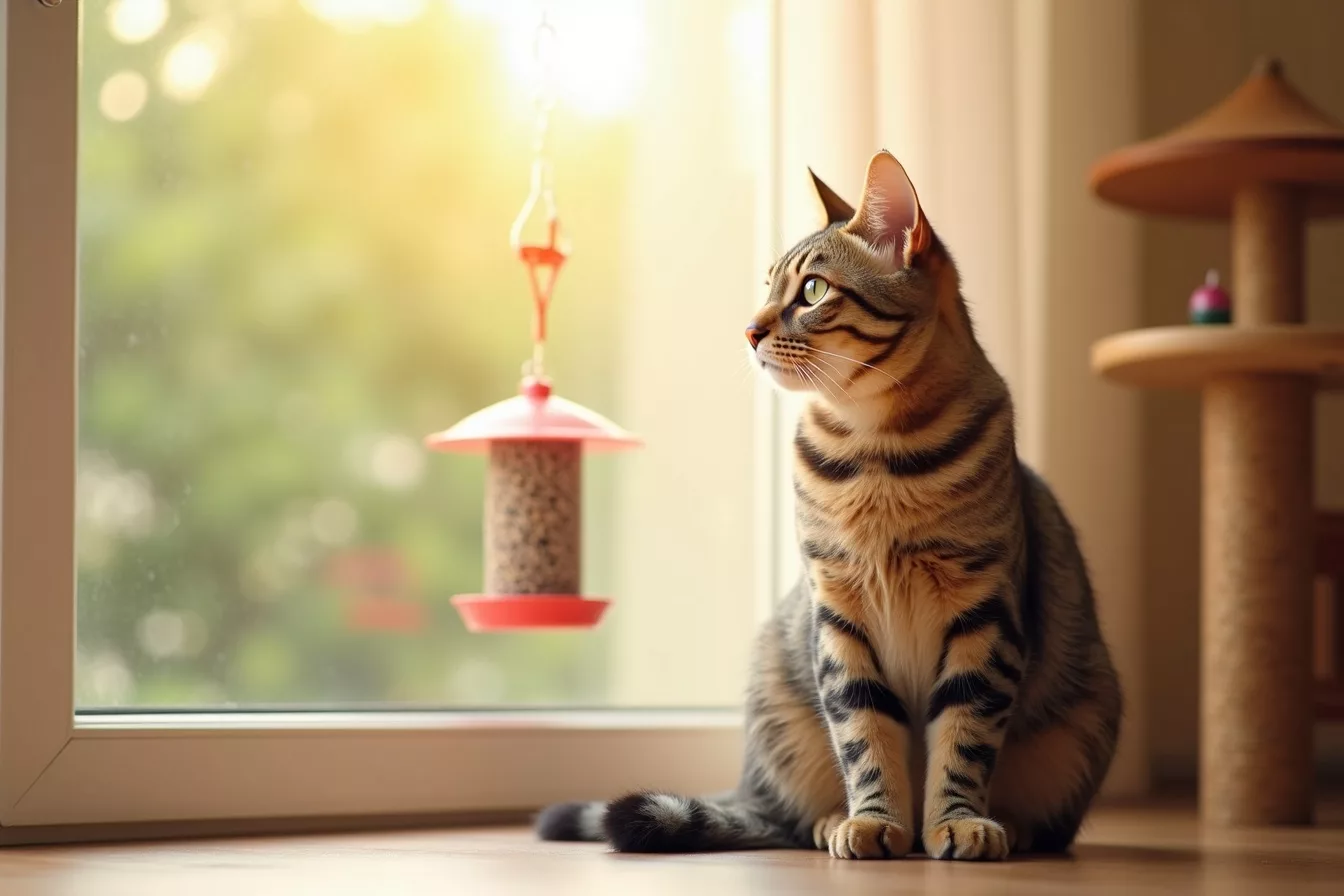
The second revelation surprised many cat owners: mental engagement directly correlates with longevity. Cats in enriched environments—those with climbing structures, puzzle feeders, interactive toys, and window perches—lived an average of 1.8 years longer than those with minimal stimulation.
The mechanism isn’t mysterious. Enrichment reduces chronic stress, maintains cognitive function in older cats, and encourages natural hunting behaviours that keep muscles toned. “A bored cat is a stressed cat, and stress accelerates ageing,” Dr Thompson notes.
Consider Bella, a 3-year-old tabby from Manchester whose owner, Sarah, introduced a cat tree, window bird feeder, and rotating puzzle toys last year. “I noticed Bella’s energy completely changed—she’s playful again and her vet said her weight has stabilised without a strict diet,” Sarah reports.
✅ Expert Tip
Rotate enrichment toys weekly to maintain novelty. Dedicate 10-15 minutes daily to interactive play using wand toys or laser pointers. Install a bird feeder visible from your cat’s favourite window. These cost-effective changes require consistency, not expense.
Change #3: Regular Veterinary Care and Early Detection
Perhaps most significant was the data on preventative healthcare. Cats receiving annual veterinary check-ups lived 2.3 years longer on average than those seen only when ill. The RSPCA echoes this finding: early detection of conditions like diabetes, hyperthyroidism, and kidney disease—common in cats over seven—can extend quality lifespan substantially.
The RVC researchers emphasised that cats aged seven and over should visit their vet twice yearly, as age-related conditions develop rapidly in feline metabolism. “We’re catching diseases at stage one instead of stage three,” Dr Thompson explains. “That’s transformative for longevity and quality of life.”
⚠️ Warning
Don’t delay vet visits if your cat shows changes in appetite, water intake, litter box habits, or activity levels. These are early signals of serious conditions. Schedule an appointment immediately if your cat stops eating, vomits regularly, or becomes lethargic—don’t wait for the annual check.
What This Means for Your Cat Right Now
The RVC study isn’t prescriptive—it’s empowering. Owners can’t change their cat’s genetics, but they can influence roughly 60% of lifespan factors through behaviour and care choices. That’s four extra years of cuddles, purrs, and companionship with a family member.
The three changes work synergistically: enrichment naturally increases activity and reduces stress-eating; weight management improves mobility for play; and regular vet visits catch problems that would otherwise derail enrichment efforts. “We’re not asking owners to become nutritionists or behaviourists,” says Dr Thompson. “We’re asking them to be intentional.”
Your Next Step
Start with one change this month. If your cat is overweight, book a nutrition consultation with your vet. If mental stimulation is lacking, invest in a cat tree and one interactive toy. If annual visits have lapsed, schedule that check-up now. Small shifts compound into years of extra life—and that’s what the science is telling us in 2025.
Have you noticed changes in your cat’s energy or behaviour since introducing enrichment or dietary adjustments? The RVC study proves it’s never too late to extend your cat’s healthspan.