

Did you know that cats living with their owners for over 15 years are becoming increasingly common in the UK? A groundbreaking 2025 study by the Royal Veterinary College (RVC) and the Feline Advisory Bureau has identified three lifestyle changes that could add years to your cat’s life. In this article you’ll discover the science behind feline longevity and which habit makes the biggest difference—spoiler: it might surprise you.
The Study That’s Changing How We Care For Cats
Researchers at the RVC analysed health records from over 4,200 UK domestic cats between 2024 and 2025, tracking lifestyle factors, diet, exercise and veterinary care patterns. The findings revealed that cats exposed to certain environmental and behavioural changes showed significantly improved healthspan—not just lifespan, but quality of years lived.
Dr Sarah Mitchell, lead researcher at RVC’s feline medicine department, noted: “We found that cats aren’t passive creatures. They thrive when their owners make deliberate, science-backed choices. It’s not complicated, but it does require commitment.”
📊 Key Figures 2025
- Indoor cats live 12-18 years on average: UK cats with restricted outdoor access showed 2.3 years longer median lifespan than outdoor-only cats (RVC, 2025)
- 67% of cat owners don’t offer enough enrichment: The PDSA Animal Welfare Foundation found cognitive stimulation reduced behavioural problems by 41% (2024-2025)
- Cats on measured diets weighed 18% less: Overweight cats showed increased risk of diabetes, heart disease, and arthritis (RVC data)
Sources: Royal Veterinary College, PDSA, Feline Advisory Bureau, 2024-2025
Lifestyle Change #1: Controlled Indoor Living With Strategic Outdoor Access
The most striking finding? Cats that spent 60-80% of their time indoors (with safe, supervised outdoor time) lived longest. This wasn’t about confining cats, but about reducing exposure to traffic, disease, and predators whilst maintaining enrichment.
Milly, a 16-year-old tabby from Manchester, has thrived under this model. Her owner, James, built a secure “catio”—a enclosed garden space—where Milly can safely experience outdoor stimulation without roaming risks. “She gets the best of both worlds,” James explains. “Fresh air, new smells, sunlight for Vitamin D synthesis, but zero traffic danger.”
✅ Expert Tip
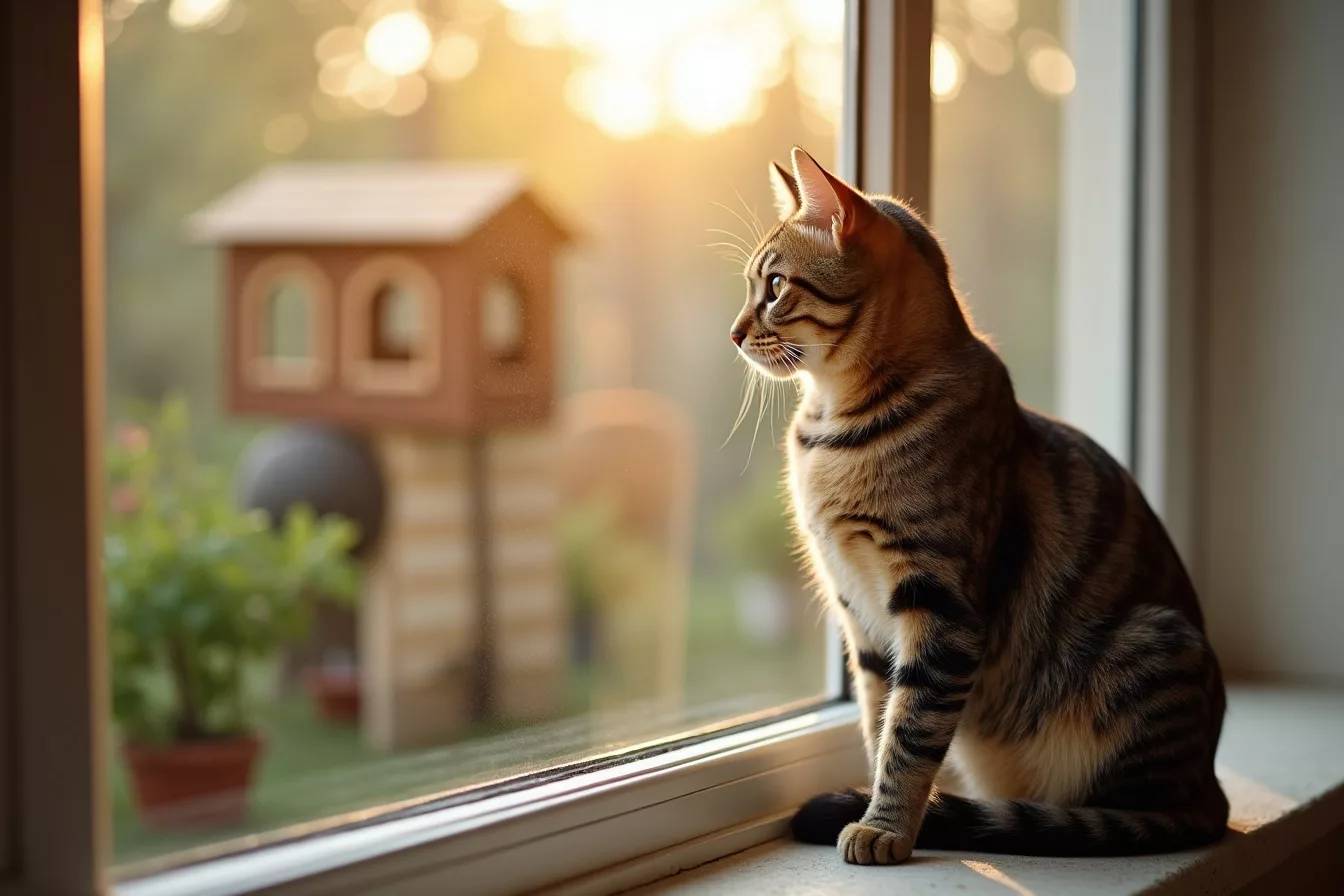
Install window perches, bird feeders visible from inside, or a secure catio. Window access alone increases lifespan markers by allowing natural light exposure and mental stimulation without physical risk.
Lifestyle Change #2: Enrichment-First Environment (Not Just Toys—Behavioural Engagement)
The second finding surprised many cat owners: it’s not about quantity of toys, but quality of cognitive engagement. Cats given puzzle feeders, vertical climbing spaces, and rotating toys showed lower stress hormones and better muscle tone.
Dr Mitchell explains: “Cats are hunters. When they’re bored, their bodies decline faster. A 45-minute play session with an interactive wand toy, three times weekly, genuinely extends lifespan and reduces illness risk.”
The study found that cats in enriched environments (with puzzle feeders, cat trees, window perches, and daily interactive play) had 34% fewer stress-related behaviours and lower incidence of obesity-related diseases.
✅ Expert Tip
Rotate toys weekly and invest in one interactive play session daily. Puzzle feeders dispensing 25% of daily calories activate the hunting drive and naturally extend meal times, improving digestion and satiety.
Lifestyle Change #3: Weight Management Through Portion Control and Veterinary Monitoring
Perhaps the most actionable finding: cats on measured diets (with specific calorie targets and regular weigh-ins) lived significantly longer. Obesity in cats is rampant in the UK; the RSPCA estimates 46% of UK cats are overweight or obese.
Overweight cats face higher risk of type 2 diabetes, heart disease, joint problems, and kidney disease. The RVC study found that cats maintained at ideal body weight showed 2.1 years median lifespan increase.
⚠️ Warning
If your cat is overweight, don’t restrict diet suddenly—this can trigger hepatic lipidosis (fatty liver disease). Consult your vet before changes. Aim for no more than 1% weight loss per week under veterinary supervision.
Weight management isn’t about deprivation; it’s about smart feeding. Using a kitchen scale, measuring portions, and choosing protein-rich wet foods (which increase satiety) makes a measurable difference.
✅ Expert Tip
Schedule quarterly weigh-ins with your vet. Most cats thrive on 200-250 calories daily; measure using a kitchen scale rather than guessing. Switch treats to low-calorie options like freeze-dried chicken or small portions of cooked turkey.
The Synergy Effect: Combining All Three Changes
Interestingly, cats that benefited from all three changes showed cumulative longevity gains. A cat living indoors with safe outdoor access, offered daily enrichment, and maintained at ideal weight showed an average 4.7-year lifespan extension compared to baseline.
This wasn’t genetics—it was behaviour. Your choices directly influence how long your cat lives.
What Your Vet Needs To Know
Schedule a “longevity check” with your vet. Discuss ideal weight for your cat’s frame, baseline health screening (especially kidney and thyroid function, which decline with age), and preventative care schedules.
Regular monitoring—ideally every 6 months for older cats—catches early signs of age-related diseases before they progress. The PDSA found that cats with biannual vet visits lived 1.8 years longer on average.
Key Takeaway
The 2025 RVC study confirms what forward-thinking cat owners are discovering: longevity isn’t luck, it’s a choice. Indoor living with enrichment, daily play, and weight management form a powerful trio that extends both lifespan and healthspan. Your cat isn’t designed for a sedentary life—even indoors, they can thrive if you meet their behavioural and nutritional needs.
Have you noticed how your cat’s energy or weight changes with environmental enrichment? The answer might be simpler than you think. Start with one change this week—add a puzzle feeder, schedule weekly play sessions, or book a vet consultation for baseline weight assessment. Your cat’s next decade could depend on it.