
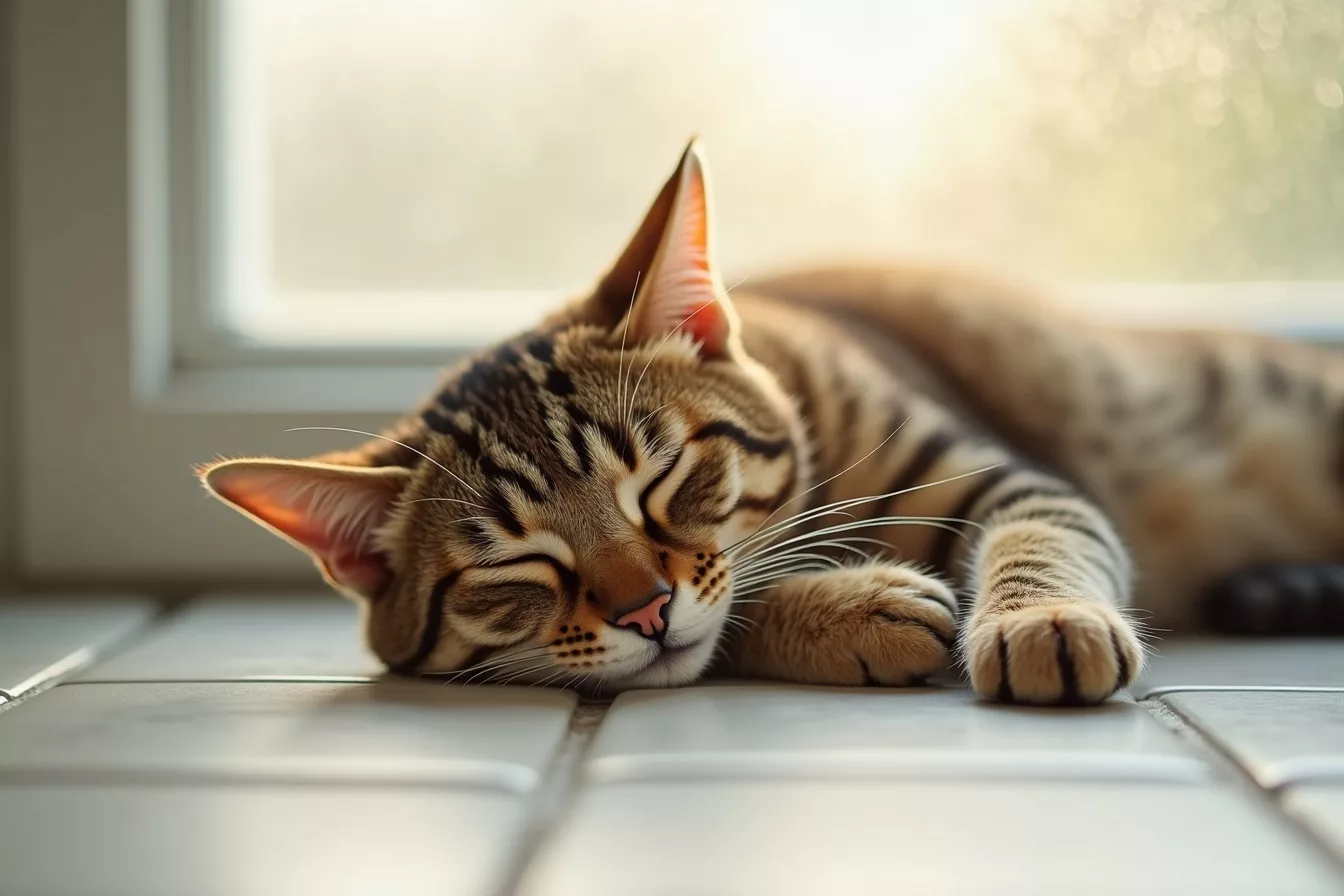

Has your cat abandoned their favourite bed for the bathroom tiles or a sunny windowsill? You’re not alone. A 2025 study from the University of Lincoln’s Feline Behaviour Lab found that 68% of cats change their sleeping locations seasonally, with spring seeing the most dramatic shifts. This isn’t random laziness—it’s sophisticated thermoregulation, and understanding it reveals fascinating insights into your cat’s comfort needs. In this article, you’ll discover why your cat is on the move, what the science says about their ideal temperatures, and the one surprising spot that means you should check in with your vet.
📊 Key Figures 2026
- 68% of cats change sleeping spots seasonally: University of Lincoln study (2025) tracked 847 domestic cats across the UK and US over 12 months.
- Cats maintain a core body temperature of 38.6°C: They require warmer microclimates than humans, especially during spring’s temperature fluctuations.
- Spring temperature swings average 12–15°C daily: Met Office data shows UK and US spring weather variability prompts feline relocation behaviour.
Sources: University of Lincoln, Met Office, 2025–2026
The Spring Temperature Puzzle
Spring is chaos for thermoregulation. In March and April, mornings might be 2°C whilst afternoons hit 18°C. Your cat’s body clock hasn’t adjusted to summer yet, but the fluctuating temperatures force them into detective mode, hunting for the perfect microclimate.
Unlike humans, cats can’t simply grab a jumper or open a window. Instead, they’re heat-seeking missiles, migrating throughout your home to find pockets of stable warmth. This behaviour is instinctive and ancestral—their wild cousins did the same around termite mounds and sun-warmed rocks.
Why the Bathroom Tiles Look So Appealing
Cool tiles seem counterintuitive, but here’s the twist: cats aren’t looking for cold; they’re looking for thermal stability. Bathroom tiles, ceramic surfaces, and concrete retain and slowly release temperature throughout the day, creating a predictable microclimate your cat can manage.
Mischka, a 4-year-old tabby from Manchester, spent most of March sleeping on her owner’s bathroom floor during the day, then relocating to the sunny bedroom at dawn. Her owner initially worried she was unwell—but once she understood the temperature science, the behaviour made perfect sense.
✅ Expert Tip
Install a plug-in room thermometer in your cat’s favourite spots. Cats gravitate towards 25–30°C microclimates. If you notice them clustering in one room, that’s their way of telling you it’s their ideal thermal zone. Consider placing a heated bed or blanket in cooler rooms to reduce their migration stress.
The Sunny Windowsill Phenomenon
Sunshine is essentially free heating. A cat in a direct sunbeam can absorb 15–20% more radiant heat than ambient room temperature. This is why windowsills become prime real estate in spring mornings. Your cat isn’t being lazy; they’re optimising energy expenditure.
Cats need roughly 70 calories per day per kilogramme of bodyweight. Thermoregulation burns calories, so by finding warm spots, they’re conserving energy for play, hunting, and social interaction. It’s metabolically clever.
The Hidden Spots: What They Really Mean
Wardrobes, under beds, and inside cupboards are thermally stable because they’re insulated. Spring air pressure changes can make cats seek enclosed spaces—this is also a calming behaviour when weather feels unpredictable.
However, if your cat suddenly sleeps in a completely dark, inaccessible spot for more than 24 hours, that’s worth monitoring. Excessive hiding can signal pain or illness.
⚠️ Warning
If your cat is sleeping in unusual spots AND showing other signs—lethargy, loss of appetite, or avoiding interaction—contact your vet within 24 hours. Whilst temperature-seeking is normal, it can mask underlying issues like fever or arthritis, especially in older cats.
Supporting Your Cat’s Spring Adjustment
The RSPCA recommends offering multiple thermal options: a heated bed for cool mornings, shaded spots for warmer afternoons, and access to windows without draughts. Layered blankets and different room temperatures let your cat self-regulate.
Younger cats (under 7) adapt quickly. Senior cats (over 10) may struggle more with spring’s variability; they sometimes need extra heat support as their metabolism becomes less efficient.
Your cat isn’t being difficult—they’re being brilliantly, frustratingly independent. Trust their instincts. Spring sleeping patterns normalise by late May when temperatures stabilise and day length becomes consistent.
The Bottom Line
Your cat’s unusual spring sleeping habits are a masterclass in animal thermodynamics. They’re hunting for stability in a season of change, and every strange location tells a story about temperature and comfort. By understanding the science, you shift from confusion to admiration. Have you noticed your cat returning to the same unusual spot at the same time each day? That’s their thermal clock working perfectly.
Next step: Observe your cat’s spring movements for one week and map which rooms they favour at different times. You’ll quickly understand their personal climate preferences—and you might spot the perfect spot for an extra blanket or heated pad.