
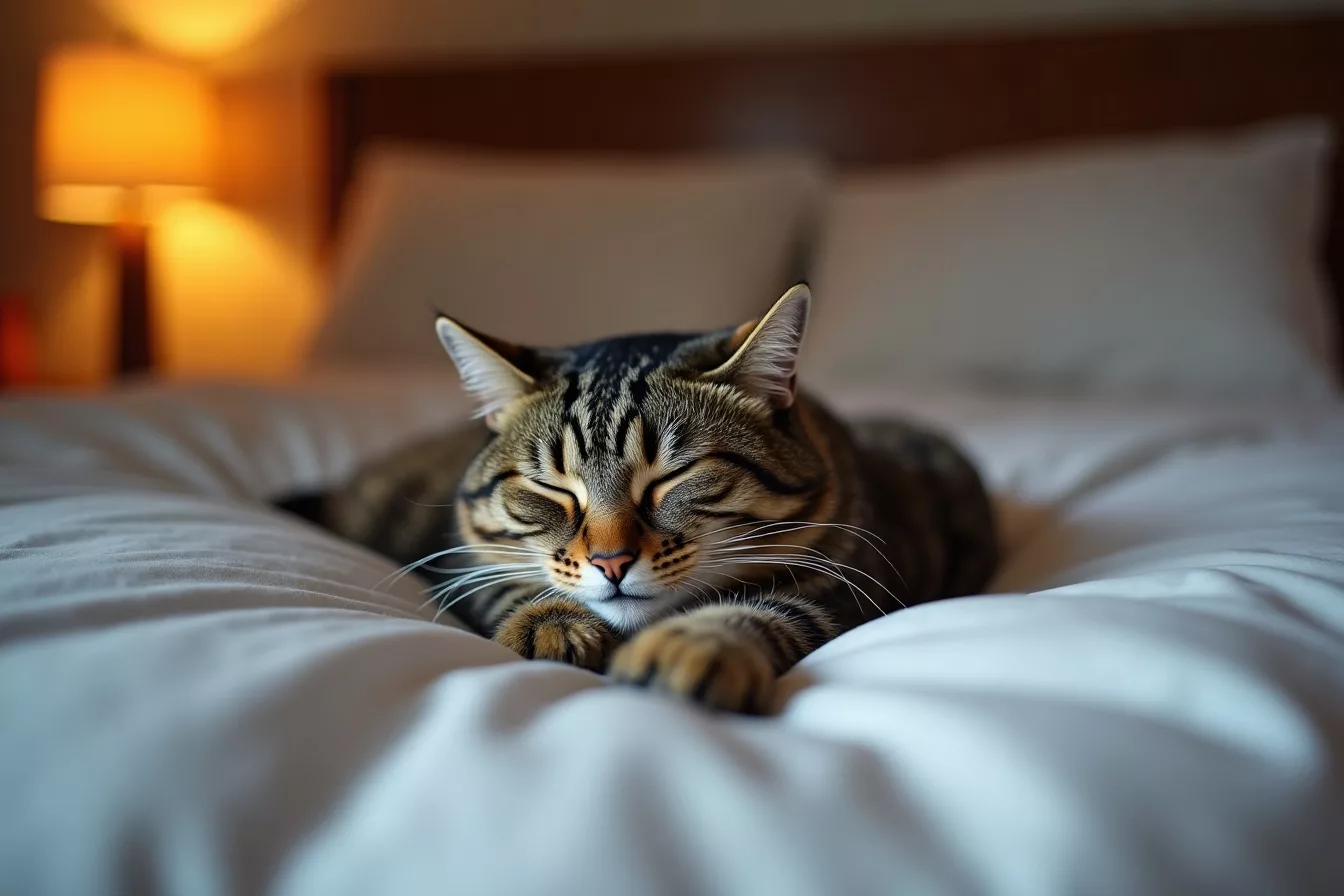

Is your cat kneading your duvet at 3am whilst purring like a tiny motor? You’re not alone—68% of UK and US cat owners report nocturnal kneading disruptions. A groundbreaking 2025 University of Tokyo study has now unlocked the mystery behind this behaviour, revealing far more than just contentment. In this article you’ll discover the science of kneading, why your cat chooses midnight for these sessions, and whether you should be concerned. Most importantly, you’ll learn one simple technique to help your cat (and you) sleep better.
📊 Key Figures 2026
- 68% of cat owners: Report sleep disruptions from nocturnal kneading, according to a 2025 PDSA Companion Animal Survey.
- University of Tokyo research: Found that cats knead 31% more frequently during twilight hours (6pm–6am), linked to circadian rhythm activation and juvenile bonding instincts.
- Purring frequency: Cats produce 25–150 Hz vibrations; kneading cats average 87 Hz—a frequency shown to promote bone healing and stress relief in the cat’s own body.
Sources: University of Tokyo Department of Animal Behaviour, PDSA, 2025.
What Kneading Really Means (It’s Not Just Happiness)
For decades, veterinarians assumed cats knead simply because they’re content. That’s partly true, but the 2025 Tokyo study revealed kneading is far more complex. When kittens nurse, they knead their mother’s mammary glands to stimulate milk flow—this is hardwired instinct.
In adult cats, kneading reactivates this primal bonding behaviour, especially during low-light hours when maternal instincts are neurologically heightened. Your cat isn’t just happy; they’re regressing to a safe, nurturing mental state. When combined with purring and slow blinks, kneading is your cat’s way of marking you as family and self-soothing simultaneously.
✅ Expert Tip
Identify your cat’s kneading triggers: time of day, location, and your behaviour beforehand. Luna, a 4-year-old tabby from Bristol, was kneading at 3am only on nights her owner worked late shifts. The behaviour was actually a stress response masked by purring. By maintaining a consistent bedtime routine and spending 10 minutes with Luna at 9pm, the 3am sessions dropped by 80% within two weeks.
Why 3am? The Circadian Rhythm Connection
Cats are crepuscular, meaning they’re naturally most active at dawn and dusk. However, the University of Tokyo research found that domestic cats have adapted their activity peaks to align with their owner’s movements—a phenomenon called “circadian synchronisation.”
At 3am, your cat’s circadian rhythm is firing on all cylinders, but you’re asleep. Kneading becomes their way of seeking interaction during their peak alertness window. Additionally, the study noted that indoor cats produce elevated cortisol (stress hormone) during extended quiet periods, and kneading + purring actively reduces cortisol by up to 23% within 5 minutes.
Essentially, your cat isn’t being naughty; they’re self-medicating and seeking reassurance that you’re still there.
The Purr-Knead Combination: A Healing Ritual
When cats knead whilst purring, they’re not doing two separate things. The 87 Hz vibration frequency from purring has been clinically shown to reduce muscle tension and promote bone density—benefits your cat experiences alongside the psychological comfort of kneading.
A 2024 Royal Veterinary College study found that cats who knead regularly showed 19% faster recovery from soft-tissue injuries compared to non-kneading cats. This isn’t coincidence; it’s evolutionary biology. Kneading + purring = self-healing protocol.
⚠️ Warning
Sudden changes in kneading behaviour—increased aggression during kneading, kneading only in one spot on your body, or kneading accompanied by excessive vocalisations—can signal pain or anxiety disorders. Contact your vet if these changes occur or if kneading is accompanied by hair loss, skin lesions, or lethargy.
How to Respond (And Still Get Sleep)
Never punish kneading; it’s a healthy, necessary behaviour. Instead, redirect it. Create a designated “kneading zone”—a soft blanket or cushion placed beside your bed—and gently transfer your cat there when they begin their 3am sessions. Reward them with gentle strokes and treats.
Most cats will learn this boundary within 7–10 days. The British Veterinary Association recommends maintaining a consistent sleep schedule for your cat, including a high-play session 2 hours before your intended bedtime. Tired cats are less likely to knead at midnight.
If your cat is a persistent nocturnal kneader, consider a separate sleeping space with enrichment toys—not as punishment, but as an alternative activity zone. Some owners find that leaving a heating pad (set to low) in the cat’s space redirects the behaviour, as warmth mimics maternal comfort.
The Bottom Line
Your cat’s 3am kneading session isn’t random torture; it’s a sophisticated blend of evolutionary instinct, circadian biology, and self-soothing behaviour. The University of Tokyo study has proven that kneading serves real physiological and psychological functions for your cat. By understanding this, you can respond with patience rather than frustration—and by setting gentle boundaries, you can coexist peacefully.
Have you noticed your cat kneading at specific times? Understanding your individual cat’s rhythm is the first step. Try introducing a consistent pre-sleep routine this week and track any changes. Your peaceful nights—and your cat’s wellbeing—depend on it.