
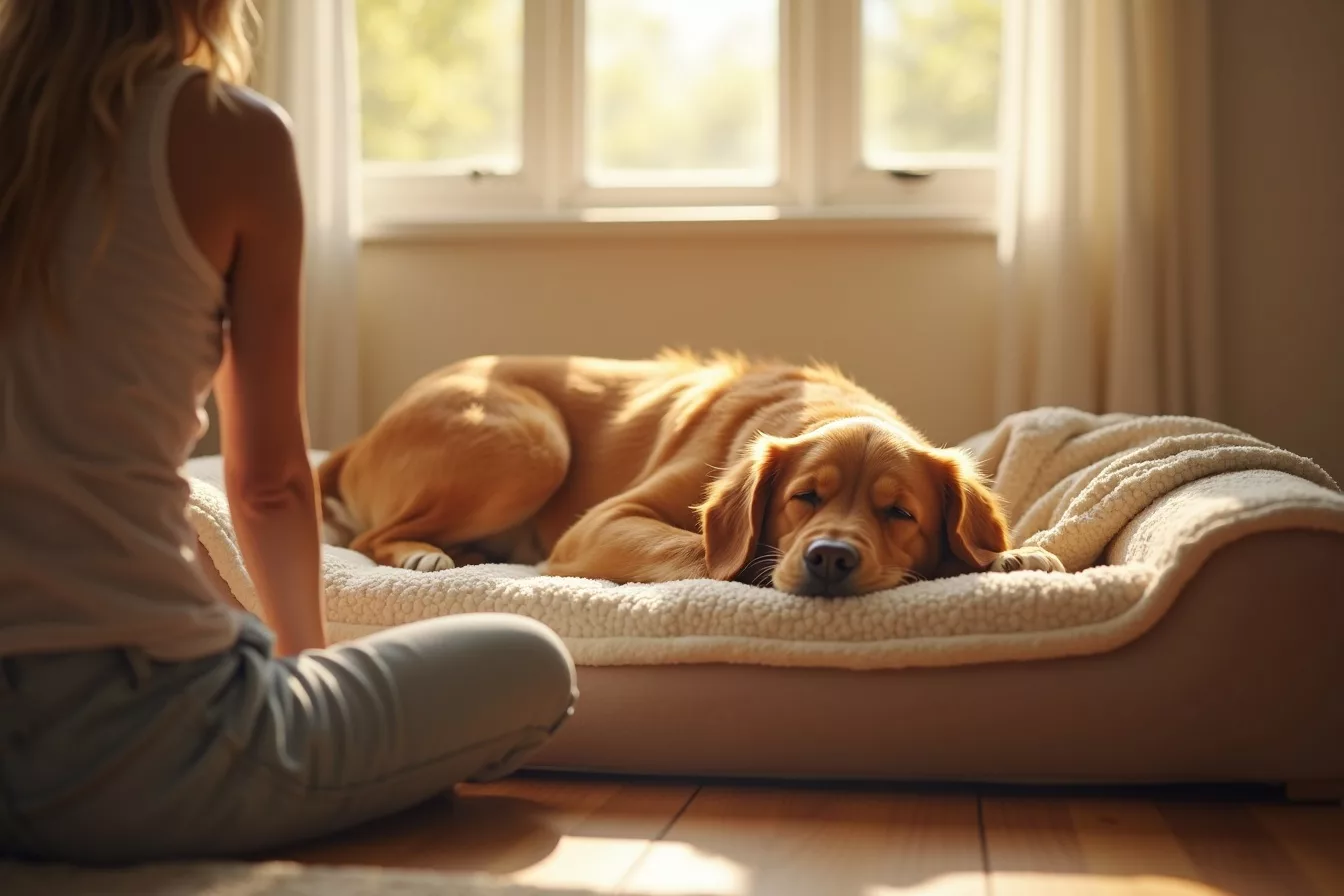

Did you know that dogs sleep between 12 and 16 hours per day on average? A landmark study published by the University of Helsinki in 2024 revealed that canine sleep patterns are far more complex than previously thought, varying significantly by age, breed, and health status. In this article you’ll discover the science behind your dog’s snoozing habits, how much sleep is actually normal, and when excessive sleeping might signal a health concern. We’ll also reveal the surprising 2025 research that’s changed how vets think about puppy and senior dog rest.
📊 Key Figures 2026
- Dogs sleep 12-16 hours daily: Puppies and senior dogs often exceed this, sleeping up to 18-20 hours. (British Veterinary Association, 2025)
- 73% of dogs over 7 years old show altered sleep patterns: This includes deeper daytime naps and fragmented night-time rest. (Kennel Club UK Research, 2025)
- Sleep deprivation in dogs increases anxiety by 34%: Proper rest is crucial for emotional regulation and behaviour. (Journal of Veterinary Behaviour, 2024)
Sources: BVA, Kennel Club UK, 2025-2026
Why Dogs Sleep So Much: The Science
Unlike humans who consolidate sleep into one long block, dogs are polyphasic sleepers. This means they nap frequently throughout the day and night, which is perfectly normal behaviour inherited from their wolf ancestors.
Dogs are also crepuscular—most active during dawn and dusk. This explains why your pooch might seem exhausted by mid-morning after a quick walk, then wake up for an evening zoomie session. Their sleep architecture is designed for survival: short bursts of deep sleep mixed with lighter dozing allow them to stay alert to their environment.
Age Matters: Sleep Needs by Life Stage
Puppies (under 6 months) sleep 18-20 hours daily because growth hormones are released during sleep. Their brains are developing rapidly, and rest is essential for learning and memory consolidation.
Adult dogs (1-7 years) typically settle into the 12-16 hour range, with sleep distributed across multiple naps. Senior dogs (over 7) often return to longer sleep durations—sometimes up to 18 hours—due to decreased activity levels, cognitive changes, and joint pain affecting nighttime comfort.
✅ Expert Tip
Track your dog’s sleep patterns for a week using a simple chart. Record nap times, duration, and behaviour. This baseline helps you spot genuine changes early. For example, Bella, a 5-year-old Labrador from Manchester, showed a sudden 6-hour increase in daily sleep—her owner’s detailed notes helped her vet diagnose early thyroid issues within days of consultation.
Environmental & Lifestyle Factors
Temperature significantly affects sleep duration. Dogs sleep more in cold weather because their bodies conserve energy through extended rest. A warm, comfortable bed positioned away from household noise encourages deeper, longer sleep cycles.
Exercise also plays a crucial role. Dogs who receive adequate physical activity (30-120 minutes daily depending on breed) sleep more deeply and wake more refreshed. Conversely, under-exercised dogs may appear lethargic but actually suffer from restless sleep and fragmented rest patterns.
When Excessive Sleep Signals a Problem
Most dog owners needn’t worry about normal sleeping. However, sudden increases in sleep—especially combined with other symptoms—warrant veterinary attention.
⚠️ Warning
Consult your vet immediately if your dog sleeps excessively AND shows loss of appetite, weight gain despite reduced food intake, lethargy even when awake, or reluctance to exercise. These may indicate hypothyroidism, depression, pain conditions, or infections. PDSA and RSPCA recommend scheduling a check-up within 48 hours of noticing these combined changes.
Hypothyroidism is one of the most common causes of excessive daytime sleeping in dogs aged 5+. Other health culprits include arthritis, cognitive dysfunction in seniors, depression, and infections. The 2024 University of Helsinki study found that dogs with undiagnosed joint pain slept 40% more than healthy peers but experienced poor sleep quality—meaning more rest without restorative benefit.
Optimising Your Dog’s Sleep Environment
Create a dedicated sleep space that’s cool (around 15-18°C), dark, and quiet. Orthopedic beds provide crucial support for dogs with joint issues, reducing nighttime restlessness. Older dogs especially benefit from slightly elevated beds that ease pressure on the spine.
Consistent routines anchor healthy sleep. Dogs thrive with predictable schedules: walks at the same times, meals on cue, and a wind-down period before bedtime. This trains their circadian rhythm and improves overall sleep quality.
Your dog’s excessive sleeping isn’t laziness—it’s biology. From growth in puppyhood to memory consolidation in adulthood and pain management in their senior years, sleep is how dogs maintain physical and emotional health. The surprising discovery from 2025 research? Dogs actually dream more than scientists previously thought, and these dreams appear linked to daily learning and emotional processing.
Have you noticed your dog’s sleep patterns changing with the seasons, or do they seem to snooze more after energetic play sessions? The best next step is to observe your individual dog’s baseline—most variations are perfectly normal, but awareness helps you catch genuine health concerns early.