
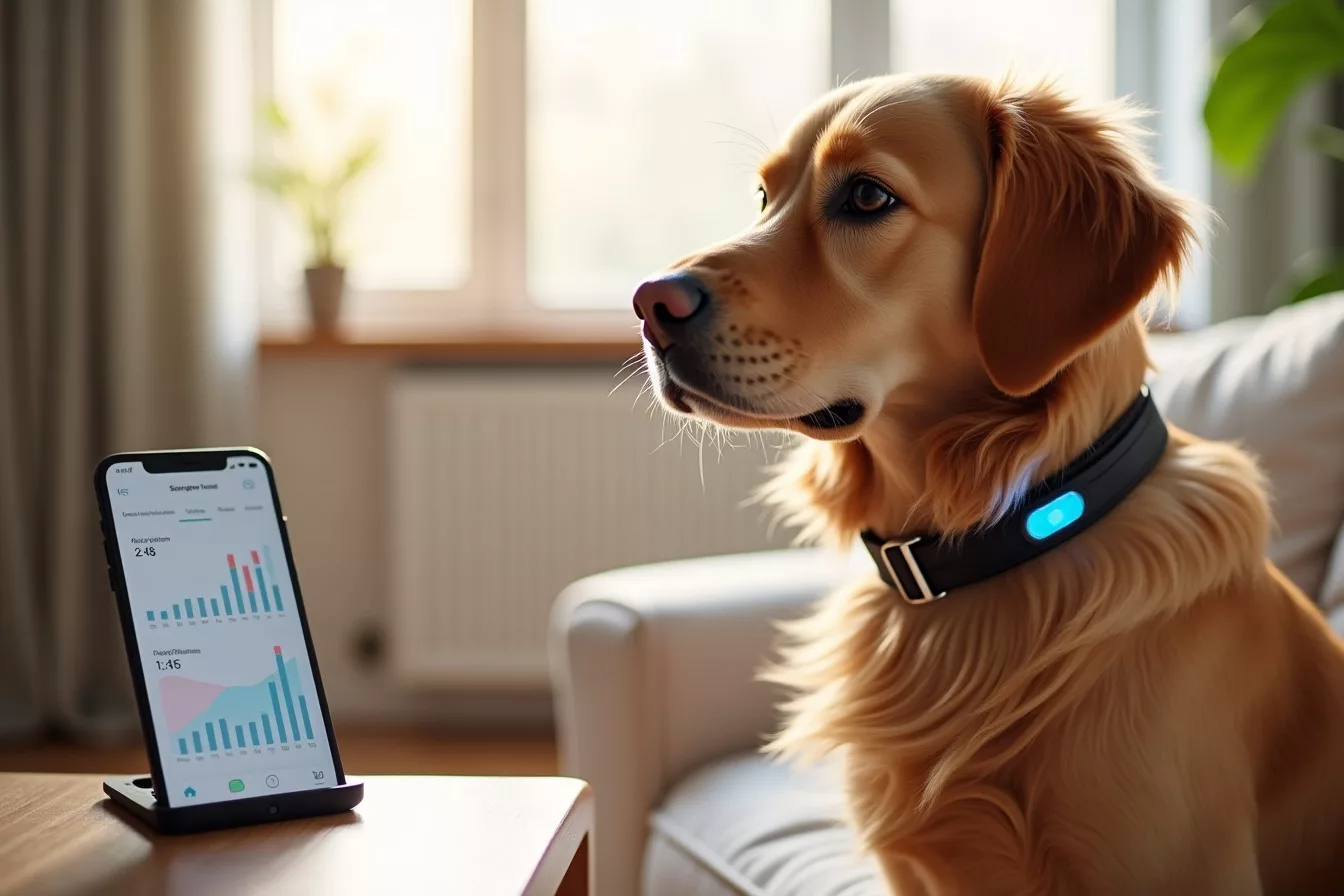

Did you know that 68% of pet owners miss early warning signs of illness in their dogs and cats? A groundbreaking 2024 study by the British Veterinary Association (BVA) reveals that wearable AI health monitors could detect serious conditions weeks before traditional symptoms appear. In this article you’ll discover how these clever devices work, which ones are already available, and the one surprising way they’re reducing unnecessary vet visits—whilst catching life-threatening diseases earlier than ever before.
What Are AI Pet Health Monitors?
Pet health monitors are wearable devices—usually collars or chest straps—that use artificial intelligence to track your pet’s vital signs in real time. They measure heart rate, body temperature, breathing patterns, and even activity levels, then send alerts directly to your smartphone if something seems wrong.
Unlike traditional fitness trackers, these AI systems learn your individual pet’s baseline behaviour. When Luna, a 6-year-old Golden Retriever from Manchester, suddenly became lethargic, her owner received an alert from her monitor before any physical symptoms appeared. The vet diagnosed early-stage kidney disease—a condition that often goes undetected until it’s advanced.
📊 Key Figures 2025
- 68% of pet owners miss early illness signs, according to the BVA 2024 Health Report
- Early detection via wearables reduces emergency vet visits by up to 34%, data from the Royal Veterinary College (RVC)
- Pet wearable market projected to reach $2.8 billion by 2026, with AI monitors growing fastest segment (Grand View Research, 2025)
Sources: BVA, RVC, Grand View Research 2025
Which Monitors Are Leading the 2025 Revolution?
Several specialist companies launched or expanded AI pet monitors in 2024–2025. PetPace (originally Israeli, now used across the US and UK) offers a collar that monitors 19 health parameters. Whistle GO Explore combines GPS tracking with heart-rate monitoring. Both integrate with your smartphone and can alert your vet directly.
The PDSA, the UK’s largest veterinary charity, began trials in 2024 with select monitor devices in shelters and rescue centres. Their early findings suggest AI monitors could help identify stressed or unwell rescue animals within hours of intake—critical for animals with hidden health conditions.
✅ Expert Tip
Don’t wait for a crisis to start using a monitor. The real value happens when the system knows your pet’s normal baseline—this takes 2-4 weeks of continuous data. Start monitoring now, especially if your pet is over 7 years old or has a breed-specific health risk (e.g., hip dysplasia in Labs, heart issues in Cavaliers).
How Does AI Actually Work Here?
The clever bit: the monitor doesn’t just record numbers. Machine learning algorithms compare your pet’s data patterns against thousands of other animals’ health histories. When something deviates—a slight rise in resting heart rate combined with reduced activity—the AI flags it, often before your vet would spot it during a yearly check-up.
Dr Sarah Caney, a feline specialist at the RVC, explained in a 2024 interview that “AI monitors excel at catching subtle changes in older cats, where small shifts in behaviour can mask serious thyroid or kidney problems.” This is especially valuable because cats naturally hide illness until it’s advanced.
⚠️ Warning
AI monitors complement, never replace, annual vet visits. If your monitor alerts you to rapid breathing, seizure-like activity, or extreme lethargy, contact your vet immediately—don’t wait for a routine appointment. False alarms do happen; your vet should always confirm diagnosis.
The Cost Question
Most AI pet monitors range from £150 to £400 for the device, plus a monthly subscription (£8–20). Yes, it’s an investment. But the RVC data shows that early detection prevents costly emergency visits—owners save an average of £500–1,500 annually in avoided crisis care.
Some insurance providers are beginning to offer discounts for pets wearing approved monitors, recognising the preventative value. Check with your UK or US insurer.
What’s Next for Pet Health Tech?
By 2026, expect monitors to include blood-glucose tracking for diabetic pets, more refined stress detection, and integration with veterinary practice management software. This means your vet sees real-time alerts during your appointment, not after.
The BVA’s 2025 roadmap explicitly backs AI health monitors as a tool to ease vet waiting lists and improve outcomes. In busy practices, these devices do some of the detective work before you even arrive.
The Surprising Emotional Benefit
Pet owners report unexpected peace of mind. Knowing you have objective health data reduces anxiety during those 3am moments when your older dog seems “off.” That reassurance—or the early alert that allows you to get help—is genuinely life-changing for pets and their families.
Final Thought
AI pet health monitors aren’t sci-fi anymore; they’re here, they work, and they’re getting smarter every month. The 2025 generation offers better accuracy, longer battery life, and tighter vet integration than 2024 models. If you have a senior pet, a breed with known health risks, or simply want to catch illness early, now’s the time to explore this technology. Have you noticed any subtle changes in your pet’s behaviour lately that might benefit from continuous monitoring?