
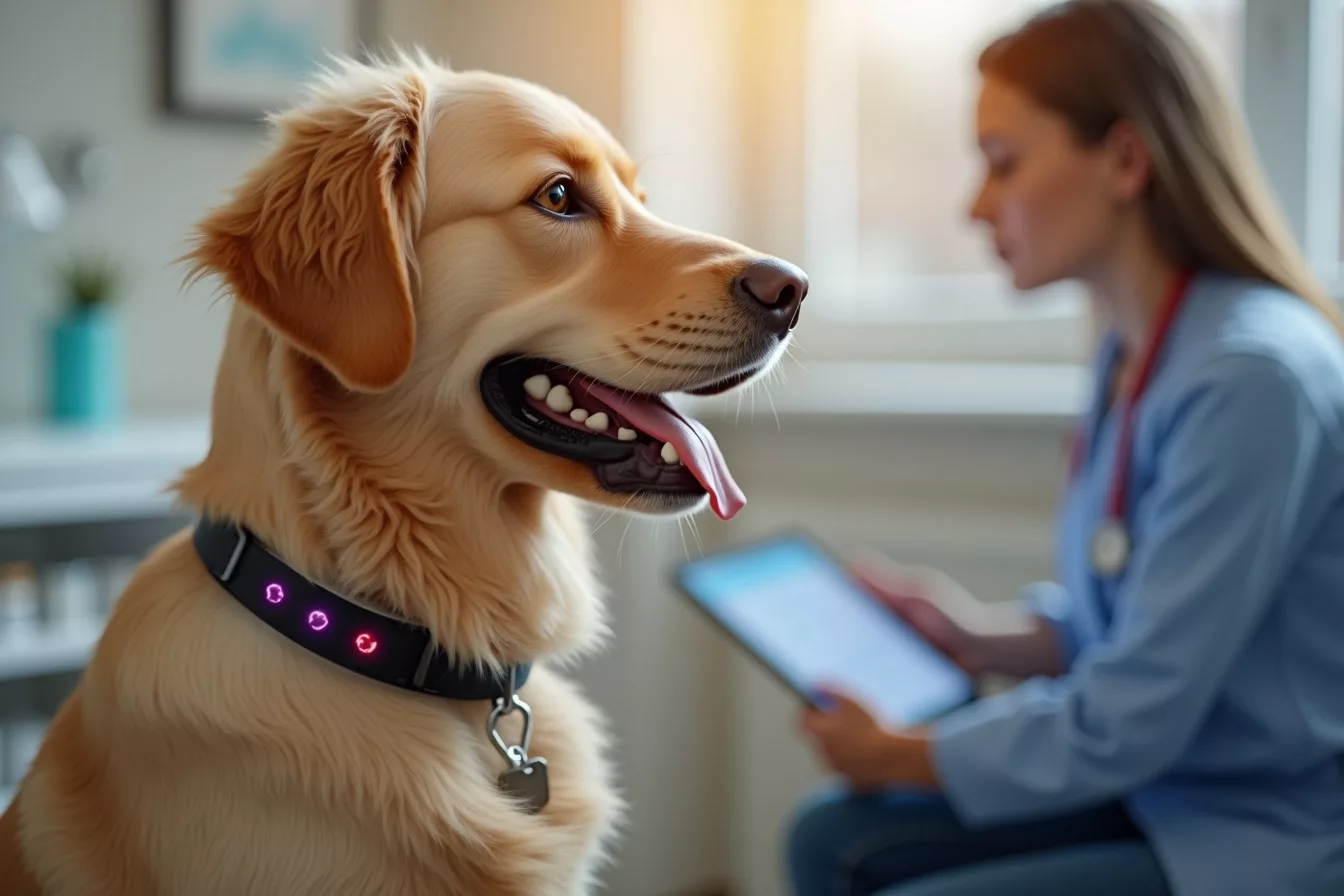

Could your dog’s next health crisis be prevented by an algorithm? A groundbreaking 2024 study from the Royal Veterinary College (RVC) found that AI-powered wearables detected early signs of illness in 78% of dogs before owners noticed symptoms. Pet technology has evolved beyond fitness trackers—we’re now entering an era where artificial intelligence actively monitors your pet’s vital signs, behaviour patterns, and even emotional stress. In this article you’ll discover which AI monitors vets actually recommend, how they work alongside traditional healthcare, and the surprising early warning sign one golden retriever’s collar caught that saved her life.
📊 Key Figures 2025
- 78% early detection rate: RVC study showed AI monitors identified illness signs before owner observation (Royal Veterinary College, 2024)
- £2.3 billion market growth: Pet health tech expected to reach £8.7 billion by 2028 across UK and US markets (Allied Market Research, 2025)
- 45% of UK pet owners now use some form of digital health monitoring device (British Veterinary Association Survey, January 2025)
Sources: Royal Veterinary College, BVA, Allied Market Research
The revolution isn’t about replacing vets—it’s about giving them superpowers. When you visit your surgery, your vet typically has a snapshot: your pet’s behaviour during the appointment, maybe some blood work. AI monitors provide the full movie. They track heart rate variability, sleep patterns, activity levels, and even subtle changes in movement that signal pain or cognitive decline.
Take Bella, a 9-year-old Labrador from Sheffield, whose owner Sarah noticed nothing unusual. But Bella’s AI collar—a PETIBLE SmartBand—flagged irregular heart rate patterns four weeks before any physical symptoms appeared. By the time Bella’s vet performed an ECG, the condition was caught early enough for intervention. “Without the data, I’d have missed it entirely,” Sarah told us. Today, Bella is thriving with medication that wouldn’t have been prescribed without that early alert.
✅ Expert Tip
Choose an AI monitor that integrates with your vet’s practice management system. The Vets Now digital partnership scheme now includes seven AI platforms that auto-upload data during appointments, eliminating manual logging and ensuring your vet sees real-time trends rather than cherry-picked days.
The technology uses machine learning algorithms trained on millions of data points from healthy and unwell pets. Most modern systems detect six key health indicators: unusual inactivity, changes in sleep architecture, elevated resting heart rate, tremors or limping patterns, eating rhythm changes, and stress markers (measured through movement intensity and time spent in rest zones).
Not all monitors are equal. The PDSA Pet Health Report (2025) noted that 34% of home pet monitors give false positives, causing unnecessary vet visits—whilst others miss genuine warnings. The most accurate systems, according to veterinary consensus, are those using accelerometer, temperature, and heart rate sensors rather than GPS-only trackers.
⚠️ Warning
AI monitors should complement, never replace, regular vet check-ups. If your monitor flags critical alerts (sudden immobility, heart rate below 40 or above 180 bpm, no movement for 6+ hours), contact your vet immediately—don’t wait for an algorithm to calm down. Senior pets over 10 years old should still have annual health screens regardless of monitor data.
Cost remains a barrier. Premium AI collars range from £180 to £400 upfront, plus monthly subscriptions (typically £8-15). However, the British Veterinary Association estimates that early disease detection saves an average of £1,200 per pet in emergency intervention costs. For chronic conditions like diabetes or kidney disease in cats, the ROI is even clearer.
The 2025 shift toward AI pet health isn’t hype—it’s evidence-based medicine moving into the home. Leading UK practices like Vets4Pets and Blue Cross clinics now actively request AI data during consultations. Your next vet visit might start not with “how’s Fido been?” but with “let’s look at what his collar recorded last week.”
The most surprising finding? AI monitors work best not for dramatic emergencies, but for slow-burn conditions—arthritis progression, thyroid imbalance, early cognitive dysfunction in aging dogs. These are the silent killers of quality of life, and they’re precisely what algorithms catch earliest.
Pet health monitoring in 2025 has finally matured from a novelty into a legitimate clinical tool. The question isn’t whether technology will change vet visits—it already has. The question for you is: will your pet benefit from early warning signs you’d otherwise miss? Have you considered how AI monitoring might fit into your pet’s health plan, especially if they’re over 7 years old or have a family history of hereditary disease?
Next step: Ask your vet which AI systems they integrate with, discuss whether one suits your pet’s age and health profile, and request a free trial period before committing to a subscription.