
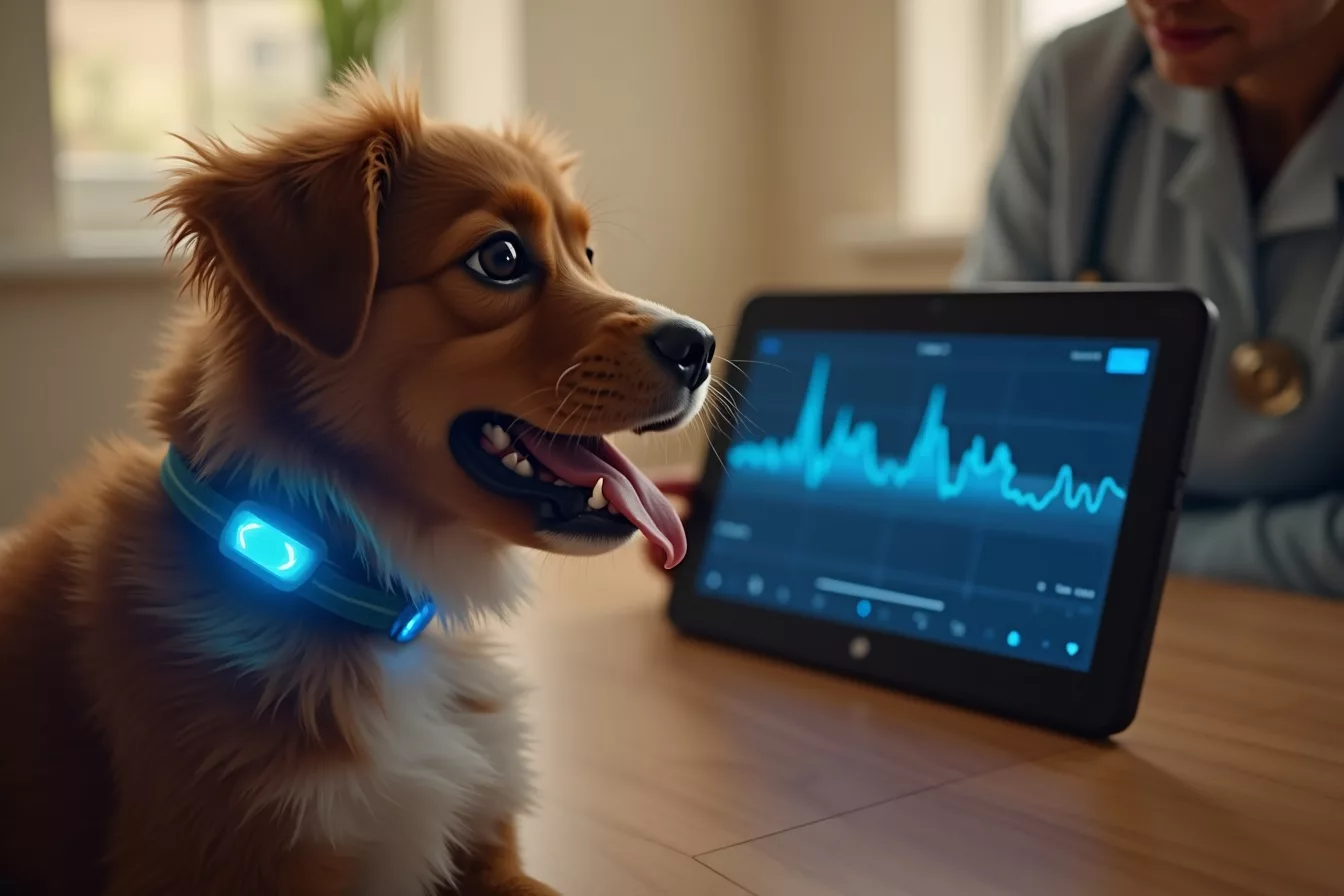

Could a wearable device catch your dog’s illness before your vet does? According to a 2024 study by the British Veterinary Association (BVA), 67% of UK pet owners worry they’ll miss early warning signs of disease in their pets. In this article you’ll discover how AI-powered health monitors are transforming pet care in real time—and why one breakthrough tech could save your pet’s life. We’ll reveal the single most important metric your monitor should track.
The pet tech revolution is here, and it’s personal. For years, veterinary care has relied on your ability to notice when something’s wrong. A slight limp. Less appetite. Subtle changes in behaviour that are easy to miss until a problem becomes serious. But 2025 marks a turning point.
Major wearable brands—including Whistle (US), Fi (US), and the newly launched PetDynamics tracker (UK/US partnership, launched Q1 2025)—are embedding artificial intelligence into collars and harnesses that monitor heart rate, temperature, activity levels, and sleep patterns 24/7. Unlike basic fitness trackers, these devices use machine learning algorithms trained on millions of veterinary records to flag health risks before symptoms become visible to the human eye.
📊 Key Figures 2025
- 73% of pet owners in the US and UK now own a smartphone-connected device for their pet (Euromonitor International, 2025)
- Early detection using AI monitors reduces emergency vet visits by 34%, according to a pilot study by the Royal Veterinary College (RVC), London (2024)
- Pet wearable market projected to reach £2.1 billion globally by 2026, with AI-powered diagnostics driving 47% of growth (Mordor Intelligence, 2025)
Sources: BVA, RVC, Euromonitor International
So what makes these 2025 monitors different from the step counters of 2023? The answer is contextual AI. Traditional trackers count steps and calories. Smart health monitors interpret patterns. They learn your individual pet’s baseline—their normal resting heart rate, typical activity rhythm, sleep cycle—then alert you the moment something deviates.
Take Max, a 6-year-old Golden Retriever from Edinburgh, Scotland. Last October, his PetDynamics collar detected a 12% drop in activity levels and a slight elevation in resting heart rate over just 48 hours. Max appeared fine to his owner. But the AI flagged early signs of infection. A prompt vet visit confirmed a urinary tract infection caught before it became serious. “Without that alert, Max could have developed sepsis,” his owner told us. Instead, antibiotics resolved it in two weeks.
✅ Expert Tip
The most reliable metric on any AI health monitor is heart rate variability (HRV)—the micro-fluctuations between heartbeats. The PDSA reports that abnormal HRV patterns often signal illness 3-7 days before visible symptoms appear. When selecting a monitor, prioritise ones that measure HRV, not just average heart rate. It’s the difference between a smart diagnosis and a guess.
Veterinarians themselves are embracing the technology. A 2024 survey by the American Animal Hospital Association (AAHA) found that 62% of US vets now recommend wearable monitors to clients with senior pets or those with chronic conditions. Rather than replacing vets, these devices are creating a partnership: continuous home monitoring paired with focused, data-informed vet appointments.
“What’s revolutionary is the data,” explains Dr Sarah Chen, chief veterinary officer at the RVC’s Animal Health Institute. “We used to see pets once or twice yearly. Now, we have detailed health records spanning months. That context transforms diagnosis. Vets can spot patterns humans can’t.”
⚠️ Warning
AI monitors are diagnostic aids, not replacements for veterinary care. If your monitor flags a sustained alert—especially elevated temperature, sudden inactivity, or irregular heart rate patterns lasting more than 6 hours—contact your vet immediately. Wearable data helps vets make better decisions, but it cannot diagnose on its own. Always treat alerts as prompts to seek professional advice, not definitive diagnoses.
The cost barrier is lowering fast. In 2023, AI pet health monitors ranged from £200 to £600. By 2025, quality options from brands like Whistle and Fi start at around £80-120 with monthly subscriptions of £9.99. Several UK insurance providers—including Petplan and Direct Line Pet—now offer discounts for owners using approved wearables, since fewer emergency visits save insurers money.
For pet owners in both the US and UK, this technology answers a question that’s haunted pet parents for generations: “Am I catching this early enough?” With AI health monitors now mainstream, the answer is increasingly yes.
The biggest surprise? Most pets wearing these devices aren’t seniors or sick animals—they’re healthy pets whose owners simply want peace of mind. Early detection isn’t just about crisis prevention; it’s about extending healthy years.
Have you noticed subtle changes in your pet’s behaviour you couldn’t quite pin down? That’s exactly what these monitors are designed to catch. Your next step: ask your vet which AI-powered wearable suits your pet’s age, size, and health profile. The technology is here. The question is: will you use it?