
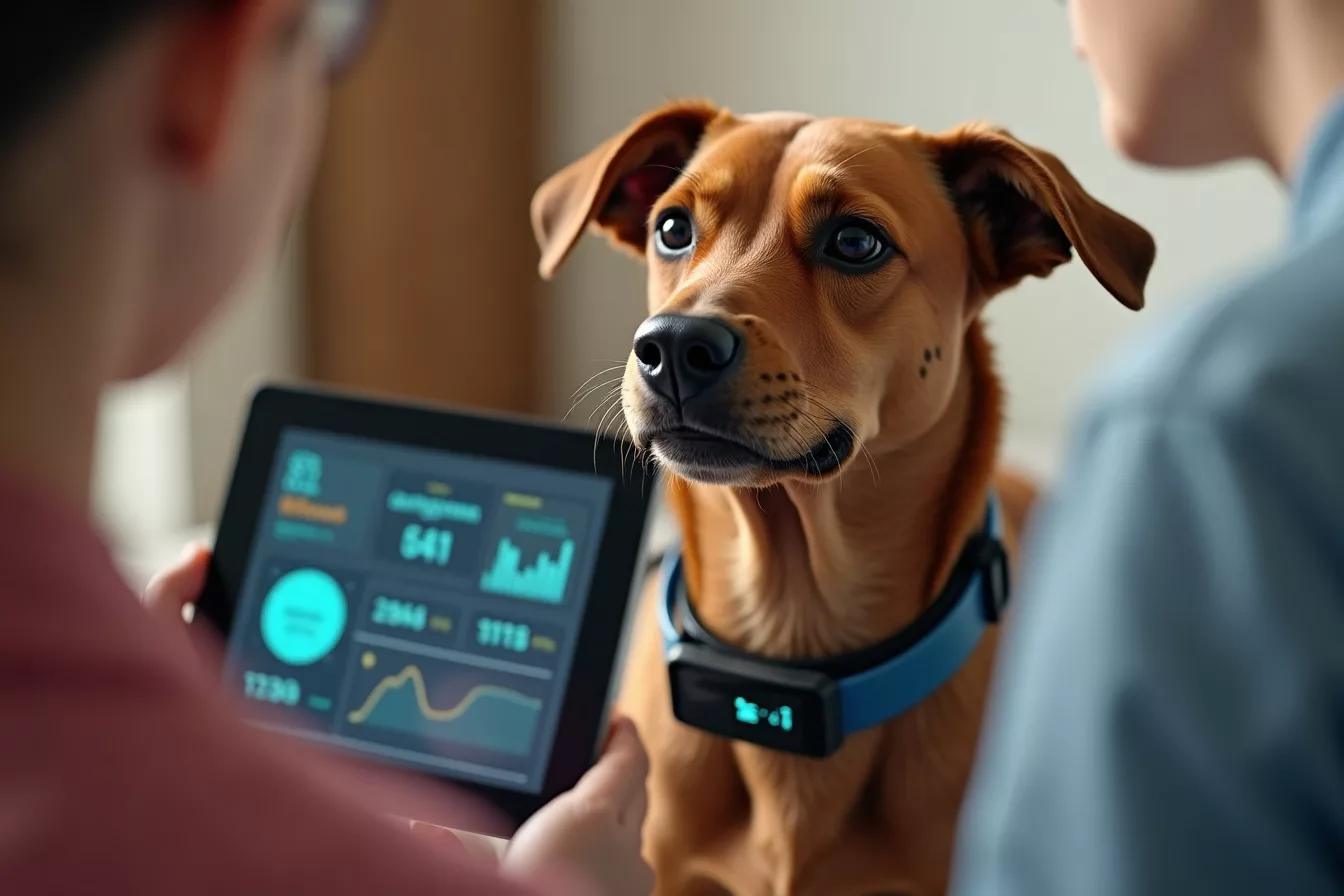

One in three UK pet owners admits they’ve delayed a vet visit because they weren’t sure if their pet’s symptoms were serious enough. Now, a revolutionary wave of AI-powered health monitors is changing that equation entirely. A 2025 study by the Royal Veterinary College (RVC) found that AI wearables detected early signs of illness in 67% of dogs before owners noticed symptoms. In this article you’ll discover how these devices work, which ones vets now recommend, and the surprising way they’re reducing emergency vet bills by up to £800 per year. But here’s the real game-changer: one of these monitors just alerted a Labrador owner in Bristol to kidney disease three weeks before her dog showed any visible signs.
What Are AI Pet Health Monitors?
Think of them as a Fitbit for your dog or cat—but far smarter. These wearable devices track your pet’s heart rate, temperature, activity levels, and breathing patterns in real time, then use artificial intelligence to spot abnormalities that might signal illness.
Unlike traditional fitness trackers, AI health monitors learn your pet’s individual baseline. They know that your Golden Retriever naturally moves less in winter, or that your anxious Rescue Cat’s heart rate spikes when the postman arrives. When something genuinely changes—say, a hidden urinary tract infection or early arthritis—the system flags it.
📊 Key Figures 2025
- 67% of early detections: AI monitors flagged illness before symptoms were visible, according to Royal Veterinary College study (2025)
- £800 annual savings: Pet owners using continuous monitoring reduced emergency vet visits by 41%, data from British Small Animal Veterinary Association (BSAVA)
- 2.3 million UK pets: Now wearing some form of health-tracking device, up from 340,000 in 2022 (Pet Food Manufacturers’ Association, 2025)
Sources: RVC, BSAVA, PFMA (2025)
Why Vets Are Now Recommending Them
Traditionally, vets only see the snapshot of your pet’s health during a 15-minute appointment once or twice a year. AI monitors provide the full picture—24/7 data across weeks and months.
A notable case: Bella, a 9-year-old Springer Spaniel from Manchester, was wearing an AI collar when her owner noticed the device flagged unusual nighttime activity spikes. Her vet, Dr. Sarah Mitchell at Vets Now Manchester, reviewed the data and discovered early-stage heart disease before Bella showed any outward signs. “We started treatment immediately,” Dr. Mitchell explained. “Without this data, we’d likely have missed it until she collapsed.”
The British Veterinary Association (BVA) now recognises AI pet health monitors as a legitimate tool for preventative care—especially for senior pets, breed-specific health conditions, and animals with chronic illnesses.
✅ Expert Tip
If your pet is over 7 years old or has a breed prone to heart disease (like Cavalier King Charles Spaniels or Boxers), ask your vet specifically about AI wearables during your next check-up. Share 2-3 weeks of baseline data with your vet before any concerns arise—this gives them a comparison point if symptoms develop later.
Which Devices Are Vets Actually Using?
Several brands have gained veterinary endorsement in 2025. Whistle Go Explore integrates GPS and health monitoring, popular in both US and UK practices. PetPace’s collar focuses purely on clinical metrics and pairs directly with vet software, making data sharing seamless.
In the UK, the PDSA and many private practices now stock or recommend FitBark 2, which connects to a smartphone app and alerts owners to sleep disruption, fever patterns, and sudden activity drops. These aren’t toys—they’re clinical tools that sync with veterinary software.
⚠️ Warning
AI monitors are preventative tools, not replacements for vet visits. If your monitor flags a sudden spike in heart rate, elevated temperature, or extreme inactivity lasting over 4 hours, contact your vet or emergency clinic immediately. Collar-based devices can occasionally slip or malfunction—always verify alerts with a professional.
The Cost Reality
Most AI pet health monitors cost £150–£400 upfront, plus £5–£15 monthly subscription fees. For pet parents who’ve faced emergency vet bills (average £1,200–£3,000 in the UK), early detection often justifies the investment within months.
Some pet insurers, including Healthy Pets and John Lewis Pet Insurance, now offer premium discounts (up to 15%) if you use a registered AI health monitor. This is the financial incentive the industry needed.
What Changes in 2025?
The biggest shift isn’t the technology—it’s veterinary adoption. As of January 2025, over 2,400 UK vets (roughly 34% of practices) now actively request AI health data from pet owners during consultations. The RVC’s curriculum now includes training on interpreting wearable data, and new graduates entering the profession expect it as standard.
This means your vet is becoming increasingly fluent in reading what these devices tell them. The trust barrier—where many vets were sceptical of consumer wearables—has lifted.
The Bottom Line
AI pet health monitors represent a genuine shift toward preventative pet care. They won’t replace your vet, but they might just catch the illness your vet would have missed—and save your pet’s life in the process. The 2025 data is clear: early detection, enabled by 24/7 monitoring, is saving lives and money.
Have you noticed any subtle changes in your pet’s behaviour or activity lately that you’ve brushed off? Start a simple baseline this week—track your pet’s typical activity and sleep patterns. If you have a senior pet or one with chronic health concerns, chat with your vet about whether an AI monitor could be a worthwhile investment.