
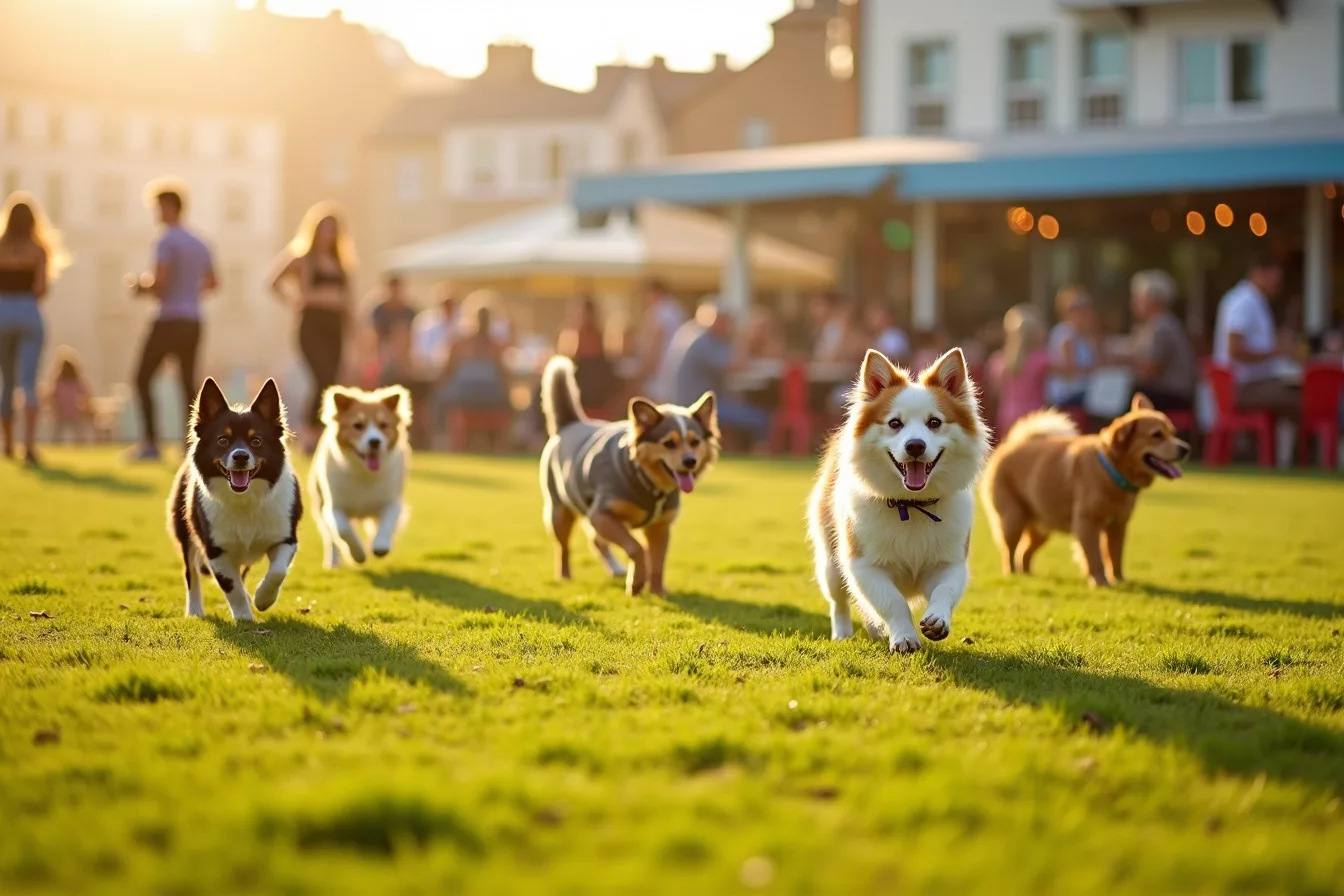

Did you know that 73% of UK dog owners now prioritise pet-friendly amenities when choosing where to live? A groundbreaking 2024 study by the British Veterinary Association (BVA) revealed that the nation’s relationship with canine companions has fundamentally shifted—and entire towns are redesigning themselves to cater to our four-legged friends. In this article you’ll discover which UK cities are leading the pet revolution, and we’ll reveal the surprising town that’s outpacing London in dog-friendly facilities.
The UK’s love affair with dogs continues to deepen. Post-pandemic pet ownership has created a surge in demand for spaces where dogs aren’t just tolerated—they’re genuinely celebrated. From specialist dog cafés to dedicated pet healthcare hubs, 2025 is shaping up to be the year British towns finally put dogs first.
📊 Key Figures 2025
- 73% of UK dog owners: Now factor pet-friendly amenities into relocation decisions (BVA, 2024)
- £2.1 billion annually: Spent on pet services and facilities across the UK (PDSA Pet Report, 2024)
- 156 dog parks added: In major UK cities since 2022, according to The Dogs Trust
Sources: British Veterinary Association, PDSA, The Dogs Trust, 2024-2025
Brighton: The Undisputed Dog Capital
Brighton has claimed the crown as the UK’s most dog-friendly city, and the evidence is everywhere. From the iconic seafront where dogs can enjoy their own designated beach zones during summer months, to the Hove Park dog-training academy, this seaside town has become a destination for canine lovers. Local authorities have invested heavily in off-lead areas, dog-friendly restaurants with water bowls at every table, and even specialist veterinary clinics offering acupuncture and physiotherapy.
Meet Biscuit, a 4-year-old Labrador from Brighton who has become something of a local celebrity. His owner, Sarah Chen, moved to the city specifically for its pet infrastructure. “Within my first week, I’d found three different dog parks, a pet groomer on every corner, and restaurants where Biscuit was welcomed like a VIP guest,” Sarah explains. This isn’t an isolated story—hundreds of pet owners cite Brighton’s culture of inclusion as their primary reason for choosing the city.
Edinburgh’s Hidden Gem Status
Scotland’s capital is quietly revolutionising how cities treat their canine residents. The Edinburgh Dog and Cat Home partnership has created a network of “therapy dogs welcome” spaces in hospitals, care homes, and public buildings. More impressively, the city council has mandated that all new public spaces must include dog-friendly features—benches for socialisation, shaded rest areas, and waste facilities designed with dog-owner convenience in mind.
What sets Edinburgh apart is its approach to dog behaviour. The city has partnered with the Royal (Dick) School of Veterinary Studies at Edinburgh University to create free dog-training workshops in public parks, making professional guidance accessible to all owners regardless of income.
Manchester’s Rapid Rise
Manchester has emerged as an unexpected challenger to Brighton’s dominance. The city’s recent regeneration of Spinningfields has created a “pet-positive” neighbourhood where dogs outnumber children in some streets. The council’s 2024 investment in 12 new dog parks, combined with the opening of Manchester’s first dedicated pet wellness centre, signals serious intent.
The city’s restaurants and cafés have embraced dogs with genuine enthusiasm. Over 40% of Manchester’s independent food establishments now offer dog menus—not just water bowls, but actual food designed for canine nutrition and enjoyment.
✅ Expert Tip
Before relocating for dog-friendly amenities, contact your local Dogs Trust branch and request their “Dog-Friendly Town” assessment. This free resource maps specific facilities, vets, parks, and pet-friendly businesses. Visiting during peak hours (weekends) reveals whether spaces are genuinely busy and well-maintained or simply photo-friendly.
Nottingham, York, and the Emerging Contenders
Nottingham has introduced the UK’s first “Dog Mayor” role—a community position dedicated to canine welfare and consultation. York, the medieval city, has embraced its heritage by creating dog-specific routes through the city walls, where lead requirements are relaxed in designated zones. Both towns are investing in pet-owner community hubs where humans connect whilst dogs socialise.
These emerging cities understand something crucial: dog-friendly infrastructure isn’t frivolous spending. It’s urban planning that improves human mental health, encourages outdoor activity, and builds community cohesion. A dog park isn’t just for dogs—it’s where neighbours meet.
⚠️ Consider This
Dog-friendly doesn’t automatically mean climate-friendly or quiet. Research council noise ordinances around dog parks, and verify that hot weather provisions (water stations, shaded areas) exist before moving during summer. Contact the local RSPCA branch for welfare concerns.
What Makes a City Truly Dog-Friendly?
It’s not just about parks. The best dog-friendly cities combine physical infrastructure (parks, waste facilities), service accessibility (affordable vets, groomers, trainers), and cultural attitude. Brighton scores highly because dogs are genuinely integrated into everyday life. You’ll see them in pubs, shops, and even some hotels. This normalisation matters.
Manchester and Edinburgh succeed because they’ve involved dog owners in planning decisions. When residents help design spaces, those spaces actually get used and maintained properly. The Dogs Trust’s 2024 Urban Dog Report confirms that community involvement increases park usage by 82%.
The shift towards dog-friendly cities reflects something deeper: the recognition that pets aren’t accessories, they’re family members who deserve the same consideration as children. Towns that understand this thrive. Their human residents report higher wellbeing, stronger neighbourhoods, and better public health outcomes—a virtuous circle that starts with a dog park.
The question now isn’t whether your city is pet-friendly—it’s whether it’s doing enough. Have you noticed your own town stepping up for its canine residents? Which UK cities do you think should make this list? The conversation about how we design spaces for dogs is only beginning, and your voice matters.